
Literature as an Artisanal Experience
A curated selection of the world's most profound literature, bound in digital excellence and presented for the discerning reader.

Martin Chavez • Archival Edition 2026
"A room without books is like a body without a soul. We curate not just objects, but vessels of human experience and imagination."
Editor's Choice
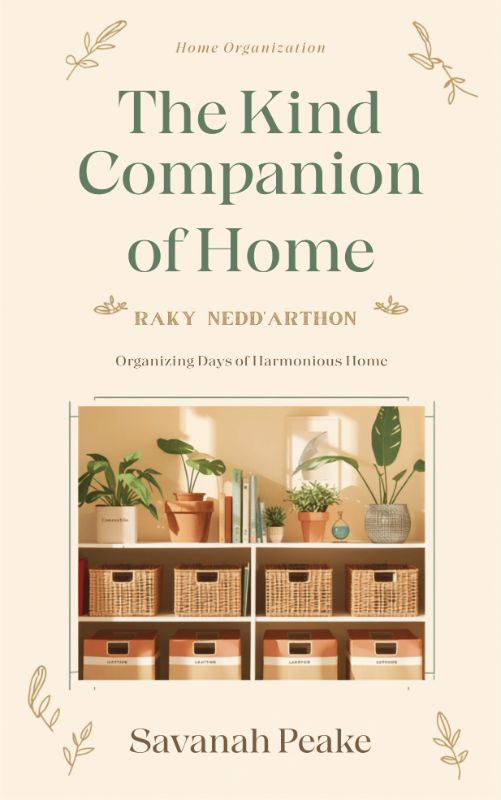
The Kind Companion of Home Organization
Welcoming Order into Our Everyday Spaces Home is more than just four walls and a roof; it is the heart of our daily experience, a sanctuary where comfort, creativity, and connection flourish. The state of our home environment profoundly impacts our well-being, moods, productivity, and even our relationships. Yet, in the hustle and bustle of modern life, many of us find ourselves wrestling with clutter, disorder, and a persistent sense of chaos that seems to seep into every corner of our living spaces. Home organization is not simply a matter of aesthetics or cleanliness—it is a holistic practice that touches every facet of our lives. It is about creating spaces that support our goals, reflect our personalities, and nurture our spirits. The Kind Companion of Home Organization is your invitation to embark on a transformative journey, one that goes beyond labels and containers to explore the deeper meaning of order, the psychology of clutter, and the joy that comes from living in harmony with your environment. This book is designed not as a rigid manual, but as a compassionate guide—a kind companion—walking beside you as you cultivate order in your home and, by extension, in your mind and soul. Whether you are a seasoned organizer seeking new insights, or someone overwhelmed by where to begin, you will find encouragement, practical tools, and a gentle framework for lasting change within these pages. The True Nature of Home Organization Many people approach home organization with a burst of enthusiasm, only to find their efforts unraveling after a few weeks. Why does this happen? The answer lies in the misconceptions and myths that surround the subject. The media often presents a picture-perfect image of organization: spotless closets, alphabetized pantries, color-coded bookshelves. While visually appealing, this version of order is often unattainable and unrealistic for most households. True organization is not about perfection. It is about functionality, intentionality, and sustainability. It is about creating systems that work for your unique lifestyle, habits, and needs. It is about making room—physically and mentally—for what truly matters. This book will help you redefine success, moving away from comparison and judgment, and toward a compassionate understanding of what organization can mean for you. Organization is a practice, not a one-time event. Like tending to a garden, it requires ongoing care, attention, and adaptation. There will be setbacks and surprises, moments of frustration and breakthrough. Throughout this journey, I encourage you to adopt a spirit of curiosity and kindness—toward your possessions, your home, and most importantly, yourself. Why Organization Matters: The Science and Soul of Order The benefits of a well-organized home are both practical and profound. On a practical level, organization saves time, reduces stress, and increases efficiency. Imagine never having to search frantically for your keys, or knowing exactly where to find that important document. Decision fatigue diminishes when your environment supports your routines and priorities. But the impact goes deeper still. Research in environmental psychology shows that our surroundings significantly influence our emotions and behaviors. Cluttered, chaotic spaces can trigger anxiety, irritability, and even depression. Conversely, orderly environments foster calm, focus, and a sense of control. Organization also has a social dimension. Our homes are the backdrop for gatherings, celebrations, and quiet moments with loved ones. When our spaces feel welcoming and manageable, we are more likely to invite others in, to share and connect, strengthening the bonds that matter most. On a spiritual level, organization offers a path to mindfulness. Clearing physical clutter often leads to insights about our emotional and mental landscapes. We begin to notice patterns, attachments, and aspirations that might have gone unnoticed. In this way, organizing our homes can become an act of self-discovery and growth. What to Expect: The Structure of This Book The Kind Companion of Home Organization is structured to guide you step by step, from foundational concepts to room-specific solutions, and finally to strategies for maintaining order over the long term. Each chapter builds on the last, weaving together theory, practical advice, and real-world examples. Chapters 1–5 explore the foundations of home organization, including the psychology of clutter, the principles of effective systems, and the emotional journey that often accompanies change. Chapters 6–15 dive into specific areas of the home—kitchens, bedrooms, living rooms, entryways, and more—offering tailored strategies and actionable checklists for each space. Chapters 16–20 focus on advanced topics: organizing for special circumstances (such as families, roommates, or small spaces), sustainable habits, digital organization, and overcoming common roadblocks. Throughout the book, you will find case studies drawn from real-life experiences, illustrating both the challenges and triumphs of organizing diverse homes. Each chapter concludes with action steps, reflection prompts, and reinforcement exercises to help you put ideas into practice immediately. The Gentle Philosophy Behind This Guide Above all, this book is grounded in a philosophy of kindness—to yourself, your household, and the planet. Too often, organization is framed as a battle against mess, or worse, as a moral failing. This perspective breeds shame and frustration, undermining the very progress we seek. Instead, I invite you to view organization as an act of self-compassion. Your home is an evolving reflection of your life’s journey, not a static showroom. Circumstances change, and so will your systems. You may have children, pets, or caregiving responsibilities. Maybe you work from home, or perhaps you travel frequently. Life is dynamic; so too should be your approach to order. We will also touch on the importance of sustainability and minimalism, not as rigid dogmas, but as guiding principles to help you make choices that align with your values. Let us consider not only what we bring into our homes, but also how we let go—responsibly and mindfully—of what no longer serves us. Your Role: Active Participant, Not Passive Reader This journey is not about passively absorbing information. Each chapter is designed as an interactive experience. I encourage you to pause, reflect, and engage with the prompts and exercises provided. Organization is as much about mindset as it is about method. The more you invest in the process, the greater your rewards will be. You do not need to complete every step perfectly, nor should you expect instant transformation. Progress is measured in small shifts—in the way you relate to your possessions, in the clarity you gain about what you truly value, and in the ease you feel moving through your days. Celebrate your victories, however modest, and approach setbacks as opportunities for learning. Overcoming Common Barriers Many readers begin this journey with a sense of overwhelm, skepticism, or self-doubt. Perhaps you have tried to organize before and reverted to old patterns. Maybe you live with others who do not share your enthusiasm for order. Or you might fear that letting go of things means letting go of memories or identity. These feelings are normal. Throughout the book, you will find strategies to address these barriers with empathy and practicality. We will discuss how to navigate resistance—both internal and external—and how to set realistic expectations that honor your unique circumstances. Tip: If you ever feel stuck or discouraged, remember that organization is not a destination, but a journey. Even the smallest step forward is a victory worth acknowledging. A Preview of Transformation Imagine waking up in a bedroom that soothes you, stepping into a kitchen where every tool has its place, or welcoming guests into a living room that radiates warmth and order. Picture the freedom of knowing what you own, of no longer being weighed down by unwanted or unnecessary items. Envision an environment that energizes and inspires you, every single day. This transformation is possible—not through grand gestures, but through steady, compassionate action. The Kind Companion of Home Organization will equip you with the mindset, skills, and encouragement to make it happen. An Invitation to Begin As you turn the page into Chapter 1, I invite you to approach this journey with an open heart and a curious mind. Bring your questions, your hopes, your challenges. You are not alone; within these chapters, you will find not only strategies, but also stories—of struggle, of progress, and of joy. Let us walk together toward a more organized, peaceful, and fulfilling home. Welcome to your kind companion on this journey—let’s begin.
Savanah Peake
$20.00
The Kind Book of Time Management
Time is the silent currency of life. Each of us is granted the same twenty-four hours in a day, yet our experiences, achievements, and sense of fulfillment differ vastly. Why? The answer rests in how we manage that elusive, ever-flowing river: time. Welcome to The Kind Book of Time Management, a guide designed to transform your relationship with time through wisdom, empathy, and practical, sustainable strategies. The Timeless Challenge Imagine waking up each morning with a clear sense of purpose, a gentle awareness of your priorities, and a calm confidence that you can shape your day rather than be swept away by it. For many, this seems like an unattainable dream. Instead, days blur together in a haze of endless to-do lists, last-minute scrambles, and a nagging sense that there’s never enough time to do what truly matters. Our world moves faster than ever. Digital notifications, constant connectivity, and the pressure to "do more, be more, achieve more" have led to a collective obsession with productivity. Yet, beneath the surface, many people feel exhausted, anxious, and unfulfilled. The pursuit of perfect efficiency often leaves us disconnected from ourselves and others. We become time’s servant, not its master. But what if there’s a kinder, more humane way to relate to time? What if time management isn’t about squeezing more tasks into an already overflowing schedule, but about aligning our actions with our deepest values and aspirations? What if, instead of racing against the clock, we could learn to move in harmony with it? The Promise of Kindness This book is different. While it contains proven techniques for planning, prioritizing, and executing tasks, its foundation is kindness—toward yourself, your goals, and the inevitable imperfections of daily life. Rather than demanding that you become a machine, this book invites you to become more fully human. Kind time management means recognizing your unique rhythms, respecting your energy, and designing systems that support your well-being. It honors rest as much as effort, reflection as much as action, and relationships as much as results. By approaching time with compassion and curiosity, you can create space for growth, creativity, and joy. Who This Book Is For Whether you are a busy professional, a student balancing academics and life, a caregiver juggling multiple roles, an entrepreneur building a dream, or simply someone seeking more meaning in each day, this book is for you. If you have ever felt overwhelmed by commitments, frustrated by procrastination, or guilty about not doing “enough,” you will find understanding and practical help in these pages. You don’t need to be naturally organized or relentlessly driven to benefit from time management. What you need is a willingness to experiment, reflect, and gently guide yourself toward new habits. This book meets you where you are, offering tools that adapt to your circumstances and personality. A New Definition of Productivity Most time management literature focuses on productivity—doing more, faster. While productivity has its place, it can also become a trap. If you measure your worth solely by output, you risk burnout and dissatisfaction. Instead, this book advocates for purposeful productivity: doing what matters, with intention and clarity, and letting go of what doesn’t. “Productivity is not about doing more things—it is about doing more of the right things.” You will learn how to identify your priorities, set boundaries, and create routines that nurture your mind and spirit. You will also explore the obstacles that sabotage your best intentions, from perfectionism and distraction to fear and fatigue. Through stories, exercises, and reflections, you will discover how to reclaim your time, one kind choice at a time. The Structure of This Book The Kind Book of Time Management is organized to guide you step by step: Chapters 2 to 5 build the foundation: clarifying your values, setting meaningful goals, and designing systems that fit your life. Chapters 6 to 10 introduce advanced tools and frameworks, such as prioritization, scheduling, and conquering procrastination, always with a focus on kindness and sustainability. Chapters 11 to 15 address real-world complexities—handling setbacks, balancing multiple roles, and staying resilient in the face of stress and change. Each chapter concludes with actionable steps, reflective prompts, and gentle encouragement. The Conclusion synthesizes your learning and helps you chart a course for lifelong growth. Why Kindness Works Kindness is not weakness. In the context of time management, it is a powerful catalyst for transformation. Self-criticism and harsh discipline may yield short-term gains, but they rarely lead to lasting change. Compassion, on the other hand, fosters resilience, motivation, and creativity. When you treat yourself with respect and understanding, you are more likely to: Recover quickly from setbacks. Adapt to changing circumstances. Celebrate progress rather than fixate on shortcomings. Find joy and meaning in your work and relationships. Kindness also extends outward. When you manage your time with care and integrity, you have more to offer others: attention, patience, and presence. Your improved well-being ripples into your family, your workplace, and your community. The Science Behind the Approach Modern research in psychology, neuroscience, and behavioral economics supports the principles in this book. Studies show that habits rooted in self-compassion are more likely to endure, that reflection enhances learning, and that clear values guide effective action. For example: Behavioral change is more successful when paired with positive reinforcement rather than punishment. Mindfulness improves focus, reduces stress, and leads to better decision-making. Rest and sleep are vital for memory, creativity, and emotional regulation. Social support boosts resilience and makes even the toughest days easier. Throughout this book, you’ll find references to these insights, woven seamlessly into practical advice. Setting Expectations No book, no matter how wise, can eliminate all chaos from your life. Unexpected events, competing demands, and inner resistance will always arise. The goal is not perfection, but progress. By engaging with the ideas and exercises offered here, you will develop greater agency and confidence in shaping your days. You may stumble or backslide; that is part of the journey. Each moment is an opportunity to begin again, with patience and self-respect. The practices in this book are not rules, but invitations—tools to be adapted, tested, and refined according to your needs. Your First Exercise: A Gentle Beginning Before you turn the page, take a moment for a simple reflection: Close your eyes and take three slow, deep breaths. Ask yourself: “If I could change one thing about how I spend my time, what would it be?” Write down your answer, without judgment or overthinking. This small act of awareness is the first step toward transformation. Throughout this book, you will return to your intentions, revisiting and revising them as you grow. What You’ll Gain By the end of this journey, you will: Understand the true nature of time and your relationship with it. Identify your values and priorities with clarity. Develop practical systems for planning, tracking, and reviewing your progress. Cultivate resilience in the face of setbacks and distractions. Build habits of self-kindness that support sustainable success. Experience greater satisfaction, balance, and joy in daily life. Time is both finite and abundant. It is fleeting, yet continually renewed with every sunrise. How you choose to spend it shapes the contours of your life. With openness, compassion, and courage, you can write a new story—one where time is not your enemy, but your ally. Welcome to The Kind Book of Time Management. Let’s begin the journey together.
Savanah Peake
$12.00

The Clear Way of Confidence
The Journey Begins: Unraveling the Essence of Confidence Confidence is one of those rare qualities that is universally admired, universally sought, and—at times—universally misunderstood. In every corner of the world, across cultures, professions, and personal journeys, the desire for authentic confidence is a driving force behind countless ambitions. Yet, for all its significance, confidence often remains elusive, cloaked in myths, misconceptions, and fleeting moments that seem to slip through our fingers just when we need them most. The Clear Way of Confidence is a book born out of the pressing need to demystify what confidence truly is, to provide a roadmap that is both practical and profound, and to empower anyone—regardless of their background, upbringing, or present circumstances—to cultivate lasting, genuine confidence. This is not a book of empty platitudes or wishful thinking. It is a grounded exploration, blending research, lived experience, and actionable guidance to chart a path forward for those who are ready to claim confidence as a daily reality. Why Confidence Matters We live in a world that constantly challenges us—personally, professionally, and socially. The ability to trust yourself, to stand firm in your convictions, and to navigate adversity with resilience is no longer a luxury; it is a necessity. Confidence is the underpinning of: Effective Communication: The courage to speak up in meetings, express your opinions, and have difficult conversations. Leadership: Inspiring others, making decisions, and leading by example. Personal Growth: Taking on new challenges, learning new skills, and embracing change. Relationships: Building trust, setting boundaries, and expressing vulnerability. Resilience: Bouncing back from setbacks, learning from failure, and maintaining momentum. Without a solid foundation of self-assurance, even the most talented individuals can falter. Conversely, with true confidence, ordinary people often accomplish extraordinary things. The Problem with Confidence “Hacks” A quick search online will yield a million tips, tricks, and “confidence hacks.” Stand tall. Make eye contact. Power pose for two minutes before a presentation. While some of these techniques have merit, they are often band-aids for a deeper wound. They may offer a fleeting sense of empowerment, but they seldom address the core of what it means to be truly confident. This book rejects the notion that confidence can be conjured overnight through superficial changes alone. Instead, it embraces the complexity of human psychology, the richness of our stories, and the importance of aligning external actions with internal beliefs. True confidence is not about faking it until you make it—it is about becoming it, step by step, in a sustainable and authentic way. The Science and Spirit of Confidence Confidence exists at the intersection of mindset, habit, and experience. It is as much an emotional state as it is a set of behaviors. Neuroscientific research tells us that our brains are malleable, capable of rewiring old patterns and building new ones through intentional practice. Psychologists have mapped out the pathways of self-efficacy, showing how beliefs about our abilities profoundly shape our actions. Philosophers have pondered the nature of self-worth, courage, and the pursuit of meaning. This book draws from all these wells of wisdom. You will find: Insights from leading scientific studies on confidence, self-esteem, and mindset. Lessons learned from individuals who have overcome tremendous odds to find their voice. Ancient philosophies and modern practices distilled into actionable steps. Exercises designed to build confidence from the inside out. Common Myths and Misconceptions Before embarking on this journey, it is essential to clear away some of the most persistent myths surrounding confidence: Confidence is innate: Many believe you are either born confident or you are not. In truth, confidence can be cultivated, regardless of starting point. Confidence is arrogance: True confidence is rooted in humility and self-awareness, not bravado or bravado. Confidence requires perfection: On the contrary, authentic confidence acknowledges and embraces imperfection. Confidence is constant: Even the most self-assured individuals have moments of doubt. The goal is not to eliminate uncertainty, but to navigate it skillfully. Confidence is about being the loudest in the room: Sometimes, the quietest person has the deepest conviction. Tip: As you read, be willing to question your own assumptions about confidence. Growth begins with openness. The Structure of This Book The Clear Way of Confidence is structured to guide you step-by-step from foundational concepts to advanced applications. Each chapter builds upon the last, weaving together theory and practice, reflection and action. Here is an overview of what lies ahead: Chapters 1–3: We begin by exploring the roots of confidence—how it develops, why it falters, and what it truly means to be confident. These chapters lay the psychological and philosophical groundwork. Chapters 4–7: Next, we delve into the practical skills and habits that support confidence. You’ll learn how to set boundaries, communicate assertively, and develop resilience in the face of setbacks. Chapters 8–12: We turn the lens outward, examining how confidence influences relationships, leadership, and the courage to pursue meaningful goals. Chapters 13–15+: The final chapters address advanced topics, including overcoming impostor syndrome, embracing vulnerability, and sustaining confidence over a lifetime. Conclusion: We will synthesize the core lessons and offer a vision for living boldly and authentically. Throughout, you will encounter real-world examples, case studies, reflection prompts, and exercises. These are not add-ons; they are integral to the learning process. Who This Book Is For You may be picking up this book because you feel held back by self-doubt, because you sense there is more within you waiting to be expressed, or because you want to help others cultivate confidence. Whatever your motivation, this book is for you if: You are a student, professional, or leader seeking to enhance your self-assurance. You have struggled with insecurity, impostor syndrome, or fear of failure. You are a parent, teacher, or mentor hoping to foster confidence in others. You simply wish to understand yourself more deeply and live with greater authenticity. No prior knowledge or special background is required. All that is needed is a willingness to engage, reflect, and apply the principles within. A Note on Practice and Patience Confidence is not a destination; it is a practice. Like any skill or quality of character, it grows through consistent effort, honest self-examination, and a balance of challenge and self-compassion. Some days, confidence will come easily. Other days, it will feel out of reach. This is normal. Progress is rarely linear but is always possible when you commit to the journey. Reminder: Be patient with yourself. The seeds you plant today may take time to bear fruit, but with care and intention, they will grow. The Promise of Clarity In writing The Clear Way of Confidence, my promise to you is clarity. Clarity about what confidence is and is not. Clarity about the steps you can take, starting now, to build self-assurance. Clarity about the obstacles you may face—and how to overcome them. Clarity that empowers, rather than confuses or overwhelms. Confidence is not reserved for the chosen few. It is within reach for anyone willing to walk the path with honesty, courage, and a willingness to learn. The way is clear, if not always easy. Together, we will illuminate it, one step at a time. Your Next Step As you move from this introduction into the heart of the book, I invite you to bring your whole self to the journey. Bring your aspirations and anxieties, your strengths and your struggles. Bring your history, but also your hope for the future. Each chapter will offer new insights, challenges, and opportunities for growth. Read with curiosity. Reflect with honesty. Practice with intention. In doing so, you will discover not just the mechanics of confidence, but its deeper meaning—the unwavering trust in your own worth, your unique voice, and your capacity to make a difference. This is The Clear Way of Confidence. Let us begin.
Savanah Peake
$8.99
The Clear Season of Fresh Starts
The Promise of Renewal: Why Fresh Starts Matter There is an undeniable allure to the idea of a fresh start. At the turning of each season, as winter’s chill gives way to the gentle warmth of spring, or as the calendar year flips to a new page, countless people across the globe experience a surge of hope, a sense of possibility, and the urge to begin again. This phenomenon—the universal longing for renewal—transcends cultures, ages, and backgrounds. It is the foundation upon which we build resolutions, make bold decisions, and pursue the lives we aspire to lead. This book, The Clear Season of Fresh Starts, is a comprehensive exploration of this powerful human impulse. Its pages are dedicated to understanding why fresh starts matter so deeply, how we can harness their transformative energy, and how to maintain momentum when the initial excitement fades. Whether you are yearning for a dramatic life overhaul or seeking subtle shifts in everyday routines, this book aims to be your guide, your companion, and your catalyst for meaningful change. The Anatomy of a Fresh Start What is it about beginnings that stirs the human heart? Why does the arrival of spring, the dawn of a new week, or even the start of a new day inspire so many to try again? The answer lies in the intersection of psychology, biology, and culture—a rich tapestry of influences that shape our responses to the passage of time. Beginnings signal opportunity. They allow us to leave behind what no longer serves us—unproductive habits, tired routines, and unfulfilled dreams—and step into a space of potential. The phrase “clean slate” is more than a metaphor; it is a psychological construct that offers relief from the burden of past failures, disappointment, or inertia. Scientific research supports the concept of the “fresh start effect.” Studies demonstrate that temporal landmarks—such as the first day of the month, birthdays, or even Mondays—motivate individuals to pursue goals with renewed vigor. These moments create a psychological distance from our past selves, allowing us to redefine our identity and reimagine our future. Yet, as universal as the desire for a fresh start is, the path from intention to lasting change is rarely straightforward. Too often, resolutions wither under the weight of old habits. Enthusiasm fades, obstacles emerge, and we are left wondering how to recapture the hope that inspired us. What This Book Offers The Clear Season of Fresh Starts is more than a motivational manifesto. It is a practical, evidence-based roadmap for anyone who wishes to harness the energy of new beginnings—whether in the context of personal growth, relationships, career, creativity, health, or spiritual renewal. Each chapter is designed to take you deeper into the mechanics of change, equipping you with both the insight and the tools you need to sustain your momentum beyond the initial burst of inspiration. You will discover: The psychological underpinnings of why and how fresh starts work. Real-life stories of individuals who successfully reinvented their paths. Practical frameworks for initiating and sustaining change in various domains. Actionable exercises and self-reflective prompts to personalize your journey. Common pitfalls that derail progress—and strategies to overcome them. The role of environment and community in supporting your transformation. My intention is to demystify the process of starting over, to offer you strategies rooted in research and real experience, and to empower you to create your own clear season—no matter what time of year it is. The Four Seasons of Renewal Throughout this book, you will encounter the metaphor of the seasons—not just as a backdrop, but as an organizing principle for personal growth. Each season brings its own lessons: Spring is the season of awakening, of hope, and of planting new seeds. Summer is a time for growth, resilience, and nurturing what we have begun. Autumn teaches us to harvest, reflect, and let go. Winter is the season of rest, consolidation, and inner preparation for what comes next. This cyclical approach reminds us that renewal is not a one-time event, but a lifelong process. By embracing the rhythms of beginnings, growth, reflection, and rest, we can sustain our progress and remain flexible in the face of change. Origins of the Clear Season The inspiration for this book came not just from observing the world or reading research, but from lived experience. Years ago, I found myself yearning for a new direction after a period of profound stagnation. Despite my knowledge and skills, I struggled to break free from old routines—until I recognized the subtle but significant power of “temporal landmarks.” The arrival of spring, with its longer days and blossoming trees, signaled a turning point. I embraced the season as a metaphorical reset, and gradually rebuilt my habits, my relationships, and my sense of purpose. As I shared this process with friends, colleagues, and clients, I noticed a pattern: everyone has their own “clear season.” Sometimes it coincides with the calendar; other times, it emerges from moments of crisis, opportunity, or inspiration. The common thread is the decision to step forward, to reclaim agency, and to envision a different future. How to Use This Book You may be at the threshold of a major life transition, or you may simply wish to make small, positive adjustments. This book is designed to meet you where you are. It is structured to allow for both sequential reading and modular exploration. Each chapter builds upon the last, but you may also dip into chapters that are most relevant to your current circumstances. At the end of each chapter, you will find: Reflection questions to deepen your understanding. Action steps to translate insight into practice. Summaries to reinforce key concepts. I encourage you to keep a journal or notebook as you read. The act of writing—of articulating your hopes, your challenges, and your progress—is itself a powerful tool for transformation. A Note on Perfectionism A common barrier to fresh starts is the belief that change must be perfect, complete, or immediate. This book invites you to release perfectionism and embrace the reality that progress is often incremental, nonlinear, and marked by setbacks as well as successes. The goal is not to become a flawless version of yourself, but to move consistently toward the life you desire, one clear season at a time. Tip: Allow yourself to begin imperfectly. The desire for a perfect start often prevents us from starting at all. The Journey Ahead Over the coming chapters, we will journey together through the landscape of fresh starts. We will examine: The science behind the fresh start effect. How to set meaningful intentions and actionable goals. Strategies to overcome resistance and self-sabotage. The importance of environment and community. Techniques for sustaining momentum during setbacks. The art of letting go and embracing change as a lifelong practice. You will read the stories of people who reinvented their paths in middle age, of young adults who found purpose after failure, of teams and communities who collectively embraced renewal. You will also encounter exercises designed to help you clarify your own vision of a fresh start—whether it means changing careers, healing relationships, pursuing a creative dream, or simply living with greater authenticity. An Invitation As you turn the page, I invite you to pause and consider: What does a fresh start mean to you? Is there an area of your life calling for renewal? What would it look like to embrace this season with openness and courage? This book is both a map and a mirror. It will offer direction, but it will also reflect back the unique possibilities within you. Every day, every moment, holds the promise of a new beginning. The clear season of fresh starts is not bound by the calendar—it is an invitation you can accept at any time. Welcome to your journey of renewal. Let’s begin.
Savanah Peake
$12.99

The Clear Path of Resilience
Resilience is a word that echoes with both simplicity and profound depth, a quality revered across cultures, generations, and disciplines. Yet, beyond its surface appeal, resilience is a complex tapestry woven from our experiences, beliefs, biology, and choices. To some, it is the quiet strength that carries one through hardship; to others, it is the creative force that transforms adversity into opportunity. In the heart of every story of triumph over challenge, there lies a lesson about the nature of resilience—a lesson that offers guidance, hope, and practical tools for anyone seeking a path through life’s inevitable storms. This book, The Clear Path of Resilience, is an exploration and a guide: a journey through what it truly means to be resilient, how resilience is cultivated, why it sometimes fails us, and—most importantly—how we can nurture it in ourselves, our loved ones, and our communities. The pages ahead are built on the foundations of scientific research, lived experience, and the wisdom of those who have walked the hardest roads and emerged not only intact but transformed. The Modern Quest for Resilience Never before has the word “resilience” been uttered so often or with such urgency. In a world marked by accelerating change—technological, environmental, social, and personal—the ability to withstand, adapt, and thrive amid difficulty is not merely desirable; it is essential. From the boardrooms of Fortune 500 companies to the living rooms of families grappling with loss, from classrooms facing unprecedented disruption to individuals wrestling with invisible battles, resilience is the key that unlocks not just survival, but growth. And yet, despite its importance, misconceptions about resilience abound. Is it an inborn trait, bestowed at birth to the lucky and denied to others? Is it a talent, a mindset, a set of skills, or something else entirely? Can it be taught, measured, or manufactured? These questions are not just academic; the answers shape how we respond to our own struggles and how we support others in theirs. Resilience is not a magic shield. It does not mean never feeling pain, never faltering, or always “bouncing back.” Real resilience is nuanced and dynamic. It is about bending without breaking, about making meaning from hardship, about carrying scars that do not define us but remind us of what we are capable of enduring and becoming. Laying the Groundwork: What This Book Offers The journey ahead will be both broad and deep. We will move beyond platitudes and simplistic self-help advice, instead embracing a holistic perspective that weaves together multiple threads: The Science of Resilience: What research tells us about how the brain and body respond to challenge, and why some people seem to “bounce back” more easily than others. Practical Strategies: Concrete, actionable techniques that anyone can use to build their capacity for resilience, regardless of age, background, or circumstance. Stories of Transformation: Real-life case studies and personal accounts that illustrate the principles in action, highlighting both triumph and struggle. Common Pitfalls: The traps that can undermine resilience, and how to avoid them. Exercises and Reflections: Tools and prompts to help you apply what you learn, deepen your self-awareness, and chart your own clear path of resilience. Each chapter will focus on a specific dimension of resilience—mindset, emotion, relationships, identity, adversity, purpose, and more—building layer upon layer, always returning to the central question: How do we cultivate a resilient life? By the end, you will not only understand the theory but possess a practical blueprint for embodying resilience in your daily existence. The Nature of Adversity Before we can understand resilience, we must first confront the reality of adversity. Adversity comes in many shapes and sizes: a lost job, a broken relationship, a diagnosis, a global crisis, a betrayal, a dream deferred. Some adversity is acute and dramatic; other times, it is chronic and quietly eroding. Everyone will face adversity, but the timing, form, and impact will differ. Tip: Adversity is not a sign of personal failure. It is a universal aspect of the human condition. What distinguishes those who crumble from those who adapt is not the presence of difficulty, but the response to it. Resilience begins in this space—between what happens to us and how we choose to meet it. It is here that our beliefs, habits, and supports come into play. Myth-Busting: What Resilience Is Not To chart a clear path, we must first clear away the fog of misunderstanding: Resilience is not stoicism. Enduring hardship without emotion is not resilience; allowing oneself to experience and process pain is critical to growth. Resilience is not invulnerability. Even the most resilient people have moments of weakness, self-doubt, and despair. The difference is not in the absence of struggle, but in the willingness to keep moving forward. Resilience is not self-reliance alone. While personal strength is important, connection to others—family, friends, mentors, communities—is often the lifeline that sustains us. Resilience is not merely “bouncing back.” Sometimes adversity leaves us forever changed. Resilience is about integrating those changes and finding new ways to thrive. Foundations: The Pillars of Resilience Throughout history and across cultures, certain themes appear again and again in stories of resilient people. These pillars will serve as the structure for our exploration: Self-Awareness: The ability to notice and name our thoughts, emotions, and patterns. Adaptability: The willingness to adjust, learn, and grow in response to new challenges. Purpose: A sense of meaning that anchors us during turbulence. Connection: Relationships that provide support, inspiration, and perspective. Hope and Optimism: The belief that improvement is possible and that our actions matter. Self-Care: Practices that nurture body, mind, and spirit, replenishing our capacity to cope. We will examine each of these in depth, exploring both their scientific underpinnings and their practical applications. The Brain, the Body, and Beyond Resilience is not just a matter of “mind over matter.” It is embedded in our biology, shaped by our experiences, and influenced by our environment. Neuroscience shows us that the brain is plastic—capable of rewiring itself in response to challenge and intentional practice. The body, too, holds wisdom: our stress response, our habits of movement and rest, our nutrition, all play crucial roles. Even our genes contribute, but they do not dictate our destiny. We will explore how biology and environment interact, how trauma and healing are encoded in the nervous system, and how practices like mindfulness, exercise, and sleep can dramatically enhance resilience at every age. Why Write This Book? This book exists because the need for resilience is universal, but the path to achieving it is not always clear. Too often, we are told to “be strong” without being shown how. We are encouraged to “stay positive” without acknowledging the depth of our pain. We are urged to “move on” before we’ve made sense of what has happened. The Clear Path of Resilience is my attempt to bridge the gap between inspiration and instruction, between theory and practice. My background—as a non-fiction author, a specialist in psychology and human development, and as someone who has faced my own share of adversity—has convinced me that resilience is not a destination, but a journey. It is a skill to be honed, a mindset to be cultivated, and a way of being that is available to all. How to Use This Book You may choose to read this book cover to cover, or you may dip into chapters that address your current needs. Either way, I encourage you to engage with the exercises, reflect on your own experiences, and approach each topic with curiosity and compassion. Consider keeping a journal as you progress, noting insights, questions, and areas for further exploration. Share what resonates with others; resilience is strengthened in community. Above all, be gentle with yourself. The journey is not linear, and setbacks are part of the process. A Preview of the Road Ahead Here’s what you can expect in the upcoming chapters: An in-depth look at the science of stress and adaptation Techniques for cultivating self-awareness and emotional regulation Strategies for building supportive relationships Ways to find and strengthen your sense of purpose Tools for maintaining hope and optimism, even in the darkest times Actionable self-care routines for body and mind Methods for transforming trauma and failure into growth Practices for nurturing resilience in children, teams, and communities Every chapter will end with a Resilience Practice—a practical exercise or reflection designed to help you integrate the material into your life. An Invitation You are not broken. You are not alone. No matter where you are starting from, resilience is within your reach. Whether you are facing a challenge right now or preparing for the uncertainties of the future, this book is for you. Let us walk the clear path of resilience together—one step, one story, one practice at a time. Reminder: Resilience is not about avoiding the storm, but learning to dance in the rain. Let us begin.
Savanah Peake
$9.99
The Clear Lessons of Home Organization
Home. The word alone invokes a multitude of images, feelings, and memories. It is more than just a shelter from the elements; it is our sanctuary, our creative haven, our space for rest and connection. Yet, for many, the home can also become a source of stress—a battleground of clutter, lost objects, and unfinished projects. In the modern era, where demands on our time and attention seem to grow exponentially, the state of our living spaces often mirrors the chaos or calm within ourselves. This book, The Clear Lessons of Home Organization, is dedicated to transforming not only your environment but also your daily life, peace of mind, and sense of control through the art and science of home organization. The Modern Challenge of Clutter Never before has the average person had access to so many possessions. The variety of goods, conveniences, and technologies at our fingertips is both a blessing and a burden. While our grandparents may have struggled to fill their cupboards, we now battle to find space for everything we own. The result? Drawers that refuse to close, garages that double as storage units, and the persistent feeling that there is never enough time or room to manage it all. But clutter is not simply a physical inconvenience. Clutter is mental noise. It interrupts our ability to think, focus, and relax. Studies have repeatedly demonstrated that a disorganized environment can increase feelings of anxiety, sap our productivity, and even strain our relationships. This book does not approach organization as an aesthetic luxury, but as a foundational pillar of well-being and effectiveness. When our homes are organized, they become more than functional spaces—they become supportive environments that amplify our goals and nurture our spirits. Why Home Organization Matters The stakes of home organization are higher than many realize. Consider these critical benefits: Reduced Stress: Research shows that tidy environments lower cortisol levels, which are linked to stress. Increased Productivity: An organized home frees up mental space and time, allowing you to focus on what truly matters. Enhanced Creativity: When visual and physical clutter is minimized, the mind is more free to explore, dream, and create. Financial Savings: Knowing what you own prevents duplicate purchases and helps you maintain what you have. Stronger Relationships: Shared spaces that are orderly reduce household conflict and nurture cooperation. Organization is not about perfection; it is about creating systems that work for you and your unique lifestyle. Whether you live alone in a studio apartment or with a bustling family in a sprawling house, the core principles remain the same. This book is your guide to understanding, designing, and sustaining order in any living situation. The Science and Art of Organization Some may assume that organizational skills are innate, a talent bestowed upon a lucky few. In reality, effective organization is both an art and a science—one that anyone can learn. The science lies in understanding human behavior, habits, and cognitive biases that lead to clutter and disarray. The art comes in crafting systems that are beautiful, intuitive, and personal. This book draws on insights from psychology, neuroscience, design, and time management to offer a comprehensive view of why disorganization happens and, most importantly, how to conquer it for good. You will encounter practical strategies, case studies, actionable checklists, and real-world examples drawn from my decades of experience as both a non-fiction author and a specialist in home organization. Common Myths and Misconceptions Before we embark on this journey, let’s dispel some persistent myths that keep many people stuck: “I’m just not an organized person.” Organization is a skill, not a personality trait. With guidance and practice, anyone can improve. “Organization requires expensive products.” Systems matter more than stuff. Clever solutions often cost little or nothing. “Neat equals organized.” A space can look tidy on the surface yet hide chaos in drawers, closets, or digital files. “It’s a one-time project.” True organization is a lifestyle, not a destination. It evolves as your life changes. This book will address these and other misconceptions head-on, equipping you with both the mindset and the methods to create lasting change. What to Expect in This Book Each chapter is designed to build upon the last, providing a cohesive roadmap from clutter and confusion to clarity and confidence. Here’s a preview of what you will uncover: Foundational Mindsets: How to reframe your relationship with your possessions and your home. Decluttering Techniques: Proven methods for letting go, sorting, and making decisions. Space Planning: Strategies to maximize function and flow in any room. Organizational Systems: Step-by-step guides for creating storage solutions that stick. Room-by-Room Solutions: Targeted advice for kitchens, bedrooms, bathrooms, garages, offices, and more. Maintaining Order: Habits and routines to keep clutter at bay for good. Throughout, you’ll find reinforcement exercises, pitfalls to avoid, and motivational reminders to support you at every phase. Tip: As you read, keep a notebook or digital document handy. Jot down insights, ideas, or questions that arise. The act of engaging with these concepts actively will dramatically increase your success. The Emotional Side of Organization No discussion of home organization would be complete without acknowledging the emotional terrain involved. Our belongings are more than objects; they are repositories of memory, symbols of identity, and sometimes sources of guilt or regret. The act of decluttering and organizing can unearth challenging feelings—fear of letting go, nostalgia, anxiety about change. This book offers compassionate guidance for navigating these emotional complexities. You will learn techniques for mindful decision-making, emotional attachment, and self-compassion as you reshape your space. Organization, at its best, is not about stripping away what matters—it is about making space for what matters most. The Ripple Effect Organized homes have a ripple effect that goes far beyond tidy shelves. When you gain mastery over your environment, you develop confidence in your ability to tackle other areas of life. You will find that the lessons of home organization—clarity, intentionality, adaptability—translate into improved work performance, better health, and richer relationships. Many readers have shared how, after transforming their homes, they felt emboldened to pursue new careers, start creative projects, or simply enjoy more restful, connected family time. The impact of home organization is profound because it touches every facet of how we live and who we become. Your Commitment Transformation is possible, but it requires commitment. There will be moments of resistance, fatigue, and doubt. However, the rewards—freedom, peace, and empowerment—are worth every ounce of effort. Approach this book as a companion and guide; return to its pages whenever you need inspiration or practical solutions. Reminder: Progress, not perfection, is the goal. Each small improvement in your environment is a victory worth celebrating. Let’s Begin As you turn the page, prepare to see your home—and your life—with fresh eyes. The journey ahead is one of discovery, creativity, and meaningful change. Whether you seek a complete overhaul or a subtle tune-up, the principles within The Clear Lessons of Home Organization will serve you for years to come. Welcome to the first step toward clarity, order, and a home that truly supports the life you wish to lead.
Savanah Peake
$5.00
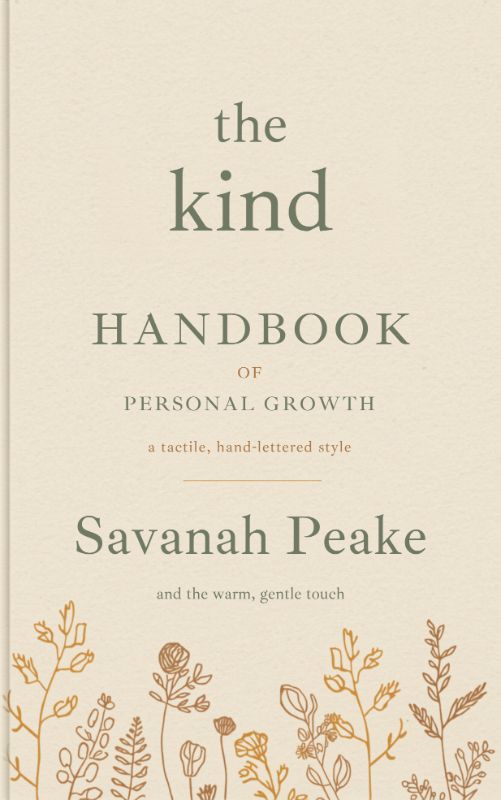
The Kind Handbook of Personal Growth
Personal growth is a journey—a living, breathing process that accompanies us through every phase of our lives. It transcends mere self-improvement; it is the ongoing pursuit of a more authentic, purposeful, and kind existence. In an increasingly fast-paced and complex world, the need for personal growth is more pronounced than ever. The Kind Handbook of Personal Growth is born from the belief that growth is not only about striving for success or achieving goals but also about nurturing compassion, understanding, and resilience within ourselves and our communities. This book is designed as both a companion and a guide—a resource you can turn to in moments of doubt, curiosity, or aspiration. Whether you are beginning your journey of self-discovery or seeking to deepen your existing practices, you will find in these pages a blend of ancient wisdom, contemporary research, and practical tools. Our approach is rooted in kindness: kindness to yourself as you stumble, experiment, and change; kindness to others as you interact with the world; and kindness to the broader human story that connects us all. Why Personal Growth Matters At its heart, personal growth is about becoming more of who you truly are. It asks us to examine our beliefs, develop emotional intelligence, foster meaningful relationships, and adapt to life's inevitable changes with grace. Growth is not a linear path; it is filled with setbacks, breakthroughs, and unexpected turns. But the rewards are profound: a deeper sense of fulfillment, greater resilience in the face of adversity, and the capacity to live with intention and joy. Growth is also an act of service. As we become more self-aware and compassionate, our capacity to positively influence those around us expands. Families, workplaces, communities, and even societies benefit when individuals are committed to their own development. The journey is not always easy. There are times when the world feels overwhelming, when our inner critics shout louder than our cheerleaders, and when the gap between who we are and who we wish to be seems insurmountable. It is precisely in these moments that kindness—toward ourselves and others—becomes the most powerful catalyst for change. The Philosophy of Kind Growth Unlike handbooks that focus solely on productivity or achievement, this book centers on kind growth. This philosophy emphasizes: Self-compassion: Growth requires honesty about our limitations, but also forgiveness and patience as we work through them. Authenticity: True growth honors your unique journey and values, rather than conforming to external expectations. Connection: We are social beings; our growth is intimately linked to the quality of our relationships. Resilience: Growth is sustainable when it is gentle and persistent, not forced or frantic. Curiosity: Every experience, even failure, holds lessons if we approach it with an open and inquisitive mind. The Kind Handbook of Personal Growth does not promise overnight transformation. Instead, it offers a roadmap for gradual, meaningful change that endures. How to Use This Book This book is structured as a series of chapters, each focusing on a key aspect of personal growth. Some chapters will invite deep introspection; others will guide you through practical techniques and exercises. You may choose to read it sequentially, allowing each chapter to build upon the last, or jump to the sections that resonate most with your current needs. Each chapter includes: Core concepts explained in accessible language Real-life examples and case studies for context Actionable techniques you can apply immediately Common pitfalls and how to avoid them Reflective exercises to deepen your learning Setting Expectations: Growth is a Process, Not a Destination It is tempting to view personal growth as a destination—a final, perfected version of ourselves waiting at the end of the path. This perspective, while motivating, can also be discouraging. The truth is, there is no finish line. Growth is ongoing. It ebbs and flows, accelerates and slows, depending on the seasons of your life. Sometimes the most significant transformation happens imperceptibly, in the small, daily choices to act with a little more courage, a little more kindness. Tip: Embrace the idea of lifelong growth. Instead of asking, “Am I there yet?” try asking, “What am I learning right now?” The Science and Spirit of Transformation Modern psychology, neuroscience, and ancient spiritual traditions all point to the plasticity of the human mind and spirit. We are not fixed entities; we are constantly evolving. Research into neuroplasticity shows that our brains can form new connections and habits throughout our lives. Practices like mindfulness, gratitude, and self-reflection have measurable benefits for mental and physical well-being. At the same time, the wisdom of ancient teachers reminds us that humility, patience, and compassion are essential companions on the path. The intersection of science and spirit is where this book finds its home—drawing from both to offer a holistic approach to growth. Common Myths About Personal Growth Before we begin, it’s important to address some of the most persistent myths that can hinder progress: Myth 1: Personal growth means fixing what’s broken. Reality: Growth is about unfolding potential, not repairing defects. You are already whole and worthy, even as you seek change. Myth 2: I must do it alone. Reality: Support, mentorship, and community are vital. Growth flourishes in connection. Myth 3: Change is always dramatic and quick. Reality: Most growth is incremental and subtle. Small steps add up to big changes over time. Myth 4: There is a “right” way to grow. Reality: Your path will be unique. Comparison with others stifles genuine development. By dispelling these myths, we create space for a more compassionate, realistic approach to progress. Your Role: Active Participant, Not Passive Reader This handbook is not a passive experience. You are invited to engage, question, experiment, and reflect. The more actively you participate—by journaling, discussing with others, or practicing the techniques—the more meaningful your journey will be. Consider setting aside a notebook or digital journal to capture your insights and responses to the exercises provided. Revisit your notes periodically to observe your evolution. Reminder: Growth is not measured by how much you know, but by how much you are willing to learn and apply. The Road Ahead: Chapter Overview Here’s a preview of what you can expect as you move through this book: Self-Awareness: Understanding your beliefs, values, and motivations. Emotional Intelligence: Building skills for managing emotions and relationships. Mindfulness and Presence: Cultivating attention and reducing stress. Resilience: Developing strength in the face of adversity. Goal Setting and Motivation: Creating meaningful objectives and sustaining momentum. Habits and Routine: Harnessing the power of daily practice. Growth Mindset: Embracing challenges and learning from failures. Compassion and Empathy: Becoming kinder to yourself and others. Communication Skills: Expressing yourself effectively and listening deeply. Creativity and Curiosity: Reigniting your sense of wonder. Purpose and Meaning: Aligning your actions with your deepest values. Relationships and Community: Building connections that nurture growth. Courage and Vulnerability: Facing fears and embracing authenticity. Time Management and Focus: Prioritizing what matters most. Sustaining Growth: Navigating setbacks and celebrating progress. Each topic is explored in depth, with a focus on practical application and kindness as the foundation. A Final Invitation Growth is your birthright. It is not reserved for the extraordinary or the privileged; it is a natural part of being human. As you embark on this journey, remember that every act of self-discovery, every attempt to live more authentically, is a contribution to a kinder, wiser world. Let us begin, together, with open hearts and curious minds. “The journey of a thousand miles begins with a single step.”—Lao Tzu Turn the page, and let your journey begin.
Savanah Peake
$29.99
The Wise Year of Fresh Starts
The Dawn of a Wise Year There is a particular magic inherent in beginnings. Whether it is the quiet hush before dawn, the first page of a new journal, or the exhilarating, hopeful breath you take before plunging into a new adventure, beginnings are the purest form of possibility. Yet, as adults, we often lose sight of this magic. The routines and responsibilities of daily life can dull our sense of wonder, making the prospect of change seem daunting, even impossible. This book, The Wise Year of Fresh Starts, is an invitation to reclaim that magic. It is a roadmap for infusing your days, months, and the entire year with intention, wisdom, and the courage to begin anew—again and again. Why Fresh Starts Matter Fresh starts are not about erasing our past or pretending our missteps never happened. Rather, they are about harnessing the wisdom accrued from our experiences—both joyous and painful—and using it as fertile soil for new growth. Research in psychology, neuroscience, and behavioral science consistently points to the power of temporal landmarks—moments that feel like natural opportunities to reset, reflect, and recommit. These might come with a new year, a birthday, the start of a season, or even the beginning of a new week. But the most profound fresh starts are those we choose for ourselves, regardless of the calendar. In a world that often prizes relentless progress and unbroken streaks, the idea of starting over can feel like admitting defeat. But the wisdom of fresh starts lies in recognizing that change is not a sign of failure—it is the very heart of growth. When we embrace the cycle of reflection, release, and renewal, we cultivate resilience, adaptability, and a deeper sense of purpose. The Promise of a Wise Year This book is not a collection of empty platitudes or quick fixes. Instead, it is a companion for transformation, grounded in evidence-based practices, real-world stories, and the accumulated insights of thinkers, doers, and dreamers across disciplines. Over the course of these pages, you will find: Foundational principles for understanding the psychology and science of change. Practical strategies for identifying and overcoming the invisible barriers that keep us stuck. Inspiring case studies of individuals who have navigated profound fresh starts in their personal and professional lives. Step-by-step frameworks for setting meaningful goals, building lasting habits, and weathering setbacks with grace. Exercises, prompts, and reflection tools to help anchor your learning and catalyze action. Each chapter is designed to stand alone, focusing on a distinct facet of renewal—from cultivating self-awareness, to reimagining relationships, to reigniting creativity or navigating career pivots. Together, these chapters form a tapestry of wisdom, inviting you to craft a year (and a life) characterized not by perfection, but by purposeful reinvention. The Anatomy of Change Before we embark on this journey together, it is worth examining why change is both so desirable and so difficult. The human brain is wired for efficiency. Habits and routines are our mind’s way of conserving energy, allowing us to function without reconsidering every action. While this is adaptive in many ways, it also means that breaking old patterns and forging new ones requires conscious effort and, often, discomfort. Tip: Change is rarely a single event. It is a process, often nonlinear, marked by false starts, setbacks, and gradual progress. The path to a fresh start is rarely straightforward, but it is always instructive. Each attempt teaches us something about our values, our triggers, and our capacity for resilience. The key is to approach change not with judgment, but with curiosity and compassion. The Role of Wisdom The title of this book is intentional. Fresh starts, when fueled by wisdom rather than impulse, are fundamentally different. Wisdom is not merely intelligence or knowledge—it is the ability to apply experience, discernment, and empathy to the challenges at hand. It is what allows us to distinguish between fleeting desires and enduring purpose, between quick fixes and meaningful transformation. Wise renewal asks us to pause before leaping, to reflect on what is truly important, and to make choices that honor both our aspirations and our limitations. This requires honesty, humility, and a willingness to learn from every stage of our journey—including our mistakes. A Year Like No Other Imagine a year in which you give yourself permission to start fresh—not just once, but as often as you need. A year in which you approach each day as an opportunity to realign with your values, deepen your connections, and pursue your goals with renewed energy. This is not a fantasy; it is a practice, and it is available to anyone willing to cultivate the habits of reflection, intention, and courageous action. Throughout The Wise Year of Fresh Starts, you will encounter exercises designed to help you: Identify the patterns and narratives that have shaped your current reality. Let go of what no longer serves you, with gratitude rather than regret. Set clear intentions that are rooted in self-awareness and aligned with your unique definition of success. Build supportive environments—internally and externally—that make change sustainable. Celebrate progress, learn from setbacks, and recommit to your goals as needed. This is not a linear journey, and there is no single path. Your wise year will be shaped by your history, your hopes, and the realities of your life. The chapters ahead are intended as guideposts, not prescriptions, and you are invited to engage with them in whatever order or manner feels most resonant. What to Expect from This Book Each chapter of this book explores a different aspect of renewal, drawing from fields as diverse as psychology, neuroscience, philosophy, and organizational behavior. You will meet individuals who have navigated personal reinvention in the face of adversity, teams that have reimagined their work cultures, and communities that have rebuilt themselves after collective setbacks. You will also find practical tools—journaling prompts, exercises, frameworks, and checklists—designed to translate insight into action. These are not one-size-fits-all solutions, but starting points for your own exploration. At the end of each chapter, you will find a brief recap and a set of actionable next steps. This structure is intentional, allowing you to pause, integrate what you have learned, and move forward with clarity. How to Use This Book There is no wrong way to engage with The Wise Year of Fresh Starts. You might choose to read it straight through, chapter by chapter, or you might dip into the sections that feel most relevant to your current season of life. You may wish to keep a journal alongside your reading, jotting down insights, questions, or intentions as they arise. If you are reading as part of a group or with a trusted friend, consider discussing the prompts and exercises together. Sharing your journey can deepen your insights and provide invaluable support. Reminder: You are not alone in your desire for renewal. Every human being, at some point, faces the need to begin again. The difference lies in how we approach this universal experience. A Note on Self-Compassion One of the most consistent obstacles to fresh starts is the voice of self-criticism. As you embark on this journey, you may encounter resistance, doubt, or fear. This is normal. Change, even when desired, can feel threatening to the parts of us that long for certainty. The Invitation The wise year is not a fixed period—it is a mindset, a commitment to living with openness, curiosity, and courage. Whether you are seeking to transform a single habit, reinvent your career, heal a relationship, or simply live with greater intention, these pages are for you. So, take a deep breath. Acknowledge where you are, honor the journey that has brought you here, and open yourself to the possibilities ahead. Together, we will explore the art and science of starting fresh—not as a last resort, but as a conscious, empowered choice. Welcome to The Wise Year of Fresh Starts. Your next chapter awaits. Reflection Exercise:Before moving on to Chapter 1, take a few minutes to reflect on the following questions in your journal: What does a “fresh start” mean to you, personally? Where in your life are you longing for renewal? What would it look like to approach this desire with wisdom rather than urgency? These reflections will serve as your foundation as we begin our journey together.
Savanah Peake
$100.00
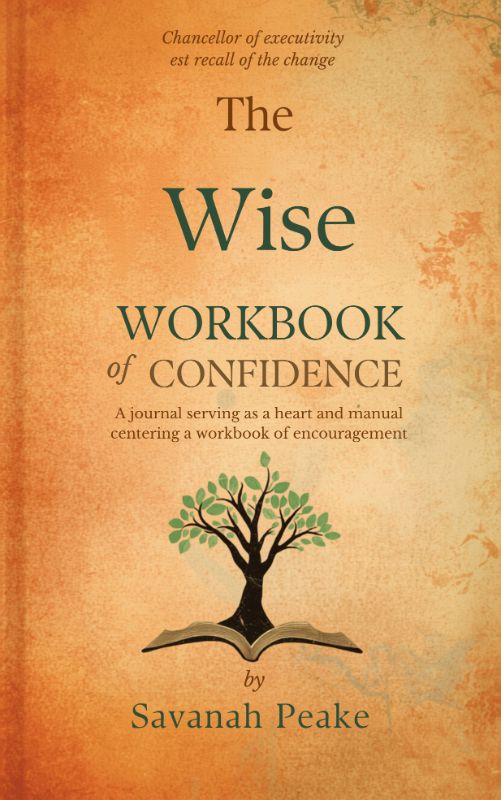
The Wise Workbook of Confidence
Confidence. Even the word itself carries a resonance, a certain weight and promise. It is the invisible force that moves us forward, the silent motivator behind every risk taken, every new relationship formed, every bold declaration of self-worth. In a world filled with uncertainty and constant comparison, confidence can feel rare, even unattainable. Yet, it is not a mysterious gift bestowed upon a lucky few. Rather, it is a skillset, a mindset, and a habitual practice—one that anyone can learn, nurture, and grow. Welcome to The Wise Workbook of Confidence. This book is not a mere collection of motivational quotes or quick-fix slogans. Instead, it is a rigorous, practical, and compassionate guide designed to help you understand, cultivate, and embody authentic confidence in every area of your life. Whether you are struggling with social anxiety, feeling stuck in your professional journey, longing for deeper relationships, or simply seeking greater peace within yourself, this workbook will serve as your companion, mentor, and mirror on the journey ahead. The Myth and Reality of Confidence Before we embark, it is essential to dispel some of the most persistent myths about confidence. Many believe that confident people are always fearless, always outgoing, always certain. This is simply not true. Real confidence is not about never feeling afraid, never doubting, or never failing. Instead, it is about moving forward despite fear, learning from doubt, and embracing failure as a stepping stone to growth. True confidence is quiet yet resilient. It is the rooted tree that bends in the storm but does not break. It is the soft but consistent inner voice that says, "I am enough," even when the world seems to say otherwise. This book will help you develop that inner voice, not as a mask to wear, but as a reflection of your genuine self. Why Confidence Matters Confidence is not simply a personal asset; it is a life multiplier. When you possess confidence, you approach challenges as opportunities rather than threats. You communicate more clearly, assertively, and empathetically. You are more likely to take meaningful risks, learn from setbacks, and persevere through difficulties. Research in psychology, education, and business consistently shows that confidence is linked to: Higher performance in academic, professional, and athletic contexts Greater resilience in the face of adversity Healthier relationships with family, friends, and colleagues Increased happiness and life satisfaction But perhaps most importantly, confidence gives you the freedom to live in alignment with your values—to be the author of your own story rather than a passive character reacting to others’ expectations. The Journey Ahead This book is structured to be both comprehensive and practical. Each chapter will explore a core dimension of confidence, providing you with in-depth explanations, real-life scenarios, and actionable exercises. You will find: Scientific insights into the psychology and neurobiology of confidence Historical examples and case studies showcasing confidence in action Step-by-step techniques for building confidence in specific areas—public speaking, leadership, decision-making, and more Worksheets and reflection prompts to deepen your understanding and apply what you learn to your unique circumstances Common misconceptions and pitfalls to avoid, drawn from years of research and direct experience with individuals on their confidence journey You do not need to work through the book in one sitting. In fact, the most effective approach is to move at your own pace, pausing to reflect, practice, and revisit sections as needed. Confidence, like any worthwhile endeavor, is best built through consistency rather than intensity. How to Use This Workbook As you read, you are invited to treat this book not just as a source of information, but as a personal workshop. Here are some guiding principles to get the most from your experience: 1. Be Honest With Yourself Self-awareness is the cornerstone of confidence. Throughout the book, you will encounter questions and exercises designed to help you examine your beliefs, fears, and patterns. Approach these honestly and with compassion. There are no right or wrong answers—only opportunities for growth. 2. Practice, Don’t Just Read Confidence is built through action. Reading about techniques is valuable, but real transformation comes from applying them. Commit to practicing even when it feels uncomfortable or unfamiliar. Growth happens at the edge of your comfort zone. 3. Reflect and Review Set aside time to regularly review your progress. Celebrate your successes, no matter how small. Notice the shifts in your mindset, behaviors, and emotions. Use the reflection prompts at the end of each chapter to deepen your insights and chart your next steps. 4. Seek Support When Needed While this workbook is designed for self-guided learning, confidence often flourishes in community. Consider sharing your journey with a trusted friend, mentor, or support group. Sometimes, an outside perspective can illuminate blind spots or offer encouragement when motivation wanes. What You Will Gain By the conclusion of this book, you will have: A clear, personalized definition of confidence tailored to your values and goals An understanding of the psychological roots of self-doubt and actionable strategies to overcome it Tools for assertive communication, boundary-setting, and effective decision-making Techniques to manage social anxiety and perform under pressure Insights for building confidence in relationships, work, and creative pursuits Lifelong habits for sustained growth, resilience, and self-compassion Tip: Remember, confidence is not a destination but a journey. Give yourself permission to move at your own pace, honor your progress, and approach setbacks with curiosity rather than criticism. A Personal Note As the author of this workbook, I have spent decades studying the science of self-belief, coaching individuals from all walks of life, and confronting my own moments of uncertainty. The insights and strategies within these pages are drawn not only from academic research and professional practice but from real, lived experience. My greatest hope is that you will find in these chapters both the wisdom and the practical tools you need to become the most confident version of yourself. You are not alone on this path. Every person you admire for their confidence—whether a world leader, a gifted artist, a beloved teacher, or a close friend—has walked this road. Each has faced setbacks, wrestled with doubt, and learned, step by step, to trust in their own worth. What Comes Next In the chapters that follow, we will explore the foundations of confidence, the obstacles that undermine it, and the specific, actionable steps you can take to build it—no matter where you are starting from. We will begin by examining the roots of confidence: where it comes from, how it develops, and why it sometimes falters. Then, we will dive into practical tools and exercises for strengthening your self-belief, communicating with impact, embracing vulnerability, and living authentically. By engaging with each chapter, completing the exercises, and reflecting on your journey, you will discover that confidence is not an abstract ideal but a living, breathing practice—one that you can nurture every day. So, with openness, curiosity, and a spirit of adventure, let us embark together on the journey toward greater confidence. The wise workbook is in your hands. Your path begins now.
Savanah Peake
$100.00
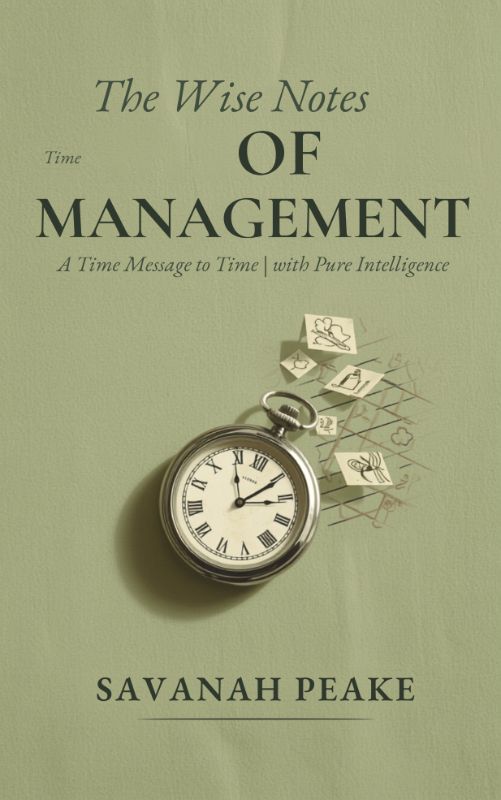
The Wise Notes of Time Management
Time is the silent architect of our lives, quietly shaping our days, our ambitions, and our destinies. It is the canvas on which we paint our achievements, the currency we exchange for memories, and the ever-flowing river that carries us from one moment to the next. Yet, for many, time management remains an elusive skill—a mysterious art practiced by the few, while the rest of us wrestle with overflowing calendars, missed deadlines, and a perpetual feeling of being just a step behind. The Wise Notes of Time Management was born from this universal struggle. It is not merely a book of tips and tricks, nor a dry collection of productivity hacks, but a deeply considered guide for transforming your relationship with time itself. Whether you are a student balancing academic demands, a professional scaling the heights of your career, an entrepreneur juggling innovation and execution, or someone simply striving to find more peace and fulfillment, this book is your companion on the journey toward mastery over your most precious, non-renewable resource. The Universal Challenge of Time Across cultures and generations, time has always been a paradox—abundant and yet scarce, equally distributed and yet differently valued. Every person on the planet receives the same twenty-four hours each day, but the outcomes of those hours could not be more diverse. Some seem to command time with effortless grace, packing their days with meaningful achievements and still finding space for rest and relationships. Others, despite frenzied effort, feel as if the day slips through their fingers like grains of sand. This sense of scarcity is not merely a modern phenomenon. Ancient philosophers, from Seneca to Confucius, grappled with the fleeting nature of life. In our digital age, however, the pace has accelerated. Information overload, constant connectivity, and the blurring of work-life boundaries have made it more challenging than ever to manage our time with intention and clarity. Why Time Management Matters At its core, time management is not simply about squeezing more tasks into a day or achieving an artificial sense of productivity. It is about aligning your actions with your values. It is about making conscious choices that reflect who you want to be and what you wish to contribute to the world. Poor time management does not just lead to missed appointments—it can erode self-confidence, strain relationships, and sap the joy from our pursuits. Conversely, wise time management can be a transformative force. It enables us to: Prioritize what truly matters Reduce stress and improve well-being Enhance our capacity for creativity and innovation Build enduring habits that compound over time Achieve ambitious goals while maintaining balance This is not a call to relentless hustle, but an invitation to intentional living. The Myths and Realities of Time Before we embark on this journey, it is important to dispel some persistent myths about time management: Myth 1: Time Management Is About Doing MoreIn reality, it is about doing what matters most. Productivity for its own sake can lead to burnout; effectiveness is about impact, not just volume. Myth 2: Great Time Managers Are Born, Not MadeWhile some may have a natural inclination for organization, the skills of wise time management are learnable, adaptable, and can be refined at any stage of life. Myth 3: Tools and Apps Solve EverythingTechnology can aid us, but no tool can substitute for self-awareness and discipline. The greatest breakthroughs in time management are often internal, not external. Myth 4: There Is a Perfect SystemLife is dynamic. What works for you today may not work tomorrow. Flexibility and self-reflection are as important as structure. Recognizing these truths frees us to approach time management as a living practice—one that evolves with our circumstances, aspirations, and even setbacks. The Structure and Purpose of This Book The Wise Notes of Time Management has been structured to guide you from foundational principles to advanced strategies, ensuring both breadth and depth in your mastery of time. Each chapter builds upon the previous, introducing new concepts while reinforcing critical skills. You will find practical techniques, case studies, and real-world examples that illustrate both success and failure. At the end of each chapter, exercises and reflection prompts will help you apply the lessons to your own life and context. This is a book for active engagement. If you approach these pages as a living workshop—a place to experiment, question, and integrate—you will see the greatest transformation. The Journey Ahead As we set out, I invite you to consider your own relationship with time. What are your biggest challenges? Where do you feel most in control, and where do you feel adrift? How might your life change if you truly mastered the art of time management? You may be motivated by professional advancement, personal growth, or a desire for deeper meaning. Perhaps you are overwhelmed by obligations, or simply curious about how to reclaim your days from distraction. Whatever your starting point, remember: You are not powerless in the face of time.You are its steward, its artist, and its author. The chapters that follow are organized to provide a comprehensive exploration: Defining Your Priorities: Understanding what matters most, and how to align your calendar with your core values. Building Effective Habits: The science and psychology behind habit formation, and how to leverage routines for sustained progress. Goal Setting and Planning: Setting clear, actionable goals, and breaking them into manageable steps. Overcoming Procrastination: Exploring the root causes of delay, and practical tools for moving from intention to action. Managing Distractions: Navigating the challenges of a hyper-connected world, and cultivating focus in the face of interruption. Time Blocking and Scheduling: Advanced techniques for structuring your day, week, and month for optimal flow. Prioritization Frameworks: Tools like the Eisenhower Matrix and the Pareto Principle to ensure your efforts yield maximum impact. Work-Life Harmony: Strategies for balancing ambition with rest, relationships, and personal well-being. Delegation and Saying No: Learning when and how to entrust tasks to others, and the art of setting boundaries. Review and Reflection: Making time for regular self-assessment, learning from experience, and adjusting course. Mindfulness and Presence: Integrating awareness and intentionality into your daily rhythms. Technology and Tools: How to choose and use digital aids without becoming a slave to them. Resilience and Recovery: Navigating setbacks, crises, and unexpected changes with grace. Mastering Meetings and Communication: Making collaborative time more productive and meaningful. Sustaining Momentum: Preventing burnout, staying inspired, and cultivating lifelong habits of wise time management. Each of these topics will be explored in depth, with a focus on real-world application and long-term sustainability. You will be encouraged to adapt the principles to your own unique context, rather than force-fitting yourself into a rigid mold. A Note on Progress and Perfection As you embark on this journey, it is essential to embrace the process. Time management is not about perfection, but about progress. You will encounter setbacks and discover unexpected strengths. Some strategies will resonate deeply, while others may require adaptation. The goal is not to become a flawless automaton, but a more intentional, fulfilled human being. Remember, even the wisest notes require practice and refinement before they become music. In the symphony of time, you are both the composer and the conductor. Your Commitment To gain the most from The Wise Notes of Time Management, I invite you to make a commitment—to yourself and to this process. Read actively. Reflect honestly. Experiment boldly. Return to these pages whenever you need guidance or inspiration. Let’s begin this journey together, transforming time from a source of stress into a wellspring of possibility. Reflective Exercise: Where Are You Now? Before you turn the page, take a few moments to reflect on the following questions. Write your answers in a notebook or journal: What are your current challenges with time management? When do you feel most productive and fulfilled? What would you do with an extra hour each day? How do you currently measure success in your use of time? What is one thing you would like to change about your relationship with time? Keep your responses nearby as you move through this book. They will serve as touchstones, reminders of your starting point and your aspirations. Time, once spent, cannot be reclaimed. But every moment presents a new opportunity—to choose, to act, and to live with intention. Welcome to The Wise Notes of Time Management. Your journey toward mastery begins now.
Savanah Peake
$60.00
The Wise Lessons of Personal Growth
Personal growth stands as one of humanity’s most profound pursuits—a lifelong expedition that transcends the boundaries of culture, era, and circumstance. Yet, while the concept of personal growth is universally acknowledged, its application is as diverse as the individuals who seek it. As we embark on the journey through this book, The Wise Lessons of Personal Growth, it is vital to frame our exploration within a context that honors both the science and art of evolving as a human being. The Essence of Personal Growth At its core, personal growth is the continuous process of understanding and developing oneself to achieve one’s fullest potential. It involves the expansion of self-awareness, the refinement of character, the pursuit of knowledge, the cultivation of resilience, and the transformation of dreams into actionable realities. This growth does not manifest overnight; instead, it is the cumulative result of choices, experiences, and reflections over time. Personal growth is not a luxury reserved for the privileged or the gifted. It is a universal right and a responsibility—a call for each individual to honor their unique capabilities while contributing meaningfully to the world around them. This book is not about perfection but rather about progress; not about competition with others, but about cooperation with oneself. The Roadmap to Wisdom Why “wise” lessons? Because wisdom is the integration of knowledge, experience, and good judgment. Wisdom allows us to discern which lessons serve us in the current moment, which patterns require change, and which truths are timeless. The wise lessons you will discover in these pages are not theoretical; they are lived, tested, and refined through the stories of people who have navigated adversity, seized opportunity, and blossomed through intentional action. Over the next several chapters, we will unravel the multidimensional aspects of personal growth. This journey will take us through the landscapes of mindset, emotional intelligence, resilience, goal-setting, relationships, creativity, purpose, and beyond. Each chapter stands as a guidepost, offering insights, stories, actionable strategies, and exercises to translate these lessons into your daily existence. The Universal Human Quest Every person, regardless of age or background, is on a quest to understand themselves and their place in the world. This quest may be conscious or unconscious, but it is ever-present. The urge to grow is woven into our DNA. From the moment we are born, we are propelled by the desire to learn, adapt, create, and overcome. As children, we ask questions with innocent curiosity; as adults, we seek meaning, fulfillment, and legacy. Yet, life is rarely straightforward. We encounter setbacks, disappointments, and suffering. We face moments of self-doubt, stagnation, and fear. Personal growth is not the absence of these challenges, but rather the willingness to face them with courage and openness. True growth requires us to navigate discomfort, confront limiting beliefs, and embrace the unknown. In doing so, we discover possibilities within ourselves that once seemed impossible. Tip: Begin this journey with compassion for yourself. Growth is not linear, and setbacks are part of the process. Celebrate small victories and learn from every experience—especially the difficult ones. The Science Behind Growth While the pursuit of growth is ancient, contemporary research in psychology, neuroscience, and behavioral science has illuminated many of the mechanisms underlying personal development. Concepts like neuroplasticity—the brain’s ability to reorganize and adapt—demonstrate that growth is possible at any stage of life. Studies in positive psychology reveal that cultivating gratitude, optimism, and purpose can significantly enhance well-being and resilience. Moreover, researchers have identified the importance of a growth mindset—the belief that abilities can be developed through dedication and effort. This mindset, popularized by psychologist Carol Dweck, is a recurring theme throughout this book. A growth mindset fosters persistence, encourages learning from failure, and builds the foundation for lifelong self-improvement. The Role of Reflection One of the most powerful tools for personal growth is reflection. Taking time to examine our thoughts, feelings, and actions allows us to gain insight into our patterns, motivations, and aspirations. Reflection transforms experiences into wisdom; it helps us identify what is working, what needs to change, and where our opportunities lie. Throughout this book, you will encounter reflection prompts and exercises. Engage with them honestly and thoughtfully. The act of writing, meditating, or discussing your insights with a trusted friend can deepen your understanding and accelerate your growth. Stories as Mirrors Humans are, at heart, storytellers. We make sense of our lives through the narratives we create and share. In these pages, you will find stories from various walks of life—individuals who have faced adversity, embraced transformation, and forged their own paths. Their journeys serve as mirrors, reflecting both the struggles and triumphs that define the human experience. These stories are not meant to be prescriptive, but rather illustrative. They remind us that growth is not reserved for the exceptional, but attainable by anyone willing to embark on the journey. As you read, consider how these lessons resonate with your own life. Where do you see yourself in these narratives? What chapters of your story are waiting to be written? The Structure of This Book To facilitate your journey, this book is organized into distinct chapters, each focusing on a core aspect of personal growth. You will encounter: Foundational Mindsets: Exploring the beliefs and attitudes that shape our potential. Emotional Mastery: Understanding and harnessing the power of emotions. Resilience and Adaptability: Building the capacity to thrive amid change and adversity. Purpose and Values: Discovering what truly matters and aligning actions with meaning. Goal-Setting and Achievement: Turning aspirations into reality through effective planning. Relationships and Communication: Nurturing connections that support growth. Creativity and Innovation: Tapping into the wellspring of imagination and problem-solving. Health and Well-Being: Recognizing the interconnectedness of body, mind, and spirit. Financial Wisdom: Approaching abundance and security with intention. Contribution and Legacy: Considering how growth extends beyond the self. Each chapter weaves together theory, practical advice, examples, and exercises, offering a comprehensive toolkit for sustained transformation. Your Role as the Reader This book is not a passive read—it is an invitation to participate. To extract the greatest value from these pages, I encourage you to: Engage actively: Take notes, highlight passages, and revisit chapters as needed. Apply what you learn: Experiment with the strategies and exercises suggested. Reflect regularly: Pause to consider how each lesson applies to your unique circumstances. Share your journey: Discuss insights with friends, mentors, or communities that support growth. Personal growth flourishes in environments of curiosity, openness, and support. While the path is ultimately yours to walk, you are not alone. Countless others have faced similar challenges, asked similar questions, and celebrated similar victories. The Courage to Begin The wise lessons of personal growth require courage—the courage to begin, to persist, and to evolve. Growth demands honesty, humility, and a willingness to confront both strengths and weaknesses. It is a journey of becoming, not arriving; of unfolding, not finishing. As you turn the page to the first chapter, remember: the journey of personal growth is not measured by the distance traveled, but by the depth of transformation experienced along the way. Each step, however small, brings you closer to the person you are meant to become. This book is your companion and guide, offering tools, insights, and encouragement. The real author of your growth story, however, is you. Reminder: Growth is not about achieving an ideal; it is about honoring your authentic self and embracing the process of becoming. Let us embark together on the wise lessons of personal growth.
Savanah Peake
$50.00
The Wise Lessons of Home Organization
The Meaningful Journey of Home Organization Home is more than just a structure of walls and a roof—it is the living, breathing center of our lives. It is where we experience the fullness of our existence: joy and sorrow, growth and rest, connection and solitude. Yet, for many, the home can also become a source of stress and frustration, cluttered with items and weighed down by disorder. In today’s fast-paced world, the challenge of maintaining a well-organized, harmonious living space has never been greater—or more important. Home organization is often misunderstood as a purely practical or aesthetic endeavor, the domain of neat freaks or interior designers. In truth, it is a profound act of self-care and intentional living. The process is not about perfection or rigid minimalism but about creating a space that supports our values, nurtures our well-being, and reflects our deepest aspirations. This book, The Wise Lessons of Home Organization, aims to guide you through a transformative journey—one that goes far beyond tidying up physical spaces to embrace the emotional, psychological, and even spiritual dimensions of organizing your home. Why Home Organization Matters Consider for a moment how your environment shapes your daily experience. The objects you see when you wake, the ease with which you find your keys or favorite mug, the atmosphere when guests arrive—these seemingly small details exert a powerful influence on your mood, productivity, relationships, and health. Scientific research has shown that cluttered environments can increase stress, sap mental energy, and even impair decision-making. Conversely, a thoughtfully organized space fosters clarity, confidence, and creativity. But there is more at stake than just convenience or aesthetics. Home organization is about stewardship—taking responsibility for the possessions we accumulate, the energy we emit, and the legacy we leave behind. It is about honoring our needs and those of our loved ones, cultivating gratitude for what we own, and letting go of what no longer serves us. The Philosophy Behind Order At the heart of organizing lies a simple, powerful principle: every item should have a purpose and a place. This philosophy, rooted in traditions as diverse as Zen Buddhism, Scandinavian design, and American pragmatism, invites us to examine not only what we own but why we own it. What stories do our possessions tell? What hopes, fears, or memories do they hold? By engaging deeply with these questions, we can make conscious choices about what to keep, what to release, and how to arrange our homes to support our intentions. This book does not preach a one-size-fits-all solution. Instead, it offers flexible frameworks and timeless wisdom that can be adapted to your unique circumstances. Whether you live in a sprawling suburban home or a cozy urban apartment, whether you are single or managing a bustling family, you will find strategies and insights here to guide your personal journey toward order and harmony. What You Will Learn The Wise Lessons of Home Organization is structured to take you step by step through every aspect of creating and maintaining an organized home. Each chapter delves into a core theme, combining practical techniques with thoughtful reflection, real-life case studies, and actionable exercises. Here is a glimpse of what awaits you: Understanding the roots of clutter and how to overcome emotional barriers to letting go Mastering the fundamentals of sorting, categorizing, and storing every type of item Designing each room for maximum functionality, beauty, and comfort Building daily, weekly, and seasonal routines that keep your home effortlessly in order Navigating the challenges of shared spaces, children’s belongings, and sentimental objects Embracing sustainability and mindful consumption in your organizing practice Developing habits and mindsets that support lifelong order and peace Throughout, you will encounter stories of transformation, time-tested checklists, troubleshooting advice, and creative inspiration to keep you motivated and empowered. The Transformative Power of Organization Organizing your home is not just about putting things away. It is about creating a sanctuary—a place where you can rest, recharge, and thrive. When you reclaim order from chaos, you reclaim agency over your environment and your life. You make room for new experiences, deeper connections, and personal growth. Imagine, for a moment, waking up to a bedroom free of distractions, where everything you need is at your fingertips. Picture a kitchen where preparing a meal is a joyful act, not a frantic search for utensils. Envision a living room that invites relaxation, conversation, and creativity. These are not unattainable dreams, but tangible outcomes of wise, intentional organization. Tip: As you begin this journey, keep a journal to capture your thoughts, feelings, and discoveries. The process of organizing is as much about inner clarity as it is about outward order. Addressing Common Myths Before we embark, it is essential to dispel some persistent myths about home organization: Myth 1: Only naturally tidy people can be organized.Organization is a learned skill, not an inborn trait. Anyone can cultivate order with the right mindset and methods. Myth 2: Organization means getting rid of everything.True organization is about discernment, not deprivation. It is about keeping what matters and arranging it with intention. Myth 3: Organizing takes too much time.While initial efforts may require investment, the rewards are exponential. A well-organized home saves time, reduces stress, and enhances enjoyment every single day. Myth 4: I have to do it all at once.Organization is a journey, not a sprint. Small, consistent actions yield lasting change. The Emotional Landscape of Home Our homes are repositories of memory and meaning. Sorting through belongings can unearth long-forgotten joys, unresolved griefs, and surprising insights. It is natural to encounter resistance, nostalgia, or even guilt as you make decisions about what to keep and what to let go. This book offers compassionate guidance for navigating these emotional currents, ensuring that your journey is both effective and healing. A Call to Mindful Action The most successful organizing journeys are grounded in mindfulness. Before you pick up a single box or bin, take a moment to reflect on your goals. What do you hope to feel in your home? What activities do you want your space to support? What values do you want your environment to embody? By anchoring your actions in a clear vision, you empower yourself to make choices that are aligned, sustainable, and meaningful. Reminder: Begin with the end in mind. Write down your vision for your ideal home and refer to it often as you work through this book. How to Use This Book Each chapter of The Wise Lessons of Home Organization stands alone, but together they form a comprehensive roadmap. You may choose to read from start to finish or dip into the sections that speak most directly to your current needs. Throughout, you will find: Step-by-step instructions for tackling every area of the home Worksheets and checklists to guide your progress Personal stories that illustrate challenges and triumphs Expert advice on overcoming obstacles and staying motivated Reflective exercises to deepen your understanding and commitment I encourage you to move at your own pace, celebrating every victory—no matter how small. Organization is not a destination but a way of living, an ongoing practice that evolves as you do. Your Invitation As you turn the page and begin this journey, know that you are not alone. Countless others have walked this path, transforming not just their homes but their lives. With patience, curiosity, and courage, you can too. This book is your companion, your guide, and your cheerleader. Welcome to The Wise Lessons of Home Organization. May it inspire you to create a home that is not only orderly, but also joyful, nurturing, and truly your own. Let us begin.
Savanah Peake
$60.00
The Wise Handbook of Resilience
Resilience is a word that resonates deeply in the collective consciousness of humanity, yet it is more than just a buzzword or a fleeting concept. It is the bedrock of personal growth, the engine of societal progress, and the invisible scaffolding that supports us as we weather the inevitable storms of life. In an era marked by relentless change, unforeseen challenges, and growing complexity, the capacity to endure, adapt, and ultimately thrive in the face of adversity is not just a desirable trait; it is essential. Welcome to The Wise Handbook of Resilience, a comprehensive exploration of what it truly means to be resilient—a guide not only to surviving the slings and arrows of fate but also to converting hardship into wisdom and setbacks into stepping stones. This handbook is designed for anyone who aspires to cultivate resilience, whether you are facing personal hardship, professional obstacles, or simply wish to fortify yourself against the uncertainties ahead. The Essence of Resilience At its core, resilience is the ability to recover from difficulties, adapt to change, and keep moving forward in the face of setbacks. It is not merely about enduring hardship; it is about responding to adversity in ways that foster growth, learning, and strength. Resilience is dynamic—a process that involves thoughts, behaviors, and actions that can be learned, developed, and reinforced over time. Many people mistakenly believe that resilience is an inherent trait, something you are either born with or without. This could not be further from the truth. While genetics and early life experiences can play a role, resilience is largely shaped by choices, habits, and mindsets that anyone can develop. Through intentional practice and self-awareness, it is possible to build an inner reservoir of strength that enables you to respond constructively to whatever life throws your way. Why Resilience Matters Why focus on resilience now? The answer lies in the world around us. We are living in a time of rapid technological advancement, social upheaval, and economic uncertainty. The ways in which we work, connect, and navigate our lives are constantly shifting. Natural disasters, political unrest, pandemics, and personal crises remind us with increasing frequency that stability is often an illusion. However, with challenge comes opportunity. Those who are resilient are better equipped to harness change rather than be overwhelmed by it. They are able to see possibilities where others see only obstacles, find meaning in suffering, and emerge from periods of turmoil not weakened, but strengthened. “The oak fought the wind and was broken, the willow bent when it must and survived.”— Robert Jordan This handbook aims to empower you to be more like the willow—flexible yet unbreakable, able to bend without losing your core integrity. The Structure of This Book The Wise Handbook of Resilience is meticulously structured to guide you on a comprehensive journey through every facet of resilience. The book begins with an examination of the foundational principles—what resilience is, how it is formed, and why it matters. Each subsequent chapter delves deeper into the practicalities, exploring the psychological, emotional, physical, and social dimensions of resilience. You will encounter real-world case studies, evidence-based techniques, and exercises designed to help you internalize key concepts. Along the way, you will learn to identify common pitfalls, avoid self-sabotage, and cultivate habits that reinforce your capacity to endure and flourish. This book is not merely academic or theoretical; it is intensely practical. Whether you are a student, a professional, a parent, or someone seeking personal transformation, you will find tools and insights here that are immediately applicable to your unique circumstances. The Science and Spirit of Resilience Modern research in psychology, neuroscience, and behavioral science has vastly expanded our understanding of resilience. We now know that resilience is closely linked to neuroplasticity—the brain’s remarkable ability to reorganize itself in response to experience. Habits such as mindfulness, reframing negative thoughts, and nurturing social connections can literally reshape our brains and transform our responses to adversity. Yet resilience is not only a matter of science; it is also a matter of spirit. Across cultures and throughout history, stories of resilience have inspired and uplifted us. From the quiet courage of individuals enduring personal loss to the collective resilience of communities rebuilding after disaster, the human capacity for recovery is awe-inspiring. In this handbook, you will find a blend of scientific rigor and timeless wisdom, drawing from both contemporary research and the accumulated knowledge of philosophers, spiritual teachers, and survivors throughout the ages. The Journey Ahead As you embark on this journey, it is vital to recognize that resilience is not about denying or suppressing pain. It is not a call to “tough it out” or pretend that everything is fine. True resilience acknowledges suffering, confronts it honestly, and seeks to learn from it. It is about developing an inner compass that helps you navigate through darkness with courage and hope. Throughout this book, you will be encouraged to reflect deeply on your own life and experiences. You will be invited to challenge limiting beliefs, practice new skills, and step outside your comfort zone. The aim is not to prescribe a one-size-fits-all formula, but to equip you with a diverse toolkit that you can adapt to your own needs. Who This Book Is For This handbook is for anyone who wishes to live with greater strength, grace, and fulfillment. It is for those who have faced hardship and want to find meaning in their struggles, as well as for those who wish to prepare for future challenges. It is for leaders seeking to inspire resilience in others, and for individuals seeking to transform themselves. If you are grappling with personal loss or trauma, you will find validation, guidance, and hope. If you are navigating career transitions, relationship difficulties, or health challenges, you will discover strategies to adapt and persevere. If you are seeking to build resilience within your family, team, or community, you will learn principles that foster collective strength. Key Themes and Promises By reading The Wise Handbook of Resilience, you will: Understand the foundations of resilience across psychological, emotional, physical, and social spheres. Learn practical tools for managing stress, reframing negative experiences, and cultivating optimism. Discover stories of resilience that illuminate the path from adversity to triumph. Engage in exercises that strengthen your resilience and deepen your self-awareness. Recognize common obstacles to resilience and learn how to overcome them. Develop a personalized action plan to integrate resilience into every aspect of your life. “Resilience is not about avoiding the fall, but about rising again and again—each time a little stronger, a little wiser, a little more whole.” The Invitation Resilience is not a destination; it is a lifelong journey. There will be setbacks, detours, and moments of doubt. Yet with each challenge, you have the opportunity to build strength, renew your sense of purpose, and discover capacities within yourself that you never knew existed. As you turn the pages of this handbook, I invite you to approach the material with curiosity, openness, and self-compassion. Allow yourself to be both a student and a teacher—learning from the wisdom of others while also reflecting on your own experiences. Remember, you are not alone on this journey. Every human being, at some point in their life, faces adversity. What distinguishes those who flourish from those who are defeated is not the absence of hardship, but the presence of resilience. May this handbook serve as your companion, your guide, and your source of inspiration as you cultivate the wisdom and strength to thrive—no matter what life brings. Looking Forward In the chapters that follow, we will explore resilience from every angle—its origins, its manifestations, its challenges, and its rewards. You will gain tools, insights, and encouragement to help you become not just a survivor, but a wise and resilient architect of your own destiny. Let us begin.
Savanah Peake
$50.00

The Steady Year of Resilience
Resilience is not merely a trait that some are born with and others are not; it is a complex, adaptive process that weaves itself into every human life. In the tapestry of existence, punctuated by both triumph and hardship, resilience is the golden thread that binds us, helps us endure, and ultimately enables us to thrive. The Steady Year of Resilience is not just a guidebook for surviving adversity; it is a comprehensive exploration of how individuals, communities, and organizations can build, sustain, and expand their capacity for resilience across a full calendar year—day by day, season by season. Why Resilience Matters To understand why resilience deserves such focus, we must first acknowledge the inevitability of challenge. No life is untouched by difficulty, whether it takes the form of personal loss, professional setbacks, health crises, or global upheaval. History is replete with examples of both individuals and societies who have weathered storms, sometimes coming through battered but unbroken, other times emerging stronger and more unified. The difference between those who are able to recover, adapt, and grow, and those who are left diminished, often lies in the presence and strength of resilience. Resilience is commonly defined as the ability to bounce back from setbacks, but this definition barely scratches the surface. True resilience encompasses not only recovery but also the capacity to learn, adapt, and even transform in the face of adversity. It is not a single act or choice, but a sustained commitment—a journey that unfolds over time. In this book, we will follow that journey over the course of a year, examining how resilience can be cultivated and reinforced through intentional practice, reflection, and connection. The Structure of This Book The Steady Year of Resilience is organized to mirror the progression of a year, each chapter corresponding to a foundational aspect or stage of resilience. From understanding the psychological and physiological underpinnings of the concept, to actionable strategies for building mental toughness, emotional agility, and adaptive capacity, this book is designed to be both a resource and a companion. The chapters delve deeply into the science and art of resilience, offering: In-depth explanations of core resilience concepts Real-world examples and case studies Practical exercises and reflection prompts Common pitfalls and strategies for overcoming them Opportunities for growth at the individual, community, and organizational level This structure ensures that each topic is explored with sufficient depth, allowing you not only to understand resilience but to embody and enact it in your daily life. The Foundations of Resilience Before we embark on this year-long exploration, it is vital to clarify what resilience truly is—and what it is not. Many misconceptions persist. Resilience is not stoicism, nor is it the simple act of gritting one’s teeth and enduring hardship without complaint. It is not about denying pain, suppressing emotion, or pretending that everything is fine when it isn’t. Rather, resilience is an active process of engaging with reality, acknowledging pain and difficulty, and choosing to move forward with intention and hope. Resilient individuals are not impervious to stress or immune to suffering. In fact, they often feel pain and loss acutely. What sets them apart is their willingness to confront these experiences honestly, to seek meaning within them, and to take steps—however small—toward healing and growth. Researchers have identified several key components of resilience, including: Self-awareness: Understanding one's emotions, triggers, and responses. Self-regulation: The ability to manage thoughts, emotions, and behaviors in challenging situations. Optimism: Maintaining hope and a positive outlook, even in adversity. Mental flexibility: The capacity to adapt to change, reframe negative thoughts, and find new solutions. Social support: Building and maintaining strong, nurturing relationships. Purpose: Connecting with values, meaning, and goals that sustain motivation. Throughout this book, we will explore each of these components in detail, examining how they interact and reinforce one another. The Year as a Metaphor and a Framework The decision to structure The Steady Year of Resilience around the course of a year is both symbolic and practical. Just as the seasons change—bringing with them cycles of growth, harvest, decline, and renewal—so too does the human experience ebb and flow. We encounter periods of abundance and scarcity, joy and sorrow, certainty and confusion. By mapping resilience practices onto the rhythm of a year, we create a framework that is both familiar and flexible, allowing for the ongoing, iterative work that true resilience requires. Each chapter corresponds to a distinct “season” or phase of resilience building. In the early chapters, we focus on laying the groundwork: understanding ourselves, identifying our strengths and vulnerabilities, and setting intentions. As the book progresses, we turn to active cultivation: developing skills for managing stress, building supportive networks, and confronting adversity directly. Later chapters address integration and transformation: learning from experience, finding meaning in hardship, and sustaining resilience over the long term. The Human Face of Resilience While this book is grounded in research and theory, it is also informed by the lived experiences of real people. Throughout these pages, you will encounter stories—some drawn from history, others from contemporary life—that illustrate the many faces of resilience. Whether it is the athlete recovering from injury, the entrepreneur rebounding from failure, the community rebuilding after disaster, or the individual navigating personal loss, these narratives highlight the universality of struggle and the remarkable capacity of the human spirit to adapt and overcome. Resilience is not a destination, but a journey. It is a process of becoming, of evolving in response to both the joys and the sorrows of life. Your Role in This Journey As the reader, you are not a passive consumer of information, but an active participant in the process of building and sustaining resilience. Each chapter provides not only knowledge but also practical tools and exercises designed to help you reflect, apply, and grow. You are encouraged to keep a journal, to engage in self-assessment, and to try out new practices. Some exercises may feel challenging or unfamiliar at first; this is a natural part of the process. Growth, after all, often occurs at the edge of our comfort zones. Throughout your journey, remember that resilience is not about perfection. It is not about never faltering or failing. Rather, it is about showing up, again and again, with curiosity, compassion, and courage. It is about learning from experience and making the choice to keep moving forward, even when the path is uncertain. The Broader Impact of Resilience While much of this book focuses on individual growth, it is important to recognize that resilience is also a collective phenomenon. Families, teams, organizations, and entire communities can cultivate resilience, often with profound effects. The ability to adapt, recover, and thrive in the face of adversity is not only a personal asset but a societal imperative. In an era marked by rapid change, uncertainty, and complexity, resilience is more important than ever. By investing in your own resilience, you also contribute to the resilience of those around you. Whether you are a leader, a caregiver, a friend, or a colleague, your ability to remain grounded and adaptive can serve as a source of strength and inspiration to others. A Call to Action As you begin this journey, take a moment to reflect on your own experiences with resilience. Consider the challenges you have faced, the strengths you have discovered, and the growth you have achieved. Acknowledge the areas in which you would like to develop further. Set an intention for the year ahead—not just to survive, but to thrive, to find meaning and purpose even in the midst of difficulty. The Steady Year of Resilience is more than a book; it is an invitation—to reflection, to action, to transformation. By engaging deeply with each chapter, by committing to the practices and exercises, and by remaining open to growth, you can cultivate a resilience that is not only steady but enduring. How to Use This Book You may choose to read this book straight through, or to focus on particular chapters that resonate with your current needs. Each chapter stands alone, but together they form a comprehensive guide to the art and science of resilience. At the end of each chapter, you will find exercises and prompts designed to help you integrate the material into your life. Be patient with yourself. Building resilience is a process, not a quick fix. Some changes will come quickly; others will unfold over time. Celebrate your progress, however incremental, and remember that every step forward is a victory. Looking Ahead In the chapters that follow, we will explore the roots of resilience, dig into the psychological and physiological mechanisms at play, and learn practical strategies for developing strength, flexibility, and hope. We will examine the role of mindset, the power of community, and the importance of meaning and purpose. We will confront the obstacles that can undermine resilience and develop tools for overcoming them. Above all, we will embrace the truth that resilience is not a luxury reserved for the few, but a birthright available to all. With intention, practice, and support, you can build a resilience that will carry you through not only the challenges of the coming year, but the challenges of a lifetime. Welcome to your steady year of resilience. The journey begins now.
Savanah Peake
$60.00

The Steady Year of Confidence
Confidence is a word that carries immense power, yet it often feels elusive, as if it’s reserved for those born with a certain sparkle or charisma. For many, confidence appears to be a fleeting feeling—a burst of courage before a big speech, a moment of clarity in a sea of self-doubt, or a surge of certainty when everything aligns just so. Yet, what if confidence was not a momentary phenomenon but a steady presence? What if, instead of chasing peaks of self-assurance, we could cultivate a year-long, unwavering sense of confidence that endures through life’s inevitable highs and lows? Welcome to The Steady Year of Confidence, a book dedicated to reshaping how you perceive and nurture confidence. Whether you are an executive navigating corporate challenges, a student seeking your footing, a parent striving to guide your children, or simply someone longing to feel more secure in your own skin, this book is crafted for you. Confidence is not a gift bestowed upon a lucky few. It is a skill—an intricate blend of mindset, habits, understanding, and resilience. It can be learned, strengthened, and, most importantly, maintained. The Myth of Instant Confidence Before embarking on this journey, it is vital to dispel a pervasive myth: confidence is not instant. The media is saturated with stories of overnight success and transformation, yet the reality is much more nuanced. Confidence built on shaky foundations crumbles quickly under pressure. Real, lasting confidence is constructed brick by brick, layer by layer. It arises not from grand gestures but from daily, deliberate actions and self-reflection. The narrative of “fake it till you make it” has its place, especially as a short-term coping mechanism. However, sustained confidence demands authenticity. It emerges when you align your actions with your values and accept yourself—flaws and all. This book will challenge you to move beyond pretending and help you nurture a confidence that is both genuine and enduring. Why a "Steady Year"? Traditional self-help books often promise dramatic change in a matter of weeks or even days. While these claims are alluring, they rarely deliver lasting results. The steady year approach is different. It is rooted in the understanding that meaningful transformation takes time. A year is both a symbolic and practical period. It allows for the development of habits, the formation of new neural pathways, and the deep internalization of lessons learned. A year also encompasses a full cycle of seasons, holidays, and life events. You will inevitably face challenges, setbacks, and unexpected changes—this is not just likely, but necessary for growth. The steady year is about building a foundation that can withstand these fluctuations. It is about developing a resilient, adaptable confidence that persists through both triumph and trial. The Science of Confidence To truly grasp what confidence is, we must delve into its psychological and physiological roots. Confidence is not just a feeling; it is a cognitive state that influences how you interpret the world and your place within it. Neuroscientific research shows that confidence is linked to structures in the brain, such as the prefrontal cortex, which governs decision-making and self-regulation. When you feel confident, your brain chemistry shifts—dopamine and serotonin levels rise, making you feel more optimistic and motivated. Psychologists define confidence as the belief in one’s ability to succeed. But this belief is not static. It is shaped by experiences, feedback, and, crucially, your interpretation of those experiences. For example, two people might face the same setback. One views it as evidence of inadequacy, while the other sees it as a learning opportunity. The difference lies in their mindset—a concept we will explore in depth throughout this book. The Pillars of Steady Confidence Throughout the coming chapters, we will return often to the core pillars of steady confidence: Self-Awareness: Understanding your strengths, weaknesses, values, and triggers. Self-Compassion: Treating yourself with kindness, especially in moments of failure or doubt. Courageous Action: Taking risks and stepping outside your comfort zone, regardless of outcome. Resilience: Bouncing back from setbacks and using adversity as fuel for growth. Consistency: Building daily habits that reinforce your sense of self-efficacy. Each pillar will be unpacked, explored, and fortified with practical exercises and real-world examples. By the end of this journey, you will have developed a toolkit to maintain your confidence throughout the year, no matter what challenges arise. What This Book Provides The Steady Year of Confidence is not another “quick fix” manual. Instead, it is a companion for your journey. Each chapter is designed to guide you through a specific facet of confidence, offering: Deep explanations of psychological principles. Practical strategies for immediate and long-term growth. Realistic examples and case studies from diverse backgrounds. Exercises and reflections to personalize your progress. Pitfalls to avoid and ways to get back on track when you stumble. You will not find empty platitudes or unrealistic promises here. Instead, you will discover the why and the how behind confidence—so that you can apply these lessons to your own life with meaning and purpose. The Journey Ahead As you prepare to embark on this year of transformation, it is important to set the right expectations. There will be moments when progress feels slow or even nonexistent. This is normal. Growth is not linear; it ebbs and flows, much like the tides. The key is to remain patient, to trust the process, and to celebrate small victories along the way. Keep in mind that confidence is not about becoming perfect or invulnerable. It is about embracing your humanity, imperfections and all. It is about recognizing your worth, even when the world seems determined to undermine it. Above all, it is about showing up for yourself, day after day, with intention and courage. Your Role in This Process This book is a guide, but the real work lies with you. You are both the author and the protagonist of your confidence journey. The exercises, reflections, and strategies presented here will only bear fruit if you engage with them fully and honestly. There is no substitute for genuine effort and self-inquiry. Tip: Keep a dedicated journal for this journey. Use it to document insights, progress, challenges, and reflections. Over time, this journal will become a powerful reminder of how far you have come. A Glimpse of What’s to Come The chapters ahead will take you through a wide range of topics, including but not limited to: The roots of low self-confidence and how to address them. The role of body language and physical presence. Navigating social situations and overcoming fear of judgment. Building confidence in professional settings. The importance of boundaries and saying no. Handling criticism and setbacks with grace. The intersection of confidence and vulnerability. Creating lasting habits for steady confidence. Each topic has been carefully chosen to provide a holistic, comprehensive approach. Whether your goals are personal, professional, or a blend of both, you will find tools and insights tailored to your needs. A Commitment to Integrity In writing this book, my commitment is to provide you with evidence-based, compassionate, and actionable guidance. I draw upon years of experience as both a non-fiction author and a specialist in confidence-building, integrating research, anecdotes, and practical wisdom. My hope is that you will feel seen, understood, and, above all, empowered to take the next step forward—no matter how small it may seem. Let’s Begin As you turn the page, take a deep breath and remember: confidence is not something you must find outside yourself. It is already within you, waiting to be uncovered, nurtured, and celebrated. This year is your opportunity to build a steady, unshakeable foundation—one that will carry you not just through the coming months, but for a lifetime. Let us begin The Steady Year of Confidence—together.
Savanah Peake
$50.00
The Steady Workbook of Personal Growth
Personal growth is the deliberate process of improving oneself—mentally, emotionally, and often spiritually—to live a more fulfilling and purpose-driven life. In a world that is constantly changing, where demands on our attention and energy are relentless, the pursuit of personal growth is both a challenge and an opportunity. This book, The Steady Workbook of Personal Growth, is designed to be your companion on this journey. It is not a quick-fix manual nor a collection of vague platitudes. Instead, it is a practical, evidence-informed, and deeply reflective guide for those ready to engage with their own potential fully. What Is Personal Growth? At its core, personal growth is the ongoing process of understanding and developing oneself in order to reach one’s fullest potential. It is more than just a buzzword—it is a lifelong commitment to becoming the best version of yourself, step by steady step. This process involves building new skills, expanding your knowledge, increasing your self-awareness, and improving your emotional intelligence. It asks you to face your fears, challenge your limiting beliefs, and cultivate habits that promote well-being and resilience. Personal growth is not linear. It is a journey marked by progress and setbacks, moments of clarity, and periods of confusion. The path will look different for everyone, but the principles of growth—commitment, reflection, learning, and action—are universal. Why Pursue Personal Growth? You may wonder: Why invest time and effort in personal growth? The reasons are as diverse as humanity itself, but certain themes recur: Fulfillment: Growth allows us to lead lives that feel meaningful and satisfying, aligned with our values and aspirations. Resilience: The more we understand ourselves and develop inner resources, the better equipped we are to handle life’s inevitable challenges. Relationships: Personal growth improves our ability to connect with others, communicate authentically, and build deeper relationships. Contribution: As we grow, we are able to give more—creatively, emotionally, and practically—to our communities and the world. Health and Well-being: Many aspects of personal growth, such as managing stress, cultivating gratitude, and developing healthy habits, directly contribute to physical and mental health. The Steady Approach: Why Slow and Consistent Wins The philosophy behind this workbook is rooted in the idea that steady, consistent effort outperforms bursts of motivation followed by stagnation. Rapid changes rarely last. Lasting transformation is built on the foundation of small, sustainable steps repeated over time. This approach is supported by a wealth of research in behavioral science, which demonstrates that habits formed gradually are more likely to stick and that self-compassion during setbacks leads to greater long-term success. Tip: Think of personal growth as tending to a garden. Seeds need time, care, and patience to grow into strong, healthy plants. The same is true for habits, skills, and self-understanding. How to Use This Workbook This book is divided into logical, progressive chapters, each focusing on a specific aspect of personal growth. Every chapter will provide: Deep Explanations: Thorough exploration of the core topic, referencing relevant research, theories, and historical perspectives. Practical Context: Real-life examples and case studies to illustrate how these concepts play out. Actionable Techniques: Concrete strategies and exercises you can apply immediately. Common Pitfalls: Warnings about typical mistakes and how to avoid them. Reflection Prompts and Exercises: Designed to reinforce learning and encourage personalized growth. You are encouraged to read at your own pace. Some chapters may resonate more deeply than others at different points in your life. Return to exercises and ideas as often as needed—growth is cyclical, not a one-time achievement. The Foundations of This Workbook This workbook draws from a variety of disciplines, including psychology, neuroscience, philosophy, and the wisdom of lived experience. It is grounded in several key principles: Self-Awareness: The foundation of all growth is the ability to observe oneself honestly, without excessive judgment or denial. Intentionality: Growth does not happen by accident; it requires conscious choices and actions aligned with clear values. Adaptability: The ability to learn, unlearn, and relearn is vital in a changing world. Compassion: True growth is kind, not harsh. It involves treating oneself—and others—with empathy, patience, and understanding. Accountability: Progress is best maintained when you track your actions, reflect on your results, and hold yourself gently accountable for your efforts. Setting Expectations: What This Book Is and Is Not It is important to clarify what you will and will not find in these pages. This is not a book of quick hacks or empty motivational slogans. There are no promises of overnight transformation or universal “secrets” to happiness. Instead, you will find: Evidence-based insights: Concepts and strategies that are supported by research and the experiences of real people. Practical exercises: Tools you can use immediately, tailored to different learning styles and needs. Guided reflections: Prompts to help you deepen your understanding and apply lessons to your own unique context. Support for setbacks: Strategies for handling obstacles and maintaining progress over the long term. Reminder: The most profound changes often come from the smallest shifts, compounded over time. Your Role in This Journey A workbook is different from a passive reading experience. Your active participation is crucial. Be honest with your reflections. Commit to trying the exercises, even (or especially) when they feel challenging. Allow yourself to move at your own pace, and remember that growth is intensely personal—comparison to others is often unhelpful. Consider keeping a dedicated notebook or journal as you move through the chapters. Write down your answers, insights, and questions. Over time, this record will become a powerful testament to your journey. The Benefits Awaiting You By engaging deeply with the material in this workbook, you can expect to: Gain greater clarity about your values, goals, and strengths. Develop a set of practical tools for managing emotions, overcoming obstacles, and building habits. Build deeper self-confidence and a sense of personal agency. Improve your relationships through better communication and empathy. Experience increased resilience, enabling you to navigate setbacks and uncertainty with greater ease. Cultivate a sense of meaning and purpose in everyday life. These benefits do not arrive all at once, nor do they manifest identically for everyone. The journey is uniquely yours. The Structure of the Book Here’s what you can expect as you move through the following chapters: Subsequent chapters will guide you through goal-setting, habit formation, emotional intelligence, resilience, communication skills, decision-making, gratitude, mindfulness, overcoming fear, and more. Each chapter builds on the last, yet can also stand alone, allowing you to focus on the areas most relevant to you at any moment. At the end of the book, you will find a comprehensive conclusion that ties together the lessons learned, with guidance for continuing your growth long after you finish these pages. An Invitation Personal growth is not a destination but an ever-evolving journey. By picking up this book, you have already taken a courageous first step. Allow yourself to be both the architect and the explorer of your life. Approach these chapters with curiosity, patience, and self-compassion. Remember: Progress is not measured by perfection but by persistence. Each small step, no matter how unremarkable it may seem, is a victory. You do not travel this road alone—countless others are walking their own paths, facing their own challenges, and celebrating their own wins. You are part of a vast community of seekers, learners, and growers. Reflection Prompt: Take a few minutes before you turn the page. In your notebook or journal, write down: Why are you drawn to personal growth at this moment in your life? What do you hope to gain from this journey? What would success look like for you, three months from now? Let’s begin the steady, meaningful, and rewarding journey of personal growth—one chapter at a time.
Savanah Peake
$60.00
The Steady Plan of Time Management
The Steady Plan of Time Management: Laying the Foundation Time is the great equalizer. Regardless of who we are, where we come from, or what we do, each of us is granted the same finite resource: twenty-four hours in a day. Yet, how we spend these hours determines the trajectory of our lives, shaping not only our productivity but our sense of fulfillment, well-being, and legacy. It is not the scarcity of time that defines us, but rather, the way we choose to manage it. This book, The Steady Plan of Time Management, is a comprehensive guide for those who seek to reclaim their hours, refocus their energy, and realize their potential through intentional, steady, and strategic action. In a world that seems to accelerate with every passing year, where distractions abound and demands multiply, mastering time management is more essential than ever. The modern individual faces a relentless barrage of emails, notifications, back-to-back meetings, and the persistent expectation to “do more with less.” The result is often a sense of overwhelm, burnout, and a nagging feeling that important goals are slipping further out of reach. This book is not another collection of quick fixes or productivity “hacks.” Instead, it is a steady plan—a deliberate, sustainable approach that recognizes the complexity of real lives and the necessity for methods that endure. The Myth of Busyness Too often, busyness is mistaken for productivity. We celebrate packed schedules, multitasking, and the ability to respond instantly to every request. But this culture of constant activity rarely leads to meaningful results. Instead, it fragments our attention, diminishes our creativity, and leaves us exhausted. The steady plan challenges this myth by shifting the focus from quantity to quality. It is not about filling every minute with tasks, but about selecting the right tasks and allocating time in a way that aligns with our deepest values and long-term objectives. Time management, in its truest form, is not the art of squeezing in more work. It is the discipline of making conscious choices, of saying “no” to the trivial so we can say “yes” to what truly matters. This requires clarity, courage, and the willingness to break free from ingrained habits that no longer serve us. Why a Steady Plan? The word “steady” is central to the philosophy of this book. In the context of time management, steady means consistent, reliable, and resilient. It stands in contrast to the cycle of frantic surges of activity followed by inevitable crashes. Many time management systems promise dramatic overnight changes, but few address the need for a sustainable rhythm—one that we can maintain through the ups and downs of life. A steady plan acknowledges that we are not machines. Our energy fluctuates, unforeseen events arise, and our goals may evolve. Rather than rigid schedules that crumble at the first sign of disruption, a steady plan offers flexible structure, guiding us to adapt while remaining anchored to our priorities. Throughout this book, you will discover tools and frameworks designed to foster this steadiness. You will learn how to establish routines that stick, set boundaries that protect your focus, and develop the mental resilience needed to weather challenges without losing momentum. The Three Pillars of Effective Time Management At the heart of the steady plan are three foundational pillars: Awareness, Intentionality, and Adaptation. Each pillar is essential for building a time management system that is both effective and enduring. Awareness: The journey begins with understanding how you currently spend your time. What are your patterns, habits, and default responses? Where does your time slip away unnoticed? Through honest self-reflection and practical exercises, you will gain clarity about your unique tendencies and the hidden obstacles that impede progress. Intentionality: With awareness comes the power to choose. Intentionality is about aligning your actions with your core values and most important goals. It involves setting clear priorities, making deliberate decisions, and resisting the urge to drift through the day on autopilot. Adaptation: Life is unpredictable. Even the best-laid plans encounter setbacks. Adaptation is the ability to adjust your strategies without losing sight of your vision. It means learning from experience, embracing flexibility, and continually refining your approach. Together, these pillars form the foundation of the steady plan. As you progress through the chapters, you will build upon each one, integrating them into a cohesive and personalized system. The Impact of Mastering Time Mastering time management is not merely about getting more done. It is about creating space—for meaningful work, for relationships, for rest, and for growth. When we manage our time well, we experience less stress and more satisfaction. We make progress on our most ambitious projects, while also preserving the freedom to enjoy the present moment. Effective time management also enhances our ability to lead and collaborate. In professional settings, those who manage their time with wisdom are better equipped to meet deadlines, drive innovation, and support their teams. In our personal lives, time mastery allows us to be more present with loved ones, to nurture our health, and to pursue passions outside of work. Perhaps most importantly, time management is a path to greater self-respect. When we honor our commitments to ourselves—when we follow through on what truly matters—we build confidence and trust in our own abilities. What to Expect from This Book The Steady Plan of Time Management is designed as a practical guidebook. Each chapter explores a specific aspect of time management in depth, offering a blend of research, real-life examples, actionable strategies, and exercises. You will find: Detailed frameworks for analyzing and improving your daily routines Case studies from a variety of fields, illustrating how individuals and organizations have transformed their use of time Practical tools such as templates, checklists, and worksheets to help you implement what you learn Common pitfalls to avoid, ensuring that your efforts lead to lasting change Guided reflections to deepen your self-awareness and reinforce your progress The book is organized to build progressively, beginning with foundational principles and moving toward advanced techniques. Each chapter stands on its own, but together, they form a comprehensive system. Who Is This Book For? This book is for anyone who seeks a better relationship with time. Whether you are a busy professional juggling multiple projects, a student striving for academic success, an entrepreneur launching a new venture, or someone simply seeking more balance and fulfillment in daily life, the steady plan can be adapted to your unique circumstances. No prior expertise is required—only a willingness to reflect, experiment, and make incremental changes. The strategies herein are grounded in both research and lived experience, ensuring that they are both effective and realistic. Tip: As you read, keep a journal or notebook nearby. Regularly jot down insights, questions, and action steps. This practice will help you internalize the material and track your progress. A Commitment to Steady Progress Change does not occur overnight. Building new habits, shifting mindsets, and restructuring your schedule requires patience and perseverance. The steady plan is not about perfection, but about progress. Small, consistent improvements compound over time, leading to significant transformation. Throughout this journey, you will encounter challenges. Old habits may resurface, unexpected events may disrupt your plans, and motivation may waver. When this happens, return to the core principles: awareness, intentionality, and adaptation. Remember that every step forward, no matter how small, brings you closer to mastery. The Power of Time Well Spent As you embark on this exploration of time management, I invite you to consider the deeper purpose behind your efforts. What would it mean to spend your time well? What possibilities might unfold if you approached each day with clarity and intention? How might your life change if you could direct your energy toward what matters most? This book offers not only strategies and systems, but also a philosophy—a way of living that honors the preciousness of time. By embracing the steady plan, you are making a declaration: that your hours are valuable, that your goals are worth pursuing, and that you possess the power to shape your destiny, one day at a time. Let us begin. In the chapters that follow, we will delve into the mechanics of time management, exploring everything from habit formation and prioritization to the art of saying no and the science of focus. Each chapter is a stepping stone, guiding you toward a life where time is not your adversary, but your greatest ally.
Savanah Peake
$100.00
The Steady Plan of Fresh Starts
In the ever-evolving landscape of modern life, the concept of a fresh start is both alluring and complex. It is a phrase that evokes images of new beginnings, of doors opening and past burdens falling away. Yet, if we dig deeper, we see that truly starting anew is not a single, grand event, but rather a steady plan—a deliberate, methodical journey that is constructed, lived, and refined day by day. This book, The Steady Plan of Fresh Starts, aims to unravel the intricate tapestry of beginning again, not as a leap into the unknown, but as a guided, sustainable process rooted in self-awareness, strategy, and resilience. Why Fresh Starts Matter Every person, at some point, confronts a crossroads: a moment when the familiar path runs out, or when the urge for change becomes too powerful to ignore. These moments appear in countless forms—a new job, the end of a relationship, a move to a new city, a health crisis, the pursuit of a dream long deferred. The circumstances may differ, but the underlying drive is the same: the desire to break free from stagnation and to claim a renewed sense of purpose and possibility. Fresh starts are not merely external changes. They demand internal transformation. While the world may offer opportunities to reset, it is our mindset, habits, and beliefs that determine whether these resets will take root or wither away. The challenge for most is not in imagining a different life, but in building it, step by step, while carrying the weight of the past and the uncertainty of the future. The Myth of the Sudden Turnaround Popular culture often portrays new beginnings as dramatic and instantaneous—a sudden epiphany, an overnight success, a radical reinvention. We are drawn to stories where someone transforms their life in a flash, where the before and after are stark and the path is clear. Yet, in reality, sustainable change rarely unfolds in such a manner. Real fresh starts are incremental. They require patience, humility, and a willingness to grapple with setbacks and doubt. They are less about leaving everything behind and more about integrating lessons, healing wounds, and methodically constructing new patterns. The myth of the instant turnaround can be dangerous, leading to frustration, self-blame, and the abandonment of promising paths just because progress feels slow or uneven. A Steady Plan: The Anatomy of Meaningful Change What, then, does it mean to have a steady plan for fresh starts? This book is rooted in the conviction that successful transformations are engineered, not improvised. While inspiration and hope are important, they must be coupled with structure, accountability, and ongoing reflection. A steady plan begins with clarity—the honest identification of what is no longer working and what you truly desire. It proceeds through commitment—the resolve to persist in the face of obstacles. It is sustained by consistency—the practice of daily actions, however small, that accumulate over time. And it is completed by adaptability—the willingness to revise your approach as circumstances evolve. Tip: Change is a process, not a destination. Embrace the journey, and measure progress by your steady efforts rather than by dramatic milestones. The Core Themes of This Book Throughout the chapters that follow, we will explore the psychology, strategy, and practice of starting over across various domains of life. Whether your fresh start involves career, relationships, health, creativity, or inner growth, the principles and techniques within these pages are adaptable to your unique context. You will encounter: Personal narratives and case studies illustrating the real-life complexities of transformation. Practical frameworks for setting goals, breaking through inertia, and sustaining momentum. Common psychological barriers—fear, guilt, imposter syndrome, perfectionism—and proven methods for navigating them. Exercises and reflections designed to help you uncover your own motivations and craft a plan tailored to your needs. Pitfalls and warning signs that often derail fresh starts, and how to recover when you stumble. Celebrations of resilience and renewal that show how even the smallest steps can lead to profound change. Moving Beyond “Starting Over” Fatigue For many, the idea of a fresh start is not new. You may have attempted to make changes before, only to find yourself slipping back into old patterns. This cycle of starting, stalling, and restarting can lead to what I call “starting over fatigue”—a sense of exhaustion and skepticism about the possibility of real change. This book is designed to break that cycle by shifting the focus from heroic bursts of effort to the power of steady, sustained progress. You will learn how to set realistic expectations, forgive yourself for past false starts, and build a foundation that endures. The goal is not perfection or unbroken progress, but resilience: the capacity to keep going, to learn from setbacks, and to find meaning in the process. The Science and Spirit of New Beginnings Modern research in psychology, neuroscience, and behavioral science offers profound insights into why change is so hard—and how it can be made easier. We now understand that our brains are wired for both habitual behavior and plasticity; that is, while we are creatures of habit, we also possess the remarkable ability to rewire our thoughts, emotions, and actions. This book draws upon the latest findings in: Habit formation and behavior change Motivation and self-regulation Mindfulness and emotional intelligence Goal-setting and productivity Resilience and post-traumatic growth But beyond science, there is also a spiritual dimension to fresh starts. Across cultures and philosophies, the act of beginning again is seen as a renewal of spirit—a return to hope, possibility, and the courage to believe in a better future. Whether you approach this journey from a secular or spiritual perspective, the invitation is the same: to honor the power of your own renewal and to trust in the process of becoming. Who This Book Is For The Steady Plan of Fresh Starts is for anyone who stands at the threshold of change. You may be: Facing a major life transition, such as divorce, career change, or relocation. Recovering from setbacks, failure, or loss. Seeking to break free from unhealthy habits or toxic environments. Wanting to pursue a long-held dream or passion. Simply feeling stuck and yearning for deeper fulfillment. This book is also for those who coach, mentor, or support others through change—leaders, educators, therapists, and friends. The frameworks and tools within these pages are designed to be accessible, actionable, and grounded in both research and lived experience. How to Use This Book Each chapter builds upon the last, guiding you through the stages of crafting and sustaining your own steady plan. You will find reflection prompts, worksheets, and practical exercises throughout, as well as real-world examples to inspire and challenge you. I encourage you to read with a journal at hand, to pause and reflect, and to engage actively with the material. Change is not a spectator sport; it is a participatory act. The more you invest in your own process—honestly, patiently, and persistently—the more transformative your fresh start will be. At the end of each chapter, there are reinforcement exercises designed to help you consolidate what you have learned and to apply it to your own life. Take your time. There is no rush. The power of a steady plan lies in its flexibility and its respect for your unique rhythm. The Promise of Fresh Starts Fundamentally, this book is a testament to the enduring human capacity for renewal. No matter your age, history, or circumstances, you possess the ability to chart a new course and to build a life that reflects your deepest values and aspirations. The journey will not always be easy, and it will not always be linear. But with a steady plan, grounded in self-knowledge, strategy, and support, you can create the conditions for lasting change. As we embark on this journey together, I invite you to set aside the myth of the instant turnaround and to embrace the wisdom of steady, intentional progress. Your fresh start is not a single event, but a living practice—one that begins anew each day, with each choice, and with every step you take. Welcome to The Steady Plan of Fresh Starts. Let us begin.
Savanah Peake
$100.00
The Steady Journey of Home Organization
Organizing a home is much more than neatly stacking boxes or color-coding shelves. It is a transformative process that touches the very fabric of our daily lives, influencing not only how we interact with our spaces but also how we feel, think, and perform. The journey to a well-organized home is not a one-time event or a weekend project; it is a steady, ongoing evolution—a practice rooted in self-discovery, discipline, and intention. The Steady Journey of Home Organization is your comprehensive guide, crafted not only to teach you the mechanics of tidying up but also to inspire a lasting, meaningful change in how you relate to your environment. Why Home Organization Matters A cluttered home is rarely just about "too much stuff." It can be a symptom of overwhelmed routines, unexamined habits, or even emotional stress. Clutter can sap our energy, increase anxiety, and diminish productivity. Conversely, an organized home does not merely look appealing—it feels inviting, supports our goals, and offers a foundation for well-being. Numerous studies have linked organized spaces to improved mental clarity, better sleep, and higher overall satisfaction with life. The process of organizing, as you will soon discover, is an act of self-care and empowerment. By taking control of our physical environments, we reclaim a sense of agency and peace. "An organized home is not a destination. It is a dynamic, living system that adapts to your life and grows with you." The Journey Over the Destination Many books and television shows promise instant, dramatic transformations: a room made new in a single afternoon or a closet overhauled before dinner. Yet, these quick fixes rarely last. Real, sustainable organization is a journey—a steady progress that unfolds over time and adapts to the shifting realities of your life. The steady journey means embracing organization as a continuous process. It is not about perfection but about progress, resilience, and learning to enjoy the small victories. This mindset shift is vital because it liberates you from the pressure to “get it all done” and instead encourages you to develop lifelong habits that support your unique needs and goals. The Psychology of Clutter Before you pick up a single box or label a drawer, it is essential to understand why clutter accumulates in the first place. Clutter is not simply the result of laziness or lack of discipline; it often has deep psychological roots. Sentimental attachments, guilt over waste, decision fatigue, and the sheer busyness of modern life all play a role. Sentimental Attachments Many people struggle to part with items that hold memories, even if the objects no longer serve a practical purpose. A faded birthday card, an old sweater, or your child’s first crayon drawing—these items become imbued with emotional significance. Part of the journey is learning to honor memories without being held hostage by them. Decision Fatigue In a world where our brains are bombarded with choices, making a decision about what to keep and what to let go can feel exhausting. This mental fatigue often leads to procrastination and avoidance, causing clutter to accumulate further. The Myth of “Just in Case” A common barrier to organization is the belief that you might need something “someday.” This mentality, while rooted in practicality, often results in homes filled with unused items. Learning to distinguish between real needs and hypothetical scenarios is a crucial skill you will develop throughout this book. The Benefits of an Organized Home The rewards of an organized home extend far beyond a tidy living room or an immaculate pantry. They touch every aspect of life, from relationships to work, creativity, and health. Here are just a few benefits you can expect on your journey: Reduced Stress: A clear space fosters a clear mind. You spend less time searching for lost items and more time enjoying your home. Increased Productivity: Organized environments support better focus, efficiency, and creativity. Enhanced Well-Being: Physical order often translates into emotional and mental harmony. More Time for What Matters: With systems in place, daily chores are streamlined, freeing you to pursue hobbies, connect with loved ones, or simply rest. What to Expect in This Book This book is not just a manual—it is a companion on your journey. It is divided into sequential chapters, each focusing on a vital aspect of home organization, from understanding your unique relationship with your possessions to creating personalized systems and overcoming common obstacles. Each chapter offers: In-depth explanations of the concepts underlying effective organization. Realistic examples and case studies drawn from diverse households. Step-by-step techniques that are flexible and adaptable. Common pitfalls to avoid, along with practical solutions. Reinforcement exercises to help you internalize and apply what you learn. Who This Book Is For Whether you are a busy professional, a parent managing a bustling household, a student living in a small space, or someone navigating a major life transition, this book is for you. Organization is not about adhering to a single rigid standard—it is about discovering what works best for your life, needs, and aspirations. You do not need to be a “naturally organized” person or invest in expensive storage solutions to benefit from this journey. All you need is a willingness to reflect, experiment, and take steady steps forward. The Principles of Steady Progress Throughout this book, we will return again and again to several core principles that underpin the steady journey: Intentionality: Organization begins with clear intentions. What do you want from your home? How do you want to feel in your space? Consistency: Small, regular actions create lasting change. The goal is not to overhaul your home overnight, but to build habits that endure. Adaptability: Life is unpredictable. Systems that work today may need adjustment tomorrow, and that is okay. Self-Compassion: There will be setbacks. Progress is rarely linear. Be kind to yourself and celebrate each step forward. Debunking Organizational Myths Before you embark, let us dispel a few common myths: Myth 1: Organization Means Minimalism: While minimalism is a popular trend, organization is not about owning the least amount possible. It is about curating your belongings so your home supports your life. Myth 2: You Must Be Naturally Tidy: Organization is a skill, not an innate trait. Anyone can learn and improve with the right tools and mindset. Myth 3: You Need Expensive Products: While organizational products can help, the foundation of an organized home is thoughtful systems and behaviors, not gadgets or containers. Myth 4: Once Organized, You’re Done: As life changes, so will your organizational needs. The journey is ongoing, not a one-time event. Creating a Vision for Your Home As you prepare to embark on this journey, take a moment to imagine your ideal home. Not the home in a magazine or on a television show, but your home—one that reflects your values, supports your routines, and brings you joy. Exercise: Close your eyes and picture a typical day in your perfectly organized home. What do you see? How do you feel? What activities are easy and effortless? Write down your vision and keep it handy. This vision will be your north star as you work through the chapters ahead. Overcoming the Fear of Starting For many, the hardest part of organizing is getting started. The sheer scale of the project can feel overwhelming, leading to inertia and frustration. This book will guide you through breaking down large tasks into manageable steps, setting realistic goals, and building momentum. Remember, you are not alone on this journey. Countless others have transformed their homes and lives by taking steady, purposeful steps. With each chapter, you will gain the knowledge, confidence, and motivation to move forward. The Road Ahead In the chapters that follow, we will explore: The foundations of home organization and how to assess your current state. Methods for decluttering with compassion and purpose. Strategies to create and maintain effective organizational systems. Room-by-room guides for tackling specific spaces. Solutions for unique challenges, from shared households to small apartments. Tools for cultivating habits and routines that ensure lasting results. By the end of this book, you will not only understand the principles of home organization but also possess the mindset and skills to sustain it. Most importantly, you will have discovered that the journey to an organized home is also a journey toward greater self-awareness, intentionality, and fulfillment. Take a deep breath, open your mind, and let us begin The Steady Journey of Home Organization together. Your home—and your life—are about to change in profound and lasting ways.
Savanah Peake
$100.00

The Kind Lessons of Fresh Starts
The Power of Beginning Again Fresh starts hold a unique place in the human journey. Whether prompted by a conscious decision or thrust upon us by circumstance, the chance to begin anew can feel like a beacon in the darkness or a gust of wind under tired wings. Moments of change—some welcome, others unwelcome—are the gateways through which we pass from what was to what could be. This book, “The Kind Lessons of Fresh Starts,” is a compassionate exploration of those moments: what they mean, how we navigate them, and how we can transform them into opportunities for genuine growth, renewal, and kindness—toward ourselves and others. Throughout our lives, we encounter many invitations to start again. Some are monumental: a move to a new city, the end of a relationship, the pivot of a career, or the recovery after a personal loss. Others are subtle: a quiet morning’s resolve to live differently, an apology extended, or the moment we reclaim a long-forgotten dream. Regardless of scale, these fresh starts have the power to reset not just our circumstances, but our very sense of self. Yet, beginnings are rarely easy. They can be tangled with uncertainty, grief, regret, or fear. The familiar past—no matter how imperfect—exerts its pull, and the uncharted future can seem daunting. In these moments, kindness becomes both our anchor and our compass. It is the gentle force that allows us to forgive ourselves, to let go of old patterns, and to approach the unknown with curiosity rather than dread. This book is, at its heart, a celebration of that kindness: the quiet, persistent generosity that underpins every true fresh start. Why Fresh Starts Matter In a culture that often idolizes perseverance and grit, we sometimes overlook the courage it takes to begin again. Starting over is not merely an act of abandoning the old; it is a conscious choice to engage with life’s dynamism. It asks us to acknowledge what is no longer working, to accept our own imperfections, and to trust that something better—or simply different—lies ahead. Research in psychology and behavioral science consistently demonstrates the value of fresh starts. The so-called "fresh start effect" shows that people are more likely to pursue goals and make positive changes at temporal landmarks: the start of a new year, a birthday, or even a Monday morning. These moments provide psychological separation from past failures, creating a sense of renewal and possibility. But fresh starts are not only about self-improvement. At their deepest, they are about transformation. They invite us to reimagine our relationship to ourselves, to others, and to the world. They challenge our assumptions, stretch our capacities, and remind us that we are never finished products. In this way, every fresh start is an act of hope. The Gentle Art of Kindness Why pair kindness with fresh starts? Because starting over is often accompanied by vulnerability. When we step into the unknown, we inevitably encounter our own limitations, mistakes, and doubts. We may face criticism—from others or from the harshest critic of all, our own inner voice. Kindness softens these sharp edges. It allows us to approach our missteps not as evidence of failure, but as opportunities for learning and growth. Kindness reminds us that we are more than the sum of our regrets, and that self-compassion is not a luxury but a necessity. It also extends outward: when we experience kindness in our own transitions, we become better equipped to offer it to others in theirs. This book draws on a wealth of sources—psychological research, philosophical traditions, real-life stories, and practical exercises—to illuminate the intertwined paths of kindness and new beginnings. Each chapter explores a different facet of the fresh start journey, always returning to the central conviction that kindness is both the soil in which change takes root and the sun that helps it flourish. Understanding the Landscape of Change Before we embark on the specific lessons of fresh starts, it is worth taking a closer look at the terrain we will traverse. Change, after all, is not a single event but a process—a journey with distinct stages and emotional undertones. The Stages of Change Awareness: The moment we recognize that something in our life needs to shift. This may come as a quiet intuition or a thunderbolt realization. Decision: The conscious choice to embark on a new path. Sometimes this is forced upon us; other times, it is freely chosen. Transition: The in-between period, often marked by uncertainty, learning, and adjustment. Old habits must be unlearned, and new ones cultivated. Embrace: The stage at which the new reality begins to feel familiar, and we integrate it into our identity. Each stage presents its own challenges and opportunities for kindness. By understanding where we are in the process, we can better navigate our emotions and set realistic expectations. The Emotional Landscape Change is rarely linear. We may oscillate between excitement and fear, hope and despair, clarity and confusion. It is normal to grieve what is lost, even as we celebrate what lies ahead. Embracing this emotional complexity is itself an act of kindness. It allows us to honor our feelings without being ruled by them. The Myths and Realities of Starting Over Many myths surround the idea of fresh starts. Some believe that new beginnings require dramatic gestures—a move across the world, a drastic career change, or a complete reinvention of the self. Others imagine that starting over erases the past, allowing us to become someone entirely new. The reality is more nuanced. Most fresh starts are incremental. They are built on the foundation of everything that came before: our experiences, our strengths, our wounds, and our wisdom. A new chapter does not negate the previous ones; it builds upon them. Sometimes, the most profound fresh starts are quiet and internal—the decision to see oneself differently, to forgive, to hope again. Reminder: Fresh starts are not about denying your past, but about engaging with your present so you can shape your future. The Structure of This Book Over the chapters that follow, we will explore fifteen core lessons—each a stepping stone on the path of kind, courageous renewal. These lessons are drawn from real stories, scientific research, and time-honored wisdom. They are designed to be both practical and reflective, offering tools as well as insights. You will find: Deep explanations of why fresh starts matter and how they work, grounded in psychology, philosophy, and lived experience. Practical techniques for navigating change, overcoming obstacles, and cultivating resilience. Common pitfalls to avoid as you embark on new beginnings. Case studies and real-life examples illuminating the joys and challenges of starting over. Exercises and prompts to help you apply the lessons in your own life. Whether you are facing a major life transition or simply seeking to grow, this book is an invitation to approach every new beginning with tenderness, courage, and hope. How to Use This Book There is no single right way to start over. Your journey will be unique, shaped by your circumstances, values, and dreams. This book is not a prescription but a companion—a gentle guide for the road ahead. Read at your own pace. You may wish to move through the chapters sequentially, or to dip into the ones that resonate most. Reflect and engage. Many chapters include exercises or prompts. Take the time to sit with these, journal your responses, or discuss them with a trusted friend. Return as needed. Fresh starts are not one-time events. They recur throughout life, and the lessons here may hold new meaning each time you revisit them. Above all, remember that you are not alone. Millions have walked this path before, and millions will walk it after. The capacity for renewal is one of humanity’s greatest gifts. An Invitation As you turn the page to the first lesson, I invite you to pause and consider: What fresh start is calling to you right now? Where in your life do you sense the possibility—or the necessity—of change? What would it mean to approach this transition with kindness, both for yourself and those around you? May the pages that follow offer insight, encouragement, and practical support. May you discover, again and again, the quiet strength that lies within you—the strength to begin anew, to learn, and to grow, with kindness as your constant companion. Let us begin.
Savanah Peake
$100.00

The Fresh Steps of Home Organization
In the heart of every home, there exists a silent yearning—a longing for spaces that radiate peace, clarity, and purpose. Whether you dwell in a sprawling suburban house, a compact city apartment, or anything in between, the universal need for organization transcends square footage, architectural style, or personal taste. It is less about strict minimalism or the pursuit of perfection, and more about creating a living environment that supports your life, reflects your values, and empowers your daily choices. This book, "The Fresh Steps of Home Organization," is an invitation not only to declutter your physical surroundings but also to reinvigorate your relationship with your living space. Why Home Organization Matters Home organization is more than a trend fueled by glossy magazines or viral videos showing miraculous transformations. At its core, it is an act of self-care and intentional living. Our homes are the backdrop to our most intimate moments and the crucible where our habits, relationships, and aspirations take shape. When clutter accumulates and chaos creeps in, it subtly erodes our focus, productivity, and even our emotional well-being. Scientific research has shown a strong correlation between a tidy, organized space and reduced stress levels, improved sleep, and heightened creativity. Think of the last time you walked into a freshly cleaned room—the sense of calm, the easy breathing, and the urge to tackle the next project. Organization provides a psychological anchor, a feeling of control in a world that often feels unpredictable. Dispelling Myths and Setting Intentions Before diving into the practical steps, it is crucial to dispel common myths about organization. Many believe it is a one-time event, a marathon weekend of sorting and discarding, after which life resumes as usual. In reality, home organization is a dynamic, evolving process. It adapts to life's milestones: marriages, births, career changes, moves, and losses. Another misconception is that organization equates to rigid minimalism. While minimalism can be liberating for some, the goal of this book is not to strip your home of personality or comfort. Rather, it is to help you curate a space where every item serves a purpose, tells a story, or brings joy. Organization is not about deprivation—it is about selection. In these pages, you will find a philosophy grounded in flexibility, self-awareness, and sustainability. The methods are not meant to impose a universal standard but to empower you to craft a home that works for your unique needs and aspirations. The Psychological and Emotional Aspects The process of organizing a home is as much about the mind as it is about the material. Our possessions often carry emotional weight: a chipped mug from college, a faded T-shirt from a memorable concert, a box of letters from a relative now gone. Letting go can provoke anxiety, guilt, or nostalgia. Conversely, holding on to too much can create stagnation and overwhelm. This book will guide you through the emotional terrain of organization, offering gentle prompts and reflective exercises to help you identify what truly matters. The aim is to build a home that honors your past while making room for your future. Tip: As you embark on this journey, remember that organization is not about achieving a magazine-worthy showcase. It is about creating a home that feels right for you—a sanctuary that nurtures your best self. What You Will Find in This Book "The Fresh Steps of Home Organization" is structured to accompany you through every phase of the organizational process, from the initial assessment to long-term maintenance. Each chapter delves into a specific aspect of home organization, providing: Foundational principles to help you reframe your mindset about your space and your possessions. Room-by-room strategies tailored to the unique challenges and opportunities of each part of your home, from entryways to attics. Hands-on techniques for sorting, storing, and maintaining order, including best practices for decluttering, categorizing, and labeling. Realistic case studies drawn from a diverse range of households, illustrating common pitfalls and creative solutions. Psychological insights into the emotional barriers to organization and how to overcome them with self-compassion. Sustainable practices for organizing in an eco-conscious way, including recycling, upcycling, and mindful consumption. Guided exercises and action plans at the end of each chapter to reinforce learning and motivate progress. Organization as a Lifestyle, Not a Chore One of the central themes woven throughout this book is the idea that organization is not a singular task to be checked off a list, but a lifestyle—a set of habits, rituals, and mindsets that evolve with you. The most successful organizational systems are those that are living, able to grow and shift with the rhythms of your life. You will learn how to: Establish routines that maintain order with minimal daily effort. Involve family members or housemates in the process, fostering a shared sense of responsibility. Designate spaces for incoming and outgoing items, reducing the "pile-up" that can quickly spiral out of control. Use organization as a means of expressing creativity and personality, making your home uniquely yours. The Ripple Effect: Beyond the Four Walls While the primary focus is on your physical space, the principles of home organization often spill over into other aspects of life. Readers frequently report that as their homes become more orderly, their minds feel clearer, their schedules less chaotic, and their relationships more harmonious. The skills you will develop—decision-making, prioritization, letting go—are invaluable in navigating the complexities of modern life. Reminder: Organization is not about impressing others. It is about investing in yourself and those you love, creating a foundation for growth, connection, and joy. Your Journey Begins Here Transformation does not happen overnight. There will be moments when progress feels slow or setbacks occur. You may encounter resistance from within or from others who share your home. This is natural and expected. What matters is persistence, patience, and a willingness to adapt. As you turn the page to Chapter 1, take a moment to set your intention. What do you hope to gain from this process? What does an organized home mean to you? Write it down, make it vivid, and revisit it whenever motivation wanes. In the chapters ahead, you will find not only practical guidance but also encouragement, inspiration, and the reassurance that you are not alone in this journey. Every step you take, however small, is a fresh step toward a home—and a life—filled with clarity, purpose, and peace. Action Step: Before proceeding, walk through your home with a notebook. Jot down your first impressions of each room—what feels good, what feels overwhelming, and what you wish could change. This simple exercise will serve as your personal map as we embark on the fresh steps of home organization together. Welcome to your journey. Let us begin.
Victoria Danielle Glover
$1.00

The Fresh Steps of Fresh Starts
The Dawn of Renewal Fresh starts are a universal phenomenon. Whether prompted by external forces or internal urgings, they represent the moments in life when we step away from what was and step toward what could be. The prospect of a new beginning stirs hope, excitement, and perhaps a touch of anxiety. The truth is that fresh starts are not exclusive to any one group of people—they are woven into the fabric of human experience, arising in the aftermath of loss, at the edge of opportunity, or at the crossroads of personal transformation. This book, The Fresh Steps of Fresh Starts, is a journey into the anatomy of new beginnings—how to recognize them, harness their energy, and transform them into lasting change. Whether you are facing a major life shift, seeking to reinvent yourself professionally, or yearning for a more meaningful existence, this guide will serve as a practical and philosophical companion on your path. The Myth and Reality of Fresh Starts There is a widespread myth that a fresh start is a dramatic event—a complete erasure of the past, a clean slate upon which to write an entirely new story. In reality, fresh starts are often subtler and more complex. They can be as quiet as a decision made in the privacy of your thoughts or as momentous as moving to a new country. Sometimes, they arrive as a gentle nudge; other times, they thunder in as upheavals that leave us breathless. The idea of starting over carries both promise and peril. Promise, because the opportunity to begin anew is full of potential and growth. Peril, because letting go of the familiar—even when it no longer serves us—can be terrifying. The challenge, then, is to navigate this duality with courage and wisdom. Why Fresh Starts Matter Why do we crave fresh starts? At their core, they are expressions of our innate desire for growth, renewal, and meaning. We long to shed the weight of old regrets, to outgrow self-imposed limitations, and to find a deeper sense of purpose. Each fresh start is a testament to our resilience and our refusal to be defined solely by our past. Research in psychology, neuroscience, and behavioral science underscores the power of new beginnings. The so-called “fresh start effect” describes the psychological phenomenon wherein people are more likely to initiate positive changes at temporal landmarks—such as the start of a new week, month, year, or life phase. These moments create a mental separation between our “old” selves and the selves we aspire to become. But the journey is rarely linear. Progress is often punctuated by setbacks and self-doubt. What distinguishes those who thrive from those who falter is not the absence of obstacles, but the ability to persist, adapt, and learn. The Anatomy of a Fresh Start What does it take to embark on a fresh start? The process might look different for each person, but certain elements are universal: Recognition: Awareness of the need for change, often sparked by dissatisfaction or longing. Release: Letting go of what no longer serves you—habits, beliefs, relationships, or environments. Reorientation: Defining what you want to move toward, even if the path is unclear. Action: Taking concrete steps, however small, in the direction of your new beginning. Resilience: Bouncing back from setbacks and learning from failure. Reinforcement: Cultivating habits and environments that support ongoing growth. Throughout this book, each chapter will delve deeply into these elements, providing tools, stories, and exercises to help you transform intention into reality. Common Catalysts for New Beginnings The triggers for fresh starts are as diverse as the human experience itself. Some of the most common include: Career transitions: Changing jobs, starting a business, or pursuing a new field. Relationships: Ending or beginning romantic partnerships, friendships, or familial roles. Geographical moves: Relocating to a new city, country, or community. Personal loss: Grieving the death of a loved one, divorce, or other significant changes. Health crises: Facing illness, injury, or recovery. Spiritual awakenings: Reevaluating beliefs, values, or life purpose. Major milestones: Graduations, retirements, or “milestone” birthdays. No matter the catalyst, the underlying challenge remains: how do we navigate the uncertainty and harness the opportunities of a new chapter? The Emotional Terrain Fresh starts are not just logistical—they are deeply emotional. The journey is often marked by a tumultuous blend of hope, fear, grief, relief, and excitement. It is normal to feel ambivalent or even conflicted about leaving the familiar behind. You may grieve what is lost, even as you reach for what is possible. One of the most insidious obstacles is self-doubt—the nagging voice that asks, “Who am I to try something new?” or “What if I fail?” Recognizing and addressing these internal barriers is essential for any authentic new beginning. Tip: Remember, the emotions that accompany a fresh start are not a sign of weakness; they are a sign that you are alive, invested, and growing. Lessons from the Field Over the past two decades, I have had the privilege of working with individuals and organizations in the throes of transformation. I have witnessed people rebound from devastating losses, reinvent their careers in midlife, and carve out new identities after years of stagnation. Their stories, woven throughout this book, are a testament to the indomitability of the human spirit. One thing is clear: There is no single formula for a successful fresh start, but there are patterns, principles, and practices that increase the likelihood of lasting change. These include setting clear intentions, cultivating self-compassion, seeking support, and maintaining a sense of curiosity. The Core Themes of This Book This book is organized around several core themes, each explored in depth in the chapters ahead: The Power of Perspective: How mindset shapes the possibilities of a new beginning. Letting Go: The art and science of releasing what no longer serves you. Intentional Action: Turning vision into reality through purposeful steps. Building Resilience: Strategies to weather setbacks and persist through challenges. Community and Connection: The role of relationships in supporting lasting change. Each chapter will combine research, real-world stories, and practical exercises to help you internalize and apply the principles of effective fresh starts. How to Use This Book This is not a book to be read passively. It is an interactive guide, designed to be revisited as you move through various phases of your journey. Each chapter concludes with exercises, reflection prompts, or action steps. I encourage you to keep a journal, engage with the material, and adapt the lessons to your unique circumstances. You may find that certain chapters resonate more strongly at different times. That is normal—personal growth is a cyclical process, and you may return to earlier lessons as you encounter new challenges or opportunities. An Invitation to Begin If you are holding this book, chances are you are on the threshold of a new beginning or contemplating one in the near future. Perhaps you feel stuck, restless, or simply curious about what else is possible. Whatever your reason, know this: You are not alone. The desire to reinvent, to grow, and to create a life that feels authentic and meaningful is a universal human inclination. Reminder: The first step is often the hardest, but it is also the most powerful. Every journey begins with a single, courageous decision to move forward. Looking Ahead As we embark together on the fresh steps of fresh starts, remember that you are the author of your own story. The chapters that follow will equip you with the insights, strategies, and encouragement you need to navigate change with confidence and grace. Whether your fresh start is voluntary or imposed, big or small, this book is your companion for the road ahead. The path may be winding, but it is rich with possibility. Let us begin.
Victoria Danielle Glover
$1.99
The Fresh Journal of Time Management
Time. It is the one resource every individual possesses in precisely equal measure, yet it feels both infinite and fleeting. The clock ticks as a steady metronome in our lives, marking moments that slip irrevocably into the past. Time management is not simply a skill to be learned; it is a philosophy and a daily practice that shapes the quality of our existence. In the ever-accelerating rhythm of the modern world, where distractions multiply and demands compete relentlessly for our attention, mastering time management is no longer a luxury—it is a necessity. The Value and Paradox of Time Time’s paradox lies in its dual nature: it is both rigid and elastic. We cannot create more hours in a day, but how we use them determines the outcomes we achieve and the satisfaction we derive from life. Every person, regardless of background, ambition, or circumstance, is granted 24 hours each day. The difference between those who thrive and those who merely survive often hinges on how these hours are invested. This book, The Fresh Journal of Time Management, is not just a compendium of tips and tricks, nor is it a mere recitation of productivity hacks. Rather, it is a comprehensive exploration of time management as a living, evolving discipline. Through its chapters, you will discover not only the practical tools to organize your days but also the deeper mindset shifts required to transform your relationship with time itself. Why Time Management Matters More Than Ever At no previous point in history have humans been bombarded by such a relentless torrent of information and opportunity. Smartphones, social media, and always-on connectivity have blurred the lines between work and personal life, making it easier than ever to be busy—but not necessarily productive. Many of us feel stretched thin, perpetually distracted, and unsure if our daily activities align with our deepest values and long-term goals. Time management matters because it is the gateway to clarity, purpose, and fulfillment. It empowers us to: Prioritize what truly matters, instead of reacting to the urgent but unimportant. Reduce stress and reclaim a sense of calm amidst chaos. Achieve goals—both grand and granular—by turning intention into consistent action. Cultivate presence, allowing us to engage more fully in our relationships and passions. Build routines and systems that support resilience in the face of setbacks. A Fresh Perspective: Beyond Schedules and To-Do Lists Many books and seminars reduce time management to a mechanical process of scheduling tasks, making lists, and using planners. While these are valuable tools, they represent only the surface. True mastery arises when we go deeper—exploring the psychological, emotional, and even philosophical dimensions of how we perceive and allocate time. In these pages, you will encounter a holistic approach that integrates: Self-awareness: Understanding your natural rhythms, strengths, and tendencies. Goal setting: Designing meaningful objectives that motivate and inspire. Prioritization: Distinguishing the truly important from the merely urgent. Boundaries: Learning to say no gracefully and protect your focus. Habits and routines: Harnessing the power of consistency for lasting change. Mindfulness: Developing the capacity to be present, attentive, and intentional. This journey is not about squeezing more tasks into your day, but about expanding the quality and impact of each moment. Who This Book Is For Whether you are a student striving to balance coursework and personal growth, a professional navigating the demands of a fast-paced career, an entrepreneur juggling multiple ventures, or a parent seeking harmony between work and family, the principles outlined here are universally applicable. This book is for anyone who has ever felt that there is never enough time, anyone who yearns for greater balance, and anyone who believes—deep down—that life can be lived with greater purpose and less regret. Equipped with evidence-based strategies, insightful case studies, and practical exercises, you will be empowered to craft a time management system tailored to your unique circumstances. You will learn from stories of those who have succeeded (and failed), drawing lessons from their journeys to inform your own. Core Themes and Structure of the Book The Fresh Journal of Time Management is structured to guide you step by step, from foundational insights to advanced techniques. The book unfolds across three broad arcs: Foundations of Time Management: These chapters explore how our beliefs, values, and self-awareness shape our use of time. We will examine the psychological barriers that sabotage our best intentions, such as procrastination, perfectionism, and decision fatigue. Tools and Techniques: Here, we delve into the practical side—systems, frameworks, and actionable methods that help manage tasks, set priorities, and build effective routines. You will learn about tools like the Eisenhower Matrix, Pomodoro Technique, and time-blocking, as well as digital aids and analog strategies. Each chapter concludes with a summary, reflection prompts, and exercises to help you internalize and apply what you have learned. You are encouraged to treat this book as both a source of inspiration and a practical manual—a journal in which you chart your evolving relationship with time. Key Questions to Guide Your Journey Before we begin, it is worth pausing to reflect on a few foundational questions. As you progress through this book, revisit these questions often. Your answers will evolve along with your understanding: What does time mean to you? Is it a scarce resource, a friend, an enemy, or something else? Where does your time currently go? Are your days shaped by intention or by default? What would you do if you had more time? What activities, relationships, or ambitions would you nurture? What, if anything, prevents you from managing your time as you wish? Are these barriers external, internal, or a mix of both? How would your life change if you mastered time management? What would be possible that currently feels out of reach? Write your answers in a notebook or journal. These reflections will serve as a touchstone throughout your exploration. The Myth of Perfect Time Management It is tempting to believe that with the right system, we can achieve perfect efficiency—that every minute will be harnessed, every task completed, and every goal reached without friction. This is a seductive illusion. Life, in all its unpredictability, resists such neat order. Interruptions, setbacks, and surprises are inevitable. The goal, therefore, is not perfection, but progress. It is about developing resilience—the ability to adapt, recover, and refocus when plans unravel. It is about cultivating self-compassion, recognizing that productivity is not the sole measure of a life well-lived. Reminder: “You cannot control the wind, but you can adjust your sails.” The art of time management is about adjusting your approach, not controlling every outcome. The Fresh Journal Approach: Active Engagement Unlike passive reading, the act of journaling your thoughts, experiences, and discoveries will deepen your learning. Each chapter encourages you to record insights, set intentions, and track your progress. This is not just a book—it is an interactive companion for transformation. You will find: Reflection prompts at the end of each chapter to guide your thinking. Case studies that illustrate real-world applications and lessons learned. Action exercises to translate theory into practice. Common pitfalls and how to avoid them, ensuring your journey is as smooth as possible. A Personal Note As the author, my journey with time management has been anything but linear. I have experienced the frustration of missed deadlines, the anxiety of overcommitment, and the quiet despair of feeling unproductive despite constant busyness. But I have also discovered the joy of reclaiming agency over my days, the satisfaction of meaningful accomplishment, and the peace that comes from aligning action with purpose. This book is the distillation of years of research, teaching, and personal experimentation. It is an invitation to you—to experiment, adapt, and ultimately, to thrive. Your Commitment Before you turn the page to Chapter 1, I invite you to make a commitment—not to perfection, but to curiosity and growth. Promise yourself that you will engage with these ideas, try the exercises, and reflect honestly on your progress. Time is your most valuable asset. Let us begin, together, the journey to manage it wisely, intentionally, and joyfully. Let the pages ahead serve as your guide, your mirror, and your map. The journey to mastering time starts now.
Victoria Danielle Glover
$1.00
The Organized Handbook of Personal Growth
Personal growth is not a destination; it is a lifelong journey. In a world that pushes us to move faster, climb higher, and achieve more, the quest for self-improvement can sometimes feel overwhelming, even chaotic. Yet, beneath the surface of this relentless pace lies a universal truth: genuine progress comes not from scattered bursts of effort, but from organized, intentional action. The Organized Handbook of Personal Growth is designed to be your trusted companion on this journey—an anchor of clarity, structure, and actionable wisdom amid the noise. The Call for Personal Growth From the earliest days of human civilization, people have been drawn to the pursuit of betterment—seeking to understand themselves, to connect with others, to master new skills, and to find meaning in their daily lives. Today, this pursuit is more relevant than ever. We are surrounded by information and opportunity, yet also by distraction and doubt. Many of us feel pulled in countless directions, unsure where to focus our energy or how to measure our progress. Personal growth, in its essence, is about becoming more fully ourselves—embracing our strengths, overcoming our limitations, and moving closer to our potential. It is not simply about achievement or self-optimization, but about living a life of greater purpose, connection, and fulfillment. It is also about resilience: the ability to face adversity, adapt to change, and emerge stronger from our challenges. Yet, the path toward growth is rarely straightforward. We encounter setbacks, conflicting advice, and the ever-present resistance of our own habits. Without a clear framework, it’s all too easy to get lost or discouraged. That is why this book exists: to bring order, structure, and practical guidance to the pursuit of personal development. Why an Organized Approach? The concept of organization is foundational to personal growth. Organization is not about rigidity, but about creating systems and habits that support our goals. It is about clearing the mental and emotional clutter that keeps us stuck, and about making conscious choices in line with our deepest values. An organized approach empowers us to: Clarify our priorities so we invest our time and energy wisely. Set realistic, meaningful goals and break them into actionable steps. Track our progress and celebrate our successes. Identify obstacles and develop strategies to overcome them. Maintain balance between different areas of life—work, relationships, health, and personal passions. By structuring our efforts, we transform personal growth from an abstract ideal into a concrete, achievable reality. What to Expect from This Book The Organized Handbook of Personal Growth is more than a collection of tips—it is a comprehensive roadmap for transformation. Each chapter builds upon the last, guiding you through a sequence of core topics designed to address every major aspect of personal development. This book is organized into the following sections, each serving a unique and essential function: Foundations of Personal Growth: Understanding the psychology, science, and philosophy behind self-improvement. Goal-Setting and Motivation: Practical frameworks for envisioning your future and maintaining momentum. Habits and Routines: How to build lasting habits and break destructive cycles. Emotional Intelligence: Cultivating self-awareness, empathy, and emotional resilience. Mindset Mastery: Rewiring your beliefs and attitudes for sustained success. Productivity and Focus: Time management techniques and systems to maximize your output. Communication and Relationships: Building deeper connections and resolving conflicts effectively. Wellness and Self-Care: Balancing growth with rest, nutrition, and physical health. Purpose and Meaning: Finding your “why” and aligning your actions with your core values. Adapting to Change: Embracing uncertainty and thriving through transitions. Creativity and Innovation: Unlocking your creative potential and applying it to all areas of life. Financial Growth: Developing a healthy relationship with money and building financial security. Leadership and Influence: Inspiring others while continuing your own evolution. Overcoming Obstacles: Strategies for dealing with setbacks, failure, and self-doubt. Integration and Lifelong Growth: Sustaining your progress and making personal development a way of life. Within these chapters, you will find: Clear explanations of key concepts and scientific research. Real-world examples and case studies to illustrate principles. Actionable exercises and step-by-step techniques. Reflective prompts to deepen your self-awareness. Common pitfalls to watch out for—and how to avoid them. The Mindset for Your Journey Before you begin, it’s important to approach this handbook with a particular mindset. Growth is not linear. There will be times of rapid progress and times of stagnation. There will be moments of clarity and moments of confusion. This is normal. The most successful individuals are not those who never fail, but those who persist through failure, learning and adapting as they go. Reminder: Progress is personal. Your journey may not look like anyone else’s—and that’s not just acceptable, it’s essential. Celebrate your uniqueness, and use this book as a framework, not a prescription. A growth mindset is grounded in a belief that abilities and intelligence can be developed through effort, strategy, and support. This mindset is the bedrock of all meaningful change. When you encounter challenges or setbacks while working through this book, return to this foundational belief: You are capable of growth, no matter where you begin. How to Use This Handbook Every reader will bring their own goals, experiences, and preferences to this book. Some may wish to read it cover to cover, while others may choose to focus first on the areas most relevant to their lives. Both approaches are valid. For best results: Engage actively. Treat this handbook as a workbook. Pause to complete the exercises and reflect on your answers. Take your time. Personal growth is not a race; allow yourself space to absorb and apply each lesson. Let go of perfection. You do not need to master every concept immediately. Small, consistent improvements are more powerful than sporadic bursts of effort. Revisit chapters as needed. As you evolve, your needs and challenges will change. This handbook is designed to grow with you. The Science and Art of Personal Growth Personal growth is both a science and an art. It draws on research from psychology, neuroscience, sociology, and other disciplines, but it is also deeply personal and subjective. What works for one person may not work for another. The key is self-experimentation—trying new techniques, reflecting on the outcomes, and adjusting your approach as needed. Throughout this book, you’ll encounter evidence-based strategies and tools, but you’ll also be encouraged to develop your own systems. The most lasting change occurs when we integrate knowledge into our daily lives, making it our own. The Promise of Organized Growth Imagine a version of yourself who is not only more productive and successful, but also more fulfilled, resilient, and joyful. Imagine waking up each day with a sense of purpose, clear about your priorities, and confident in your ability to handle whatever life brings. This is the promise of organized personal growth. An organized approach does not eliminate uncertainty or challenge—it equips you to face them with clarity and courage. It empowers you to make choices that are aligned with your values, to foster deeper relationships, to create meaningful impact, and to live with greater intention. Tip: Every great transformation begins with a single, organized step. Use this book as your launchpad. Your Journey Begins As you embark on this journey, remember: you are both the architect and the builder of your life. The chapters ahead are not just instructions—they are invitations to explore, experiment, and evolve. Whether you are seeking to overcome a specific obstacle, to unlock your creative potential, or to cultivate a more balanced and meaningful life, The Organized Handbook of Personal Growth is here to guide you. Let us begin this journey together, with intention, organization, and the unwavering belief in the possibility of growth.
Victoria Danielle Glover
$1.00
The Organized Guide of Fresh Starts
Life is a series of beginnings. Some are subtle, emerging quietly in the spaces between old habits and new desires. Others are monumental, marked by a resounding need or a pivotal event that changes everything in an instant. Whether whispered or thunderous, beginnings are the pulse of human experience—each one a chance to redefine, to rebuild, and to rediscover who we are and what we are capable of. The Organized Guide of Fresh Starts is your map for navigating these critical junctures, providing the tools, strategies, and mindset shifts necessary to not only survive change but to thrive because of it. The Power and Promise of Fresh Starts We often associate fresh starts with obvious milestones: the New Year, a new job, the end of a relationship, or a move to a different city. Yet, the truth is that fresh starts are available to us every single day. The concept is not limited to dramatic transformations; sometimes, a true fresh start is a subtle pivot—a shift in attitude, a commitment to a healthier routine, or a decision to let go of what no longer serves us. Fresh starts capture the essence of hope and possibility. They are invitations to leave behind the weight of past mistakes, outdated beliefs, and limiting narratives. When we embrace fresh starts, we acknowledge that our stories are not set in stone. We recognize our agency, our capacity to imagine, and our right to change direction at any moment. But why, despite these powerful opportunities, do so many people struggle with the idea of starting over? The answer lies in our relationship with uncertainty and fear. Change, even when positive, disrupts the familiar. It asks us to relinquish comfort and step into the unknown. This book is designed to equip you with the confidence, clarity, and organizational skills needed to make fresh starts less daunting and more exhilarating. Why Organization Matters Starting over is more than a mental or emotional process; it is an organizational challenge. The way we structure our thoughts, time, environment, and goals directly affects our ability to make meaningful change stick. Chaos breeds confusion, but organization breeds action, focus, and momentum. In every chapter of this guide, you will learn how to: Assess and clarify your motivations for change Set realistic, actionable goals Create supportive routines and environments Anticipate and overcome obstacles Sustain progress beyond the initial surge of motivation Each section blends practical advice with psychological insights, drawing on the latest research in neuroscience, habit formation, productivity, and personal development. The Universal Need for Renewal No matter your age, background, or circumstances, the need for renewal is universal. We all experience seasons of stagnation or dissatisfaction. Sometimes the world changes around us—jobs end, health falters, relationships evolve—and we must adapt whether we feel ready or not. Other times, the push for a fresh start comes from within, a persistent yearning for something more aligned with our true selves. Throughout history, some of the most successful people have been those who mastered the art of beginning again. They recognized that endings are not failures but transitions—opportunities to apply wisdom gained and to approach the next chapter with greater intentionality. Myths and Misconceptions about Fresh Starts Before we dive into the actionable content, it is important to address some common myths that often sabotage our efforts: Myth 1: Fresh starts require dramatic change.In reality, small, consistent actions often lead to the most lasting transformations. Myth 2: You get only one shot at starting over.Life is not a single-use opportunity; you can begin again as many times as needed. Myth 3: Starting over means admitting failure.On the contrary, it takes courage and humility to recognize when a new path is necessary. Myth 4: Motivation is enough.While motivation helps, it is fleeting. Systems, habits, and support are what sustain change over time. Myth 5: Organization is just for the hyper-disciplined.Organization is a skill anyone can learn, regardless of personality type or past experience. By dismantling these myths, you free yourself to approach fresh starts with realistic expectations and a sense of possibility, rather than dread. The Structure of This Guide The Organized Guide of Fresh Starts is divided into comprehensive chapters, each focused on a crucial element of successful reinvention. The journey will take you through: Understanding the psychology of change Crafting a vision for your new beginning Building habits that support your goals Managing setbacks and self-doubt Cultivating resilience and adaptability Creating supportive routines and environments Leveraging tools and technology for organization Navigating relationships and social dynamics during change Developing financial and career strategies for new chapters Prioritizing health and well-being during transitions Each chapter includes real-world examples, case studies, and exercises designed to help you apply the concepts to your own life. At the end of each section, you’ll find summaries and action steps to reinforce your learning and keep you moving forward. The Importance of Self-Compassion One of the most overlooked aspects of starting over is the need for self-compassion. Change is rarely linear. There will be setbacks, moments of doubt, and times when progress feels invisible. Be gentle with yourself. Growth requires patience, self-forgiveness, and the willingness to try again. Reflect on these guiding principles as you embark on your journey: Progress over perfection:Aim for improvement, not flawlessness. Every step counts. Curiosity over criticism:Approach mistakes with a learning mindset rather than harsh judgment. Flexibility over rigidity:Be willing to adapt your strategies as you learn more about yourself and your circumstances. Tip: Whenever you feel overwhelmed, pause and remind yourself that every day is a chance to start anew. Even the smallest action can reignite your momentum. What You Will Gain By the end of this book, you will possess: A clear framework for approaching any fresh start Practical tools for organizing your goals, time, and environment Proven strategies for sustaining motivation and overcoming obstacles The confidence to embrace change as a natural and valuable part of life You will see that starting over is not a punishment or a setback, but a privilege and a path to growth. Your Commitment This book is not just a manual; it is a companion for your journey. Its effectiveness depends on your willingness to engage with the exercises, reflect on your experiences, and apply what resonates. There will be challenges, but there will also be breakthroughs. Make a commitment now: to show up for yourself, to embrace your capacity for change, and to organize your fresh start with intention. Final Thoughts Before We Begin The chapters ahead are designed to support you whether you are at the very beginning of a new chapter or somewhere in the messy middle. You might be seeking a fresh start in your career, relationships, health, or personal growth. Whatever your motivation, you are in the right place. Remember, you are not alone. Every person you admire has faced moments of uncertainty and reinvention. What sets them apart is not luck or talent, but their willingness to keep going, to stay organized amid the chaos, and to believe in the power of new beginnings. Let this book be your guide. Together, we will explore the art and science of fresh starts, equipping you with the knowledge and tools to craft the life you envision—one organized, intentional step at a time. Prepare yourself for the journey ahead. A fresh start awaits.
Victoria Danielle Glover
$0.5

The Kind Way of Resilience
Resilience is a word that conjures images of strength, unwavering determination, and the ability to withstand adversity. For many, it’s synonymous with toughness—a kind of emotional armor, a hardened exterior that repels hardship. Yet, the true essence of resilience is far more nuanced, more humane, and, paradoxically, more gentle. This book, The Kind Way of Resilience, is an exploration of that subtle, transformative power: the ability to persist, adapt, and flourish not through brute force or denial of vulnerability, but through compassion, flexibility, and profound self-understanding. The Heart of Resilience The journey to resilience begins not with a call to arms, but with a call to kindness. Kindness—to oneself, to others, to the very circumstances that challenge us—is the cornerstone of genuine, sustainable resilience. It is a stance that invites us to soften where we have been rigid, to listen where we have shut down, and to nurture where we have neglected. This approach does not seek to erase pain or erase challenges; rather, it offers us tools to engage with life's inevitable ups and downs in a way that preserves our well-being and deepens our sense of connection. Resilience, then, is the capacity to move forward in the face of difficulty, not because we are unbreakable, but because we are willing to bend, to yield, and to adapt. This kind of resilience is not about refusing to fall; it is about learning how to rise, again and again, with greater wisdom and compassion. Why a Kind Approach Matters In a world that often prizes stoicism, achievement, and relentless progress, the idea of approaching adversity with gentleness can seem counterintuitive. We are repeatedly told to “toughen up,” “push through,” or “never let them see you sweat.” These messages, while well-intentioned, can leave us feeling isolated, ashamed of our struggles, and disconnected from others who are fighting their own battles. But what if the path through hardship was not a solitary march, but a communal journey? What if our greatest strength lay not in shielding ourselves from pain, but in opening ourselves to it—acknowledging our wounds, accepting help, and offering support in return? The kind way of resilience recognizes that true strength is not the absence of vulnerability, but the willingness to embrace it with openness and care. The science of psychology increasingly supports this perspective. Research on post-traumatic growth, emotional intelligence, and positive psychology reveals that those who practice self-compassion—the ability to treat oneself with understanding and patience during times of failure or suffering—are more likely to recover from setbacks, maintain healthy relationships, and pursue meaningful goals. Resilience, in this view, is not a rare trait reserved for a lucky few, but a skill that can be cultivated by anyone willing to approach themselves and their experiences with kindness. The Journey Ahead This book is your guide to developing a kind, robust, and adaptable resilience. It is organized into a series of chapters that each address different dimensions of resilience—emotional, mental, social, and physical—while emphasizing the central role of compassion throughout. You will find practical strategies, compelling stories, and reflective exercises designed to help you: Understand the true nature of resilience and why kindness amplifies its power Build emotional awareness and regulate difficult feelings without self-judgment Reframe setbacks as opportunities for learning and growth Cultivate supportive relationships that foster collective resilience Develop habits that sustain well-being in the face of ongoing stress Recognize and address cultural narratives that hinder self-compassion Harness mindfulness, gratitude, and other evidence-based techniques for resilience Identify and avoid common pitfalls that undermine your progress Create a personalized resilience toolkit tailored to your unique needs and values The Myths We Must Challenge As we begin, it is important to confront some pervasive myths about resilience that may have shaped your beliefs: Myth 1: Resilience means never showing weakness. Reality: Resilience thrives on the honest acknowledgment of vulnerability. Denying pain or struggle only delays healing. Myth 2: Resilience is innate—you either have it or you don’t. Reality: Resilience is a set of skills and attitudes that can be learned, practiced, and strengthened over time. Myth 3: Kindness is a sign of softness or weakness. Reality: Kindness, especially in the face of adversity, is a profound act of courage and strength. Myth 4: Resilience means handling everything alone. Reality: We are inherently social beings; seeking and offering support are vital components of resilient living. These myths are not only false but actively harmful. They can keep us trapped in cycles of self-criticism, isolation, and burnout. Throughout this book, you will learn to recognize and release these limiting beliefs, replacing them with attitudes and behaviors that empower growth and healing. Stories of Kind Resilience Resilience comes alive in stories—of individuals who have faced illness, loss, discrimination, or disappointment and emerged with a deeper sense of purpose and humanity. These stories are not tales of superheroes, but of ordinary people who chose, in moments of darkness, to respond with gentleness rather than harshness, curiosity rather than judgment, hope rather than despair. You will meet: A teacher who, after losing her job, rebuilt her life and sense of identity through acts of service and gratitude. A single parent who learned to embrace imperfection, asking for help and finding strength in community. An athlete who, after a career-ending injury, discovered new forms of meaning by mentoring others on their own journeys. Survivors of trauma who found hope and healing not by “getting over” their pain, but by integrating their experiences and extending compassion to themselves and others. Each narrative illustrates the central thesis of this book: that the kind way of resilience is not a detour from real strength, but its purest expression. Your Role: Active Participant, Not Passive Reader This book is not meant to be read passively. You are invited to engage deeply with the material, to reflect on your own experiences, and to experiment with the practices offered. Each chapter concludes with reinforcement exercises—practical steps you can take to begin integrating the principles of kind resilience into your daily life. These exercises are not tests of endurance or willpower; they are invitations to curiosity, experimentation, and gentle self-exploration. As you move through the chapters, you may encounter resistance—old habits of self-judgment, skepticism about the value of kindness, or discomfort with vulnerability. This is natural. Change is seldom linear, and setbacks are part of the process. The kind way of resilience asks only that you meet these moments with patience and a willingness to try again. Preparing for the Journey Before we embark, take a moment to consider your own relationship to resilience. Ask yourself: When have you demonstrated resilience in your life? What helped you through those times? How do you typically respond to stress, failure, or disappointment? What messages have you received about resilience, toughness, or vulnerability—at home, at work, or in society at large? Where might kindness—toward yourself or others—shift your experience of adversity? Write your answers in a journal, or simply hold them in your mind as we proceed. These reflections will serve as anchors as you encounter new ideas and practices. Tip: There is no “perfect” way to be resilient. The journey is unique for everyone, shaped by personality, culture, experiences, and circumstances. Trust that you are exactly where you need to be. A New Definition of Resilience In the chapters ahead, we will define resilience not as a rigid attribute, but as a dynamic process—a way of relating to oneself, others, and the world that is flexible, responsive, and, above all, kind. This new definition honors the full spectrum of human experience: joy and sorrow, strength and vulnerability, action and rest. Resilience, at its core, is the willingness to keep growing, even when it hurts. Welcome to The Kind Way of Resilience. May this journey offer you tools, insights, and inspiration to meet life’s challenges with compassion, courage, and grace. Turn the page. The adventure begins.
Victoria Danielle Glover
$1.00
The Kind Routine of Confidence
The Quiet Power: Reimagining Confidence Through Kindness In a world that often celebrates bold declarations, assertive personalities, and relentless self-promotion, confidence is frequently misunderstood. Many of us have been taught, implicitly or explicitly, that confidence is synonymous with dominance, loudness, or even arrogance. We are told to "fake it till you make it," to speak up first and loudest, to never show hesitation. Yet, beneath the surface of these cultural messages lies a subtler, deeper, and infinitely more sustainable form of confidence—one rooted not in bravado, but in kindness. The Kind Routine of Confidence is not just a title; it is a gentle revolution. It is an invitation to transform the way you perceive yourself and the way you interact with the world. This book is for everyone who has ever doubted themselves, for those who feel invisible in crowded rooms, and for those who yearn to believe that confidence can coexist with gentleness. Rethinking Confidence: Beyond the Stereotypes Consider for a moment the individuals you truly admire. Are they the ones who dominate the conversation, or are they the ones who listen deeply, who make you feel seen and valued? Real confidence is not about overpowering others or silencing dissent. It is about standing firmly in your values, expressing your truth with clarity and calm, and having the humility to admit when you are wrong. At its core, confidence is about self-respect—and the genuine respect of others. This book challenges the stereotypes around confidence by introducing a daily practice—a routine—anchored in kindness. Through deliberate, small acts of self-compassion, mindful self-talk, and empathetic engagement with others, you can build a foundation of unshakable confidence. This is not a quick fix. It is not a list of hacks or shortcuts. Instead, it is a sustainable blueprint for personal growth, resilience, and joy. Why Kindness Unlocks True Confidence Kindness and confidence may seem like unrelated virtues, but they are deeply intertwined. When you treat yourself with kindness, you create a safe space within your own mind. You become your own ally rather than your harshest critic. This inner environment allows you to take risks, make mistakes, and learn without fear of self-punishment. It is from this nurturing soil that authentic confidence grows. Moreover, kindness towards others is a natural extension of self-kindness. When you are secure in yourself, you no longer need to compete relentlessly for validation. You become generous with your attention, your encouragement, and your support. People are drawn to you—not because you are the loudest voice in the room, but because you are a steady presence. This is the quiet power of the kind routine. The Promise of a Routine Routines are powerful. They anchor us in times of chaos and uncertainty. They give structure to our days and, by extension, to our lives. But not all routines are created equal. Some routines drain us, reinforcing self-doubt and insecurity. The kind routine is different. It is a carefully designed sequence of thoughts, actions, and reflections that you can integrate into your daily life. It is flexible, adaptable, and deeply personal. Within these pages, you will discover: How to identify and dismantle the inner critic that undermines your confidence. Practical exercises for cultivating self-compassion and mindful self-acceptance. Communication strategies that foster connection and dissolve social anxiety. Techniques for setting healthy boundaries without guilt or resentment. Stories and case studies of individuals who have transformed their lives through kindness-based confidence. A Journey for Every Reader Whether you are a student struggling with imposter syndrome, a professional navigating high-pressure environments, a parent seeking to model healthy self-esteem, or simply someone searching for a more peaceful relationship with yourself, this book is for you. The principles and practices within are universal. They have been distilled from cutting-edge psychological research, timeless wisdom traditions, and the lived experiences of countless individuals. This is not a one-size-fits-all manual. As you read, you will find tools and ideas that resonate with your unique circumstances. Some chapters may challenge you. Others may feel like a comforting conversation with an old friend. What matters most is your willingness to engage with the material, to experiment, and to reflect. The Structure of This Book The journey begins with an exploration of what confidence truly means and why traditional approaches often fall short. Each subsequent chapter delves into a specific aspect of the kind routine, offering both theoretical insights and actionable steps. You will encounter: Deep dives into the psychology of self-worth and belonging. Real-world stories of transformation and resilience. Step-by-step guides for developing new habits and mindsets. Reflection prompts and exercises designed to reinforce your learning. Setting Intentions: How to Use This Book Before we embark together, I invite you to pause and set an intention. Why are you reading this book? What do you hope to gain? Perhaps you want to silence your inner critic, to speak up more in meetings, to feel more at ease in your own skin, or to build deeper connections with others. Whatever your motivation, know that you are not alone. The desire for confidence—real, sustainable, kind confidence—is universal. As you move through each chapter, I encourage you to: Read with an open mind and a compassionate heart. Engage with the exercises, even if they feel unfamiliar at first. Reflect honestly on your experiences, celebrating progress over perfection. Return to chapters as needed; growth is rarely linear. The Science of Kindness and Confidence The ideas in this book are grounded in scientific research. Studies on self-compassion by psychologists like Dr. Kristin Neff have shown that kindness towards oneself leads to greater resilience, motivation, and emotional well-being. Neuroscience has revealed that positive self-talk and mindfulness can literally rewire the brain, reducing anxiety and increasing feelings of safety and self-assurance. Social psychology teaches us that people who exude calm, empathetic confidence are more likely to be trusted and respected, both personally and professionally. In other words, kindness is not a weakness—it is a superpower. Embracing Vulnerability One of the greatest myths about confidence is that it requires invulnerability. In truth, the most confident people are those who are willing to be vulnerable. They admit when they do not know something. They ask for help. They share their struggles and, in doing so, give others permission to do the same. Vulnerability is not a liability; it is the birthplace of connection and authenticity. Throughout this book, you will find stories of people who dared to be vulnerable—and discovered confidence on the other side. These stories are reminders that your struggles do not make you less worthy. They make you human. The Ripple Effect Kindness is contagious. When you treat yourself with compassion, you naturally extend that kindness to others. This creates a ripple effect, transforming your relationships, your workplace, and your community. Confidence, too, is contagious. When you show up with quiet assurance, you inspire others to do the same. Imagine a world where confidence is measured not by volume, but by depth. A world where kindness is the foundation of every interaction. This is the world we are building together, one routine at a time. Your Invitation This book is an invitation—to rethink, relearn, and rebuild your confidence from the inside out. It is an invitation to practice kindness, not as an afterthought, but as the cornerstone of your daily routine. It is an invitation to become the kind of person who inspires trust, fosters connection, and navigates life’s challenges with grace and resilience. You are ready. The kind routine of confidence awaits. Let us begin this journey together—with curiosity, with courage, and, above all, with kindness. In the following chapters, we will explore the roots of confidence, debunk common myths, and lay out a practical, actionable path for integrating kindness into every aspect of your life. As you turn the page, remember: the quiet power of confidence is already within you, waiting to be awakened.
Victoria Danielle Glover
$1.00

The Inspired Year of Fresh Starts
A new year dawns not just with a flip of the calendar but with a surge of hope, the palpable energy of possibility, and a sacred invitation to begin again. The notion of a fresh start is both timeless and urgent, a universal longing that bridges cultures, ages, and circumstances. Whether it is the aftermath of a challenging season, the gentle nudge of curiosity, or the unyielding desire to become better versions of ourselves, the call for renewal echoes within us all. This book, The Inspired Year of Fresh Starts, is your companion for that journey—a guided exploration into the art and science of starting anew, again and again, throughout the tapestry of a single year. The Power and Psychology of Fresh Starts Why are fresh starts so compelling? The answer is rooted in both psychology and human experience. Researchers have identified what is known as the "Fresh Start Effect"—the tendency for people to take action toward goals after temporal landmarks, such as the start of a new year, a birthday, or even the first day of a new month. These moments act as psychological reset buttons, separating us from our past shortcomings and creating a sense of a new chapter. In these moments, our minds become more open to change, more receptive to optimism, and more forgiving of past mistakes. But the magic of a fresh start is not just a matter of turning a page; it is a matter of rewriting the story. Neuroscience reveals that our brains are remarkably plastic, capable of forging new pathways and habits at any stage of life. The old adage "you can't teach an old dog new tricks" is less a law and more a myth. With the right mindset, tools, and support, renewal is possible—not just once a year, but every day. The Myth of the Perfect Beginning Too often, we are stalled by the myth that a fresh start must be perfect, dramatic, or complete. The truth is, most transformations begin quietly—seeded by a whisper of hope, nurtured by small, consistent actions, and realized through persistence more than inspiration. The chapters ahead will illuminate this reality, dispelling the paralyzing ideal of the "perfect start" and offering instead a blueprint for meaningful, sustainable change. The art of beginning again is not reserved for the extraordinary; it is the birthright of the ordinary. It is found in the single parent returning to school, the retiree learning a new craft, the entrepreneur pivoting after failure, the artist rediscovering their muse after years of creative drought, and the everyday individual simply seeking more joy, connection, or purpose. Why This Book? This book was born from years of research, observation, and personal journeys—both mine and those of countless others who have dared to begin again. As an expert in the study of personal transformation, goal-setting psychology, and behavioral change, I have witnessed the remarkable power contained within intentional new beginnings. I have also seen the obstacles that derail even the most earnest attempts: fear of failure, the weight of past regrets, the confusion of where to start, and the fatigue of repeated setbacks. The Inspired Year of Fresh Starts is not a one-size-fits-all manual. Rather, it is a living guide—a collection of strategies, stories, exercises, and insights designed to meet you wherever you are. You’ll find practical frameworks, real-life case studies, reflective prompts, and step-by-step techniques. Each chapter is carefully crafted to walk with you through the seasons of change: from clarifying your vision and setting powerful intentions, to overcoming resistance, building new habits, navigating setbacks, and celebrating your progress. What to Expect from This Journey Over the course of the chapters, you will: Examine the psychological underpinnings of fresh starts—why they work, how to harness them, and pitfalls to avoid. Clarify what you truly want to renew, revitalize, or reinvent in your life—be it your career, relationships, health, mindset, creativity, or sense of purpose. Learn actionable frameworks like the “Fresh Start Formula,” the “30-Day Reboot,” and the “Micro-Change Method.” Explore inspiring stories of individuals who have undertaken bold and subtle fresh starts, learning from their stumbles and triumphs. Practice exercises that move you from intention to action, from dreaming to doing, and from surviving to thriving. Reflect deeply on the barriers—internal and external—that have held you back, and how to dismantle them with courage and compassion. Celebrate the small wins, the quiet progress, and the resilience that comes from picking yourself up, again and again. This is not just a book to be read—it is a book to be lived. The Anatomy of a Fresh Start Before we embark, let’s define what constitutes a fresh start. It is not merely a change in circumstances; it is an intentional reset—a decision to pursue a new direction, mindset, or pattern of behavior. A fresh start may be catalyzed by external events (a new job, a move, a loss, or a milestone), but its essence lies within: a conscious choice to begin anew, with hope and determination. A fresh start can be: A dramatic life overhaul, such as switching careers, relocating, or ending a long-standing relationship. A subtle but powerful shift, like adopting a new perspective, breaking a minor habit, or rediscovering a neglected passion. A series of micro-renewals, woven into daily routines—small acts of recommitment, forgiveness, or self-care. In truth, every day holds the seeds of a fresh start. The sunrise itself is nature’s reminder that renewal is always possible. Facing the Barriers Let us name, without shame, the forces that make fresh starts daunting: Fear of failure: The dread that history will repeat itself, that effort will not yield results. Perfectionism: The belief that if a new beginning cannot be flawless, it is not worth attempting. Overwhelm: The paralysis that comes from not knowing where to start, or how to sustain momentum. Regret and guilt: The weight of past decisions clouding the possibility of a different future. External circumstances: The reality of obligations, limited resources, or unsupportive environments. These barriers are real, but they are not insurmountable. Throughout this book, we will address each one, offering both practical solutions and compassionate encouragement. The Promise of Renewal: A Year Like No Other Imagine a year in which you do not simply wish for change, but actively create it. A year in which each month, each week, each day becomes an opportunity to renew a part of your life, however big or small. This is the promise of The Inspired Year of Fresh Starts—to transform the abstract hope of renewal into a lived reality. You may choose to focus on a single area—your health, relationships, creativity, or career. Or you may find that as you make progress in one domain, momentum spills naturally into others. The process is dynamic, not static; cyclical, not linear. There will be advances and setbacks, surges of motivation and periods of doubt. But with the right tools and mindsets, you can navigate these ebbs and flows, emerging not just unchanged, but expanded. How to Use This Book This book is structured to be both sequential and modular. You may read it cover to cover, following the arc of the year and the logical progression of renewal. Or you may dip into chapters as needed, returning to sections that speak to your current season. Each chapter closes with reflection prompts, exercises, or action steps—tools to move you from inspiration to implementation. Throughout, you will encounter the voices of those who have walked this path before you. Their stories are not offered as blueprints, but as beacons—proof that renewal is possible, that courage grows in the doing, and that every ending contains the seeds of a new beginning. A Note on Compassion A year of fresh starts is not a call to relentless self-improvement, nor an invitation to shame yourself for what has not yet been achieved. It is, above all, a practice of compassion—toward yourself and others. To begin again is to acknowledge your own humanity, to forgive missteps, to celebrate effort as much as outcome, and to offer yourself the grace you would extend to a dear friend. Tip: As you move through this book, treat yourself with gentleness. Self-criticism rarely fuels lasting change; self-compassion, on the other hand, is a powerful catalyst for growth. The Journey Ahead In the coming chapters, we will delve into: The science and art of starting anew Clarifying your vision and intentions for the year Overcoming the inertia of the past Building habits that stick Navigating setbacks and relapses Drawing inspiration from real-life stories of renewal Creating structures for accountability and support Celebrating milestones, both great and small By the end, you will not only have a roadmap for your own inspired year of fresh starts, but the confidence and resilience to reinvent yourself whenever life calls for it—be it in January, July, or on an ordinary Tuesday. An Invitation Let this be your year. Not the year you simply wish for change, but the year you create it. Not the year you wait for the perfect moment, but the year you seize the imperfect ones. Not the year you measure yourself by past limitations, but the year you expand into new possibilities. The journey begins now. Turn the page. The story of your inspired year awaits.
Victoria Danielle Glover
$1.99
The Inspired Workbook of Personal Growth
Personal growth is often spoken about in hushed, almost reverent tones. We hear stories of remarkable transformations and feel a rush of hope, imagining ourselves breaking through barriers, living life at its fullest, and becoming our best selves. But what does personal growth actually mean? And more importantly, how can we cultivate it in real, tangible ways? This workbook is designed not just to inspire but to empower you with the tools, frameworks, and insights needed for profound, enduring personal transformation. The Nature of Personal Growth At its core, personal growth is the ongoing process of understanding and developing oneself to achieve one’s fullest potential. It is deeply individual yet universally relevant. The journey looks different for everyone, but its essence is the same: a commitment to self-awareness, learning, and positive change. Personal growth is not a destination but a continuous journey. Life throws challenges our way—sometimes expected, often surprising. Through these moments, our responses shape who we become. The way we think, act, and reflect determines not just our success in the world, but our inner sense of fulfillment and meaning. Why a Workbook? We live in an age of information overload. Self-help articles, motivational videos, and quick-fix tips are everywhere, promising transformation in 10 easy steps. Yet, true growth rarely happens through passive consumption. It requires active participation, honest introspection, and repeated practice. That’s why this is a workbook—not just a book to read, but a space for you to engage, reflect, and take action. Each chapter blends in-depth explanation with exercises, questions, and prompts meant to make you pause, dig deeper, and translate ideas into lived experience. You’ll be encouraged to revisit old patterns, challenge assumptions, and celebrate wins along the way. The Philosophy Guiding This Book This workbook is grounded in several foundational beliefs: Every person is capable of growth, regardless of age, background, or circumstance. Growth is not linear. There are ups, downs, plateaus, and periods of rapid change. Self-awareness is the cornerstone of progress. The better you understand your thoughts, emotions, and behaviors, the more empowered you are to change them. Sustainable change comes from small, consistent actions. Grand gestures are inspiring, but real progress is built on daily habits. Compassion—especially for yourself—is essential. Growth is hard. You will stumble. Self-kindness is not indulgence; it is necessity. What You Will Find Inside This workbook is structured to guide you step-by-step through essential dimensions of personal growth. Each chapter explores a core area, such as: Self-awareness and identity Mindset and beliefs Goal setting and motivation Emotional intelligence Resilience and adaptability Communication and relationships Habits and routines Meaning and purpose For each topic, you’ll find: Deep dives into the theory and science Real-world examples and case studies Common traps and how to avoid them Actionable strategies and exercises Reflection prompts to personalize your journey At the end of each chapter, you’ll have space to summarize insights, set intentions, and track progress. The goal is for you to finish this workbook not just with new knowledge, but with a transformed way of seeing yourself and your place in the world. Who This Book Is For This workbook is for anyone who wants to grow—whether you’re just starting out or you consider yourself a seasoned student of self-development. You might be: Feeling stuck or overwhelmed and longing for change Seeking more meaning or purpose in your daily life Eager to strengthen your relationships, confidence, or well-being Curious about what makes you tick and how to unlock your potential Committed to lifelong learning and personal mastery No matter your starting point, the tools and insights in these pages are meant to meet you where you are and help you move forward. How to Use This Workbook There is no single “right” way to use this workbook, but here are some suggestions to maximize your experience: 1. Go at Your Own Pace Some chapters may resonate deeply and invite immediate action. Others may challenge you to re-examine old habits or beliefs. Take the time you need with each section. Rushing through will only limit your growth. Let insights sink in, and revisit exercises as needed. 2. Be Honest—Especially With Yourself The exercises in this workbook are only as powerful as the honesty you bring to them. Resist the urge to write what you “should” feel or think. Instead, aim for authenticity. There are no right or wrong answers—only what is true for you in this moment. 3. Celebrate Progress, Not Perfection Personal growth is not about becoming perfect. It is about becoming more yourself, more aware, more intentional. You will have setbacks and moments of doubt. Notice them, learn from them, and keep moving forward. Every small step counts. 4. Use a Dedicated Journal or Notebook While this workbook provides space for notes and exercises, you might find it helpful to use a separate journal for longer reflections or ongoing tracking. Documenting your journey can offer powerful insights over time. 5. Engage With Others Growth is often accelerated through connection. Share insights with a trusted friend, join a discussion group, or find an accountability partner. Hearing different perspectives can spark new ideas and keep you motivated. The Promise of Transformation If you commit to this process, you will not be the same person at the end of this book as you were at the beginning. You will have: Greater self-knowledge Stronger emotional skills A clearer vision for your life Concrete strategies for overcoming obstacles But perhaps most importantly, you will have demonstrated to yourself that you are capable of change—and that, ultimately, is the heart of personal growth. Setting Your Intention Before you turn the page, pause for a moment. Consider the following questions. Write your answers in the space provided or in your personal journal. Why did you pick up this workbook? What are you hoping to gain from it? What areas of your life feel most in need of growth or renewal? What is one small, positive change you would like to commit to during this process? How will you celebrate your progress along the way? Tip: The clearer your intentions, the more powerful your growth journey will be. Return to these answers as you move through the book to stay grounded and motivated. The Journey Begins Personal growth is not reserved for the extraordinary few; it is the birthright of every human being. As you embark on this journey, remember: the most important step is the one you take today. Your willingness to explore, reflect, and act sets the stage for everything that follows. Let’s begin—one page, one insight, one courageous step at a time.
Victoria Danielle Glover
$1.00

The Inspired Practice of Resilience
Resilience has become one of the most essential attributes for thriving in the modern world. In the face of relentless change, uncertainty, and adversity, resilience is often cited as the difference between those who falter and those who flourish. Yet, for all the attention it receives, resilience is still widely misunderstood. Is it an inborn trait? A skill to be learned? A resource to be replenished, or a state of mind to be cultivated? This book, The Inspired Practice of Resilience, seeks to answer these questions with depth, clarity, and practical wisdom. The Age of Adversity We live in times marked by unpredictability. Global events—a pandemic, economic downturns, technological upheaval, and social transformations—have underscored the reality that change is the only constant. On a personal level, each of us encounters our own unique challenges: the loss of a loved one, a career setback, health struggles, or the cumulative effects of stress and anxiety. These challenges do not discriminate; they are the shared threads of the human experience. What distinguishes those who emerge stronger from adversity? Why do some individuals and communities appear to bend without breaking, to adapt and even grow amid hardship, while others become overwhelmed? The answer, in a word, is resilience. However, to reduce resilience to a mere buzzword or a simplistic concept is to overlook its profound complexity and power. Defining Resilience: Beyond the Buzzword At its core, resilience is often described as the ability to “bounce back” from difficulties. But in truth, resilience is much more than a reactive capacity. It is the proactive, dynamic, and ongoing process of adapting well in the face of adversity, trauma, tragedy, threats, or even significant sources of stress. Resilience involves behaviors, thoughts, and actions that can be learned and developed in anyone. It is not a fixed trait; rather, it is a set of skills, attitudes, and resources that are honed through conscious practice, reflection, and perseverance. In other words, resilience is as much about how we prepare for and respond to challenges as it is about recovery. Key elements of resilience include: Emotional regulation: The ability to manage emotions effectively, rather than being overwhelmed by them. Cognitive flexibility: Adapting one’s thinking in response to new information or experiences. Meaning-making: Finding purpose or learning in the midst of hardship. Connection: Building supportive relationships and communities. Self-efficacy: Belief in one’s ability to influence events and outcomes. These elements, among others, will be explored in detail throughout this book. Why Resilience Matters Now More Than Ever In the 21st century, rapid technological change, a 24-hour news cycle, and the global interconnectedness of crises create environments filled with volatility, uncertainty, complexity, and ambiguity (VUCA). Organizations and individuals alike face relentless demands to adapt, innovate, and endure. Resilience is not only a personal asset but a collective necessity. For leaders, educators, parents, and communities, cultivating resilience is integral to fostering environments where people can learn, recover, and thrive. In workplaces, resilience underpins adaptability and sustained performance. In families and friendships, it forms the foundation for mutual support and growth. On a societal level, resilience enables communities to withstand shocks and rebuild stronger. Debunking Myths About Resilience Before embarking on a deeper exploration, it is important to dispel common myths and misconceptions about resilience: Myth 1: Resilience means never feeling pain or distress.In reality, resilient people experience the full range of emotions—fear, sadness, anger, disappointment. What sets them apart is their capacity to face these emotions honestly and navigate through them. Myth 2: Resilience is an innate trait—some have it, others do not.While genetics and temperament may play a role, resilience is largely shaped by experiences, mindset, and deliberate practice. Myth 3: Being resilient means going it alone.On the contrary, resilience is often strengthened through connection with others—family, friends, colleagues, mentors, and community. Myth 4: Resilience is about simply toughing it out.True resilience is not about stoicism or suppressing vulnerability. It is about engaging with difficult realities, seeking help when needed, and learning from adversity. The Structure and Promise of This Book The Inspired Practice of Resilience is designed as both a comprehensive guide and a practical toolkit. Each chapter delves into a distinct dimension of resilience, from the psychological and physiological foundations to the real-world applications in daily life, work, and society. This book is not a collection of platitudes, nor is it a one-size-fits-all manual. Instead, it offers: In-depth explanations of core concepts, so that you understand not just the “how” but the “why” of resilience. Realistic examples and case studies drawn from diverse fields—psychology, business, sports, the arts, and community life—that illustrate resilience in action. Actionable exercises, strategies, and reflection prompts at the end of each chapter, allowing you to practice and personalize your journey. Common pitfalls and barriers to resilience, with guidance on how to avoid or overcome them. Resources for further exploration for those who wish to deepen their understanding. This book is for anyone who: Faces ongoing stress or uncertainty and seeks practical ways to cope. Leads teams, organizations, or communities and wishes to foster collective resilience. Has experienced loss, failure, or trauma and desires to rebuild with strength and hope. Wants to cultivate a more resilient mindset for themselves and those they care about. The Journey Ahead: Cultivating an Inspired Practice Why the word practice in the title? Because resilience is not a destination, but a lifelong process. Like any meaningful skill—music, athletics, leadership, or craft—resilience is honed through deliberate practice, ongoing learning, and engagement with both successes and setbacks. It is not about achieving a mythical state of invulnerability, but about developing the internal and external resources to respond, adapt, and grow through life’s inevitable challenges. Inspired practice means approaching resilience with curiosity, creativity, and purpose—not merely as a means of survival, but as a pathway to deeper fulfillment, connection, and meaning. Throughout this book, you will be encouraged to reflect, experiment, and adapt the practices to the realities of your own life. A Call to Reflection Before you turn the page, take a moment to consider your own relationship with resilience. Reflect on moments in your life when you have faced adversity: How did you respond? What resources, internal or external, did you draw upon? What did you learn about yourself in the process? Where do you feel strong, and where do you seek growth? This book is an invitation—to explore, to question, and to practice. The journey of resilience is both universal and utterly unique. It is the thread that connects us across time, culture, and circumstance, and the key to unlocking a life of deeper purpose and possibility. Let us begin.
Victoria Danielle Glover
$1.99

The Inspired Manual of Home Organization
Home. For many, the word conjures images of warmth, safety, love, and a sanctuary from the world outside. Yet, for countless others, home also elicits feelings of chaos, overwhelm, or even embarrassment—triggered by the persistent struggle to keep living spaces organized, functional, and inviting. If you have ever found yourself searching for lost keys in a cluttered kitchen drawer, feeling frustrated by overflowing laundry baskets, or wishing your home could be a haven of peace rather than a source of stress, then this book is for you. Welcome to The Inspired Manual of Home Organization. This book is not simply a guide to tidying up or hiding the mess; it is a comprehensive roadmap to transforming your home into a place that reflects your values, supports your life, and nurtures your well-being. In the chapters that follow, you will discover not only how to organize, but why organization matters, and how it is intimately connected to your happiness, productivity, and overall quality of life. The Call for Order: Understanding the Need for Home Organization In an era defined by information overload, relentless schedules, and constant connectivity, our homes have become more than mere shelters. They are workspaces, classrooms, gyms, and sanctuaries—often all at once. This evolution has magnified the importance of organization, making it less about aesthetic perfection and more about functionality, efficiency, and emotional equilibrium. Clutter is not just a physical phenomenon; it is deeply psychological. Numerous studies link an organized environment to lower stress levels, improved focus, and greater feelings of control. When our homes are in chaos, our minds follow suit. Conversely, when our spaces are intentionally arranged, we invite clarity, creativity, and calm into our lives. This relationship between external order and internal peace is a foundational truth explored throughout this manual. Moving Beyond the Myths: What Organization Is—and Isn’t One of the most persistent myths about organization is that it is the domain of the naturally tidy, the minimalist, or the perfectionist. In reality, organization is a skill—a set of habits and systems that anyone can learn, regardless of personality or past experience. It is not about rigid rules, sterile spaces, or obsessive control; rather, it is about creating environments that serve your unique needs and aspirations. Another misconception is that organizing is a one-time event—a weekend blitz that solves all problems with a few labeled bins and a trip to the donation center. True, sustainable organization is a journey, not a destination. It is a process of continual assessment, adaptation, and refinement—a dance between your evolving life and the space you inhabit. Tip: Organization is personal. The systems that work for your neighbor, favorite influencer, or even your own family members may not fit your lifestyle. The key is to experiment, observe, and craft solutions that truly support you. What This Book Offers This manual is designed to be your coach, companion, and confidant on the path to a more organized home. Each chapter delves deeply into specific topics, providing: Practical Strategies: Step-by-step guidance for tackling every area of your home, from the entryway to the attic, with real-world solutions for common challenges. Mindset Shifts: Insights into the psychological barriers that keep us stuck and tools for cultivating a more positive, empowered approach to organization. Case Studies: Relatable stories of individuals and families who have transformed their spaces—and their lives—by embracing the principles within these pages. Actionable Exercises: Reflection prompts, checklists, and challenges to reinforce learning and inspire immediate progress. Expert Advice: Tips from professional organizers, designers, and even behavioral scientists to ensure your efforts are effective and sustainable. At the heart of this manual is the belief that organization is not about imposing order for its own sake, but about creating a home that reflects and supports your best self. The Journey Ahead: An Overview Every home is unique, and so is every journey to organization. This book is structured to walk you through the entire process, whether you are starting from scratch or looking to fine-tune existing systems. Here’s a preview of what lies ahead: Laying the Foundation: We begin by exploring the psychology of clutter, helping you understand the deeper reasons behind disorganization and how to cultivate a mindset for lasting change. Crafting Your Vision: Next, you will learn to define your ideal home environment, set meaningful goals, and map out your organizational journey. Room-by-Room Transformation: The core chapters provide in-depth strategies for organizing every space, including: Entryways and Mudrooms Kitchens and Pantries Living and Family Rooms Bedrooms and Closets Bathrooms and Linen Storage Home Offices and Workspaces Kids’ Spaces and Playrooms Garages, Basements, and Attics Storage Solutions for Small Spaces Systems for Daily Living: Special chapters address routines for maintenance, paper management, digital organization, and cultivating habits that keep your home running smoothly. Navigating Life Transitions: Guidance for organizing during major life changes—moving, downsizing, welcoming children, or aging in place. Sustaining Success: The final sections focus on troubleshooting, ongoing motivation, and building a resilient, adaptable home organization system. Each chapter is crafted to blend inspiration with action, ensuring you not only learn but apply the lessons to your own home. The Emotional Landscape: Letting Go, Creating Space Perhaps the most challenging and transformative aspect of home organization is the emotional journey of letting go. Our possessions are not just objects; they are repositories of memories, hopes, and sometimes, regrets. Sorting through them can stir up powerful feelings—nostalgia, guilt, anxiety, even grief. This manual approaches decluttering with compassion and respect, recognizing that every item in your home has a story. You will find gentle guidance for navigating these emotions, making thoughtful decisions about what to keep, and discovering the freedom that comes from creating space for what truly matters. Reminder: Letting go is not about loss; it is about making room for the life you want to live. Every item you release creates space for new experiences, relationships, and opportunities. The Ripple Effect: Organization and Well-Being The benefits of an organized home extend far beyond tidy shelves and clear countertops. Research shows that effective home organization can: Reduce stress and anxiety Improve sleep quality Boost productivity and focus Enhance relationships Support healthier habits Increase feelings of self-efficacy and accomplishment In other words, when you transform your home, you transform your life. The systems and strategies you build here will ripple outward—shaping your days, influencing your mindset, and empowering you to pursue your goals with greater energy and confidence. How to Use This Book While you can read this manual cover to cover, it is also designed as a flexible reference. Feel free to jump to chapters that address your immediate needs or revisit sections as your circumstances change. Each chapter stands alone, but together they create a holistic framework for sustainable home organization. At the end of each chapter, you will find action steps and reflection prompts to encourage real progress. I urge you to pause, engage with these exercises, and celebrate your milestones—no matter how small. Tip: Progress, not perfection, is the true measure of success. Organization is not a finish line, but a lifelong practice. Your First Step By picking up this book, you have already taken the most important step: choosing to invest in your home, your well-being, and your future. Whether you are facing mountains of clutter or merely seeking greater efficiency, know that transformation is possible—and that you are not alone. As you turn the page, you will begin a journey of discovery, empowerment, and, ultimately, freedom. The tools, insights, and inspiration within these pages are yours to use, adapt, and share. May this manual be a trusted companion as you create a home that is not only organized, but inspired—a place where you can truly thrive. Let’s begin.
Victoria Danielle Glover
$1.00

The Inspired Journey of Time Management
The Universal Struggle From the busy executive juggling deadlines to the university student balancing coursework and social life, from the stay-at-home parent coordinating the family’s schedule to the entrepreneur striving to build a dream, the struggle to master time is universal. We all receive the same 24 hours in a day—no more, no less—but the gulf between those who feel perpetually behind and those who stride confidently toward their goals is vast. Why is it that some people seem to achieve so much, while others are perpetually overwhelmed? The answer is not found in mystical productivity hacks or superhuman willpower. It rests in a set of principles, mindsets, and actionable strategies that anyone can learn, practice, and master. This book is your guide to that mastery. The Purpose of This Book The Inspired Journey of Time Management is not just another collection of tips, tricks, or empty platitudes about “working smarter, not harder.” It is a comprehensive exploration of the psychology, science, and practical realities of time management. Throughout these pages, we will embark on a journey together—a journey that will challenge your assumptions, illuminate hidden obstacles, and provide you with a toolkit for genuine transformation. You will discover: The core principles underlying effective time management, from the value of clarity and prioritization to the subtle art of saying no. Common myths and misconceptions that sabotage our efforts before we even begin. Real-world case studies and stories that bridge theory and lived experience, revealing how others have overcome adversity and found success. Actionable techniques for organizing your days, eliminating distractions, conquering procrastination, and building habits that last. Reflective exercises and self-assessment tools to personalize your journey and anchor your progress. This is not a one-size-fits-all system. Life is too complex, and individuals too unique, for any rigid formula to suffice. Instead, you will gain the insight and flexibility to adapt timeless time management wisdom to the ever-shifting demands of your own life. The High Cost of Poor Time Management Let us begin by facing a hard truth: time lost is never regained. Mismanaged time exacts a steep toll—not only in missed deadlines or unfulfilled goals, but also in stress, strained relationships, lost opportunities, and diminished well-being. The cost accumulates quietly, sometimes invisibly, until we find ourselves wondering where the days, months, or even years have gone. Consider these all-too-common scenarios: The talented professional who dreams of writing a novel, but finds years slipping by without a single chapter completed. The diligent student whose to-do list grows ever longer, yet grades and motivation steadily decline. The loving parent who yearns to be present with their children, but is constantly pulled away by work and obligations. What unites these stories is not a lack of ambition or talent, but a lack of structure, clarity, and intentionality in the way time is approached. By learning to manage time with care and purpose, we reclaim agency over our lives and open the door to growth, achievement, and fulfillment. Dispelling Myths: Time Management Is for Everyone Many people believe that effective time management requires a certain personality type—that it is only for the obsessively organized, the naturally driven, or the chronically busy. Nothing could be further from the truth. Time management is a universal discipline, accessible to anyone willing to learn and practice. In fact, the people who benefit most from these skills are often those who feel least “naturally” inclined toward order and structure. Throughout this book, you will encounter stories of individuals from all walks of life who overcame chaos, distraction, and self-doubt—not by becoming someone else, but by discovering new ways to harness their strengths and compensate for their weaknesses. The Evolution of Time Management Time management is not a modern invention, nor is it a static field. From the ancient philosophers who pondered the fleeting nature of existence to the industrial titans of the 19th century who pioneered productivity systems, humanity has always sought ways to make the most of its days. In recent decades, advances in psychology, neuroscience, and technology have deepened our understanding of how attention, motivation, and behavior interact. Yet, for all our progress, the fundamentals remain unchanged. The core challenges—knowing what matters, making intentional choices, resisting distraction, and sustaining effort—are as old as civilization itself. This book will draw upon both timeless wisdom and cutting-edge research, weaving them together into a framework that is practical, flexible, and deeply human. What You Will Learn Each chapter of this book will build upon the last, guiding you through a carefully structured journey: Self-Awareness: Understanding your current relationship with time, including strengths, weaknesses, and hidden beliefs that shape your habits. Goal Setting and Prioritization: Learning to define what truly matters, set meaningful goals, and distinguish the essential from the trivial. Planning and Organization: Mastering the tools and techniques that bring order to chaos, from daily routines to long-term projects. Focus and Attention: Cultivating the ability to concentrate deeply, manage distractions, and enter states of flow. Overcoming Procrastination: Identifying the roots of avoidance and building systems to keep yourself moving forward. Energy and Well-being: Recognizing the interplay between time, energy, and health—and learning to manage them in harmony. Adaptability and Resilience: Navigating setbacks, embracing change, and sustaining progress over the long haul. Along the way, you will wrestle with common pitfalls, experiment with new approaches, and reflect on your own growth. Each chapter will offer practical exercises, checklists, and prompts to ensure that learning leads to action. The Mindset of the Inspired Journey Why call this an inspired journey? Because time management is not simply a matter of efficiency, but of meaning. To manage your time is to shape your life, and to shape your life is to honor your deepest values, passions, and purpose. Inspiration is the fuel that sustains change. Without it, even the best systems become mechanical and lifeless. With it, ordinary moments become the building blocks of extraordinary days. Throughout this book, you will be encouraged not only to manage your time, but to do so with a sense of curiosity, creativity, and joy. A Personal Invitation As you begin this journey, I invite you to bring an open mind and a willingness to experiment. There is no single right way to manage time, and your path will be uniquely your own. You may find that certain techniques resonate immediately, while others require adjustment or reflection. That is not a sign of failure, but of growth. Remember: progress, not perfection, is the true measure of success. Small, consistent steps—sustained over time—can produce extraordinary results. Tip: As you read, keep a journal or notebook nearby. Capture your insights, questions, and ideas. The act of writing will deepen your understanding and provide a record of your journey. How to Use This Book This book is designed to be both a guide and a companion. You can read it straight through, or dip into chapters as needed. Each section stands alone, but together they form a holistic approach to mastering time. At the end of each chapter, you will find: Key Takeaways: A summary of the most important principles and techniques. Reflection Questions: Prompts to help you apply the material to your own life. Action Steps: Practical assignments to reinforce your learning. Feel free to adapt these tools to your own needs. The goal is not to impose a rigid system, but to empower you to build habits and routines that support your unique goals and aspirations. A Glimpse Ahead Over the coming chapters, we will explore: The real reasons time slips through our fingers—and how to reclaim it. The difference between urgent and important tasks, and why most people get trapped in the “urgency trap.” How to design daily and weekly rituals that create lasting momentum. The surprising science of attention, and how to train your brain for deep work. The art of graceful boundaries, and how saying “no” can be the most productive act of all. You will meet people who overcame impossible odds, organizations that transformed chaos into calm, and ordinary individuals who became extraordinary through the power of intentional time management. The First Step Every journey begins with a single step. By opening this book, you have already taken that step. Whether you are seeking greater productivity, more balance, or a deeper sense of meaning, the tools and insights you find here will help you chart a path forward. Let us begin—not with the pressure to do more, but with the invitation to be more: more present, more focused, more intentional, and more fulfilled. Welcome to The Inspired Journey of Time Management. Your time is your life. Let’s make it count.
Victoria Danielle Glover
$1.00

The Inspired Journey of Confidence
Confidence is often spoken of as a shining beacon, an internal flame that guides us through life’s uncertainties and challenges. To many, it seems elusive—something only a select few possess in abundance while the rest merely aspire to grasp it, if only for fleeting moments. Yet, what if confidence is not an unattainable gift, but rather a journey—one that anyone can embark upon, nurture, and master through deliberate steps, reflection, and inspired action? This book, The Inspired Journey of Confidence, is a roadmap for anyone eager to transform their relationship with themselves and the world around them. It is not a collection of trite platitudes or empty affirmations. Rather, it is a comprehensive exploration of confidence as both a skill and a state of being, drawing on cutting-edge research, real-life stories, and actionable strategies. Whether you are struggling with self-doubt, eager to tackle new challenges, or simply seeking to deepen your self-awareness, this journey is as much about rediscovering what lies within as it is about overcoming external obstacles. The Myth and Reality of Confidence The modern world is saturated with images, stories, and narratives of confident people—entrepreneurs who seize opportunities, speakers who captivate audiences, athletes who perform at their peak under pressure. These examples often set an impossibly high bar, fueling the myth that confidence is synonymous with being fearless, assertive, and unwavering at all times. This myth, pervasive and persistent, can be paralyzing. Many internalize the belief that if they feel uncertainty, anxiety, or hesitation, they are somehow lacking or broken. The reality could not be further from the truth. Confidence is not the absence of fear, but the willingness to move forward despite it. It is not a static state, but a dynamic process—one influenced by our experiences, environment, mindset, and choices. Even the most accomplished individuals wrestle with moments of insecurity and doubt. What sets them apart is their ability to navigate these moments with self-compassion, resilience, and a toolkit of practical strategies. The Purpose of This Book The Inspired Journey of Confidence is designed to demystify the concept of confidence and provide a step-by-step guide for cultivating it at every stage of life. This is not a quick fix or a one-size-fits-all solution. Instead, it is an invitation to embark on a transformative journey—one that honors your unique background, values, and aspirations. Throughout these pages, you will discover: The psychological and neurobiological foundations of confidence The role of self-awareness, self-acceptance, and self-compassion Techniques for overcoming fear, failure, and self-doubt Tools for building resilience and grit Practical exercises to foster authentic self-expression and assertiveness Real-world examples and case studies illustrating the principles in action Strategies for sustaining and reinforcing confidence over the long term Each chapter is structured to provide both theoretical insights and practical application, ensuring that you not only understand the concepts but can also implement them in your daily life. Why Confidence Matters It is tempting to view confidence as a luxury—nice to have, but not essential. In reality, confidence underpins almost every aspect of our well-being and success. It shapes how we approach opportunities, relationships, challenges, and setbacks. It influences our willingness to take risks, our capacity to learn from mistakes, and our ability to advocate for ourselves and others. Studies in positive psychology have repeatedly shown that confidence is closely linked to: Higher levels of achievement and performance Greater resilience in the face of adversity Improved mental and physical health More fulfilling relationships Enhanced problem-solving and creativity Perhaps most importantly, confidence is a catalyst for agency—the belief that you can influence your circumstances and create meaningful change. It empowers you to dream bigger, act boldly, and persist in the pursuit of your goals. The Universal Struggle Despite its importance, the struggle with confidence is universal. It transcends age, gender, culture, and background. Children learning to ride a bike, teenagers navigating social dynamics, adults seeking career advancement, artists sharing their work, leaders inspiring teams—at every stage, confidence is both a challenge and an opportunity. Consider the following scenarios: A student who hesitates to raise their hand in class, fearing they will sound foolish A professional who passes up a promotion because they doubt their abilities An entrepreneur paralyzed by the possibility of failure A parent questioning their competence to guide their child An athlete who chokes under pressure despite years of training In each case, the underlying fear is not just about external outcomes, but about internal beliefs—about worth, capability, and belonging. The journey of confidence, therefore, is as much about healing and reframing these beliefs as it is about mastering new skills. The Journey Ahead As you turn the pages of this book, you will notice a recurring motif: the journey. Confidence is not a destination that can be reached and left behind—it is an ongoing process, marked by growth, setbacks, and renewal. Like any meaningful journey, it requires preparation, intention, and a willingness to confront discomfort. You will be encouraged to: Reflect honestly on your current relationship with confidence Identify the experiences and narratives that have shaped your beliefs Set realistic, meaningful goals for your growth Practice new behaviors and attitudes, even when they feel unfamiliar or uncomfortable Celebrate progress, however small, and learn from setbacks Seek support and inspiration from others who have walked similar paths Throughout, you will find exercises, journal prompts, and reflection questions designed to deepen your self-understanding and reinforce your progress. These are not mere add-ons, but integral parts of the journey—tools to help you bridge the gap between knowledge and action. Core Themes and Structure This book is divided into a series of comprehensive chapters, each addressing a key aspect of confidence: Foundations of Confidence: Understanding what confidence truly is, and debunking common myths. Self-Awareness: Exploring your strengths, values, and unique story. The Inner Critic: Recognizing and transforming self-doubt and negative self-talk. The Role of Mindset: Developing a growth-oriented approach to challenges and learning. Resilience: Building the capacity to bounce back from setbacks. Courage and Vulnerability: Embracing imperfection and taking risks. Communication: Expressing yourself authentically and assertively. Body Language and Presence: Harnessing non-verbal cues to project and foster confidence. Overcoming Fear of Judgment: Navigating the opinions and expectations of others. Performance Under Pressure: Thriving in high-stakes situations. Goal Setting and Action: Translating confidence into tangible achievements. Relationships and Social Confidence: Building connections and navigating social dynamics. Sustaining Confidence: Reinforcing habits and practices for lasting change. Helping Others: Inspiring and nurturing confidence in those around you. The Lifelong Journey: Embracing confidence as a continuous path of growth and discovery. Each chapter is crafted to offer a blend of scientific insight, practical techniques, and real-world inspiration. You will meet individuals from diverse backgrounds who have navigated their own journeys of confidence—sometimes stumbling, often persisting, always learning. What This Book Is Not Before we embark, it is important to clarify what The Inspired Journey of Confidence is not. It is not a promise of instant transformation or a guarantee that you will never experience doubt again. It does not minimize the complexity of human experience or suggest that confidence alone can solve all problems. Rather, it is a companion and guide—a resource to empower you, challenge you, and support you as you carve your own path. Confidence, like any worthwhile pursuit, requires patience, persistence, and self-compassion. There will be moments of discomfort and resistance, but also moments of profound growth and joy. How to Use This Book To get the most from this journey, approach each chapter with an open mind and a willingness to engage fully. Complete the exercises, reflect on the questions, and give yourself permission to move at your own pace. Some chapters may resonate more deeply than others; that is natural. Return to them as needed, and remember that growth is rarely linear. You may wish to keep a journal as you progress—recording insights, challenges, and milestones. Over time, this will become a powerful testament to your journey and a source of encouragement when doubts resurface. TIP: Confidence is not about being perfect. It is about being present, authentic, and courageous in the face of imperfection. An Invitation As you stand at the threshold of this journey, take a moment to acknowledge the courage it takes to begin. Whether you are driven by a desire for personal growth, professional advancement, or deeper fulfillment, know that confidence is within your reach. It is not a fixed trait, but a living, breathing part of who you are—waiting to be discovered, nurtured, and celebrated. Let us embark together on this inspired journey—one step, one chapter, one insight at a time. The path ahead may be challenging, but it promises transformation, empowerment, and a renewed sense of possibility. Welcome to The Inspired Journey of Confidence. Your adventure begins now.
Victoria Danielle Glover
$1.99
The Healthy Year of Fresh Starts
The Power of Beginnings There is something profoundly hopeful about the notion of a fresh start. Whether it’s the promise of a new year, the quiet resolve of a Monday morning, or the silent turning of a calendar page, beginnings captivate our imagination and fuel our ambitions. In these moments, we sense a rare and precious opportunity: a chance to rewrite our story, to make choices that align with our deepest values, and to move closer to the life we aspire to live. Yet, despite our best intentions, many of us struggle to sustain the energy and commitment required for meaningful change. New Year’s resolutions fade by February. Gym memberships gather dust. Habits, so carefully planned, dissolve under the pressures of daily life. Why does this happen? What stands in the way of real, lasting transformation? More importantly, how can we harness the power of a fresh start—not just once a year, but every single day? This book, The Healthy Year of Fresh Starts, is an invitation and a guide to living your healthiest, most purposeful year yet. It is not a manual for quick fixes or fleeting trends, but a comprehensive, practical roadmap for embracing consistent renewal—physically, mentally, emotionally, and spiritually. It is about cultivating a lifestyle where every day is an opportunity to start anew, and every setback is simply a stepping stone toward lasting success. What Does It Mean to Live a Healthy Year? Modern society often equates health with numbers: weight, calories, cholesterol, steps, hours of sleep. But true health is more nuanced and multidimensional. It encompasses not only the state of our bodies, but also our thoughts, our relationships, our work, and our sense of purpose. It is the harmonious integration of physical vitality, mental clarity, emotional resilience, and spiritual fulfillment. A healthy year is not a year free from challenges, mistakes, or setbacks. Rather, it is a year marked by intentional choices, mindful habits, and the courage to begin again—no matter how many times life demands it. It is a year in which you learn to see each day as a new beginning, and each moment as an opportunity to realign with your highest goals. Why Fresh Starts Matter Science confirms what ancient wisdom has long suggested: we are creatures of habit, but we are also capable of change. The concept of the "fresh start effect"—a term coined by behavioral scientists—refers to the psychological boost we experience at temporal landmarks like New Year’s Day, birthdays, or even the start of a month. These moments separate our past selves from our present, making it psychologically easier to let go of previous failures and pursue new goals. Tip: “Don’t wait for the perfect moment. Any moment can become your fresh start.” This effect is powerful, but it is not limited to the calendar. With intention and practice, you can create your own fresh starts any time you need them. This book will show you how. The Structure of This Book The Healthy Year of Fresh Starts is organized to mirror the natural rhythm of a year—one chapter for each major area of life where fresh starts can catalyze profound change. Each chapter is designed not only to inform but to transform, offering in-depth exploration, real-world examples, and practical exercises tailored to help you put theory into practice. You will discover: The science behind why we struggle with change—and how to overcome it. Proven strategies for building sustainable habits, not just temporary resolutions. Ways to nurture your body, mind, and spirit through evidence-based practices. Techniques for recovering from setbacks, building resilience, and sustaining motivation. Tools to foster deeper connections with yourself and others. Approaches to aligning your daily actions with your core values and long-term vision. Each chapter concludes with action steps and reflection prompts, empowering you to turn insights into lasting behavioral shifts. Who This Book Is For This book is for anyone who has ever longed for a fresh start—and wondered how to make it last. Whether you are: Seeking to improve your physical health or fitness, Hoping to break free from unhelpful habits, Craving more clarity, peace, or joy in your daily routine, Navigating a major life transition or healing from adversity, Or simply yearning to live more intentionally— You will find guidance, encouragement, and practical tools within these pages. My Journey to Fresh Starts My own path to writing this book was not a straight line. As a specialist in health and personal development, I have spent decades studying the mechanics of behavior change—both in the laboratory and in the messy reality of everyday life. I have witnessed, time and again, how the promise of a fresh start can ignite hope, but also how quickly that hope can be extinguished by self-doubt, overwhelm, or lack of support. Early in my career, I was obsessed with the idea of willpower: the belief that if people simply tried harder, they could change. But over time, I learned that willpower is just one piece of the puzzle. Environment, mindset, community, and self-compassion are equally—if not more—important. True transformation is never about perfection; it is about progress, persistence, and the willingness to begin again. The strategies and stories in this book are drawn from research, clinical practice, and personal experience. They are rooted in science, but also in the messy, beautiful reality of being human. What to Expect (and What Not to Expect) This is not a book of empty promises or miracle cures. You will not find quick fixes or one-size-fits-all solutions here. Instead, you will find: Evidence-based principles for making meaningful, sustainable change. Realistic advice tailored to busy, imperfect lives. Gentle encouragement to embrace self-compassion, not self-criticism. Tools for reflection and growth, no matter where you are starting from. You will not be asked to overhaul your entire life overnight. Instead, you will be invited to take small, manageable steps—each one a fresh start, each one moving you closer to your healthiest year. The Journey Ahead As you move through the chapters that follow, I encourage you to read with curiosity and openness. Notice what resonates. Experiment with the exercises. Be gentle with yourself when you stumble. Remember, the journey to a healthy year is not a sprint—it is a series of small, intentional choices, made day after day. Reminder: “Progress, not perfection. The only failure is giving up on yourself.” If you finish this book having made even one positive change—no matter how small—you have succeeded. And if you find yourself starting over, again and again, know that you are not alone. Each fresh start is a testament to your resilience and your unwavering hope. Your Commitment Before you turn the page, I invite you to make a quiet commitment to yourself. Not a grand declaration or a list of impossible goals, but a simple promise: to show up for yourself, day after day, and to honor your own capacity for renewal. Write it down. Speak it aloud. Hold it close. “This year, I will give myself the gift of fresh starts. I will approach each day as an opportunity to grow, to learn, and to become the healthiest version of myself—one step, one choice, one moment at a time.” Let’s begin this journey together—toward a year of fresh starts, and a lifetime of well-being.
Victoria Danielle Glover
$1.00
The Healthy Plan of Personal Growth
Personal growth is both an ancient ideal and a modern necessity. It is a journey that combines the wisdom of centuries with the dynamic challenges of today’s world. People have always strived to become better—to overcome their limitations, develop their character, and contribute meaningfully to their families, communities, and societies. Yet, in an era marked by constant change, rapid technological advancement, and overwhelming information, the art and science of personal growth have never been more relevant, nor more demanding. This book, "The Healthy Plan of Personal Growth", extends an invitation: to embark on a holistic, practical, and sustainable journey of self-improvement. Whether you are an ambitious professional, a student, a leader, a parent, or someone simply seeking greater fulfillment, this journey is for you. It is not about chasing perfection or comparing yourself to others. Instead, it is about embracing your unique path, understanding your strengths and weaknesses, and building a life rooted in purpose, resilience, and compassion. The Universal Drive for Growth From the earliest civilizations, humans have sought to understand themselves. Ancient philosophers such as Socrates urged us to “know thyself.” The teachings of Confucius, the writings of Marcus Aurelius, and countless spiritual traditions all echo the call to personal development. But what is personal growth in a modern context? At its core, personal growth encompasses the ongoing process of becoming the best version of oneself. This means not only acquiring knowledge and skills but also nurturing mental, emotional, physical, and social well-being. It involves questioning assumptions, confronting limiting beliefs, and developing habits that support long-term flourishing. It is not a destination but a lifelong process. In today’s world, personal growth is more important than ever. The pressures of daily life, career demands, shifting social structures, and global uncertainties can leave us feeling fragmented, anxious, or stuck. Yet, within these challenges lies the greatest opportunity: to craft a life of meaning, balance, and contribution. The Healthy Plan: A Holistic Blueprint This book offers a healthy plan—a structured, evidence-based, and integrative approach to personal growth. The word “healthy” is intentional. Too often, self-improvement is framed in terms of relentless productivity, hustle, or self-criticism. True growth does not come from burning out or relentlessly chasing goals at the expense of well-being. Instead, it emerges from balance, self-care, and sustainable progress. The healthy plan presented here draws from psychology, neuroscience, philosophy, leadership, and real-world experience. It recognizes that growth is multidimensional, encompassing: Self-awareness: Understanding your thoughts, emotions, motivations, and behaviors. Mindset: Developing a growth-oriented, resilient, and optimistic outlook. Emotional intelligence: Navigating relationships, communication, empathy, and self-regulation. Physical well-being: Prioritizing health, energy, and self-care. Purpose and values: Aligning daily actions with what matters most. Goal-setting and habits: Designing clear, actionable steps for consistent progress. Adaptability: Embracing change, uncertainty, and lifelong learning. Contribution: Expanding beyond the self to positively impact others. Each chapter explores one of these dimensions in depth, providing practical tools, real-life stories, and exercises to help you implement the concepts in your unique context. Why Most Self-Improvement Fails Despite widespread interest in personal growth, many people struggle to translate good intentions into lasting change. New Year’s resolutions fade, gym memberships gather dust, and self-help books remain unread on nightstands. Why is meaningful change so difficult? Several common pitfalls stand in the way: Lack of clarity: Ambiguous goals and values lead to confusion and inconsistency. Overwhelm: Trying to change too much, too fast, results in burnout. Unrealistic expectations: Perfectionism and impatience sabotage progress. Isolation: Attempting personal growth alone, without support or accountability. Neglecting the basics: Ignoring physical health, sleep, and emotional needs. Short-term focus: Prioritizing quick fixes over sustainable habits. This book addresses these pitfalls head-on. Instead of offering one-size-fits-all answers, it guides you through a process of self-discovery, planning, and action. The journey is not linear—there will be setbacks, detours, and moments of doubt. But with the right mindset, tools, and support, you can cultivate resilience and momentum. Growth That Resonates: The Ripple Effect Personal growth is not a selfish pursuit. When you become healthier, more self-aware, and purpose-driven, you are better equipped to support your loved ones, inspire your colleagues, and contribute to your community. Growth is contagious; your positive choices and attitudes can ripple outward, creating a more compassionate, innovative, and resilient society. Tip: “The best way to find yourself is to lose yourself in the service of others.” — Mahatma Gandhi Throughout history, individuals who committed to personal growth have sparked movements, invented solutions, and uplifted countless others. Whether you aspire to lead on a grand scale or simply improve your daily interactions, your growth matters. How to Use This Book The chapters ahead are designed to be both comprehensive and actionable. You do not need to read them all at once or in order. Each chapter stands alone, offering in-depth insight and practical exercises. However, for the greatest impact, consider moving sequentially through the chapters, allowing each lesson to build upon the last. At the end of each chapter, you will find reflection prompts and action steps. These are not mere add-ons but essential components of the healthy plan. Growth happens when knowledge is put into practice. Take your time with these exercises—journal your responses, discuss them with a trusted friend, or revisit them as your journey unfolds. What You Will Gain By the end of this book, you will have: Clarity about your core values, strengths, and aspirations. Practical strategies for building habits, managing setbacks, and navigating change. Deeper self-awareness and the ability to respond—rather than react—to life’s challenges. Tools for emotional intelligence, communication, and relationship-building. A personalized growth plan you can adapt and refine over time. The confidence and resilience to pursue your goals with purpose and compassion. This is not a promise of instant transformation or magical solutions. Rather, it is an invitation to a meaningful process—one grounded in research, enriched by stories, and tailored to your reality. A Note on Compassion and Self-Acceptance As you embark on this journey, remember: growth is not linear. There will be days of progress and days of setback. There will be times when old habits re-emerge, or when motivation wavers. This is normal. The key is to meet yourself with compassion, patience, and curiosity. Reminder: “Do not judge yourself by your harvest, but by the seeds you plant.” — Robert Louis Stevenson Self-acceptance is not the enemy of growth but its foundation. When you honor your humanity—your imperfections, struggles, and triumphs—you create a safe space for authentic transformation. Growth is not about erasing who you are, but about expanding into who you can become. Your Journey Begins The healthy plan of personal growth awaits. Each chapter will equip you with the knowledge, skills, and encouragement to craft a life of meaning, health, and fulfillment. Your journey will not always be easy, but it will be worth it. As you turn the page, bring with you an open mind, a willing heart, and a commitment to your unique path. The adventure of growth is yours to define—and it starts now.
Victoria Danielle Glover
$1.99

The Healthy Method of Time Management
Time is the most democratic resource on earth. Each of us receives exactly 24 hours in a day, and yet, the ways we use these hours dramatically shape the quality, productivity, and meaning of our lives. In an era marked by an unending stream of notifications, the pressure to multitask, and the ever-increasing speed of life, the quest for effective time management has become not just a professional necessity, but a fundamental pillar of a healthy, balanced existence. This book, The Healthy Method of Time Management, is not just another treatise on planners, productivity hacks, or rigid scheduling. Instead, it is a comprehensive exploration of time as a living, breathing element of our day-to-day experience—one that can be managed, yes, but also nurtured, respected, and harmonized with our deepest values and aspirations. Why Another Book on Time Management? You may wonder, with shelves bulging with books on time management, why yet another? The answer lies in the glaring omission at the heart of most existing literature: health. Most time management strategies focus exclusively on output, squeezing ever more tasks into shrinking blocks of time, often at the expense of our well-being, relationships, and peace of mind. The result? Burnout, anxiety, and a nagging sense that life is slipping through our fingers. The Healthy Method of Time Management seeks to turn this paradigm on its head. Here, we are not just concerned with doing more, but with doing well: sustaining energy, fostering creativity, maintaining emotional balance, and living with intention. This is a method that aligns the management of your time with the nourishment of your body, mind, and spirit. The Modern Time Dilemma Let’s paint a picture familiar to so many: You wake up to a blaring alarm, already thinking about the avalanche of emails waiting for you. You rush through breakfast, half-listening to your loved ones, scrolling through your phone. The day unfolds in a blur of back-to-back meetings, urgent requests, and a relentless stream of tasks. By evening, you are exhausted, your to-do list longer than ever, and you fall into bed wondering where the day went. This scenario is not the exception; it is the norm for millions. The digital age, with all its conveniences, has also unleashed a tyranny of immediacy. Work follows us home. Social media siphons our attention. The boundaries between "work time" and "personal time" have all but vanished. The result is a chronic sense of overload and a loss of control over our most precious asset: time. A Holistic Approach: The Pillars of Healthy Time Management The Healthy Method proposes a holistic framework that integrates the following essential pillars: Self-awareness: Understanding your natural rhythms, strengths, and vulnerabilities. Prioritization: Aligning your daily actions with your deepest values and long-term vision. Boundaries: Creating and maintaining healthy divisions between work, rest, and play. Energy management: Recognizing that time is only useful when coupled with physical and mental vitality. Mindfulness: Cultivating presence and focus, reducing mindless busyness. Rest and recovery: Scheduling downtime not as an afterthought, but as a strategic asset. Tools and techniques: Using planners, apps, and other aids without letting them become our masters. Growth mindset: Embracing adaptability, resilience, and continuous learning. Throughout this book, each of these pillars will be examined in depth, with practical strategies, case studies, and exercises to help you not just manage your time, but transform your relationship with it. The Cost of Poor Time Management Ignoring time management has real, measurable costs. These are not merely professional, but profoundly personal. Health: Chronic stress, sleep deprivation, and burnout are direct consequences of poor boundary-setting and overcommitment. Relationships: The people we love most often receive our least focused attention when our schedules spiral out of control. Creativity: The white space necessary for innovation and inspiration disappears in a life packed to the brim. Joy and meaning: A rushed life is rarely a fulfilled one. If you have ever felt overwhelmed, guilty for resting, or perpetually behind, you are not alone. The good news is that these patterns are not destiny—they can be changed. The Science Behind Time Management The Healthy Method is grounded in a rich body of research from fields as diverse as psychology, neuroscience, productivity science, and health studies. Recent advances have shed new light on: The circadian rhythms that drive individual productivity peaks and valleys. The effects of multitasking and constant interruptions on cognitive performance. The power of habit formation and small, consistent changes. The crucial role of sleep, nutrition, exercise, and emotional well-being in supporting sustainable productivity. This book distills this research into actionable insights, always with an eye toward practicality and sustainability. Who Is This Book For? Perhaps you are a busy professional juggling competing demands. Or a student trying to balance academics, work, and social life. Maybe you are a parent, entrepreneur, caregiver, or creative, struggling to carve out time for what matters most. Whatever your stage of life, if you yearn for more clarity, purpose, and peace in how you use your days, this book is for you. Tip: The methods shared here are not one-size-fits-all. As you read, give yourself permission to experiment, adapt, and evolve. Your healthiest way of managing time is as unique as your fingerprint. What You Will Learn By the end of this book, you will be able to: Assess your current relationship with time—identifying your strengths and growth areas. Build a personalized time management system that supports both your goals and your well-being. Use practical tools—from daily planners to digital detox strategies—to reclaim your focus. Set and protect boundaries with confidence and compassion. Understand and nurture your energy cycles for peak performance and recovery. Develop an inner compass for prioritization—choosing what truly matters, every single day. Embrace self-compassion and the power of rest, without guilt. Cultivate resilience and adaptability in a fast-changing world. Why Health-Centered Time Management Matters Now We are living through a period of unprecedented change. The rise of remote work, the blending of professional and personal spheres, and the relentless march of technology have redefined what it means to be productive. At the same time, the world is grappling with a crisis of stress, burnout, and disengagement. The old models—based on squeezing out every spare minute—are no longer sustainable. A health-centered approach to time management is not just a luxury; it is a necessity for thriving in the 21st century. It is the foundation for sustainable success, creativity, and—most importantly—joy. How to Use This Book You will find this book structured for both linear reading and practical application. Each chapter builds upon the previous, gradually layering concepts, strategies, and real-life stories. At the end of most chapters, you will find: Reflection prompts: Questions to help you personalize the material. Action steps: Practical exercises to translate ideas into habits. Pitfalls to avoid: Common mistakes and how to steer clear of them. Feel free to pause, reflect, and revisit chapters as needed. The journey to healthy time management is ongoing, and this book is meant to be a companion, not just a manual. A Personal Note As someone who has spent decades studying the intersection of productivity, health, and human potential, I have witnessed firsthand the transformative power of healthy time management. The most fulfilled, successful people are not those who do the most, but those who do what matters—with heart, presence, and care. In writing this book, I have drawn not only on research and professional experience, but on the stories of countless individuals who have reclaimed their time, their energy, and their lives. My hope is that, in these pages, you will find both practical wisdom and inspiration for your own journey. Reminder: There is no "perfect" way to manage time. There is only the ongoing practice of aligning your hours with your values and your well-being. Give yourself grace as you learn, experiment, and grow. What Lies Ahead In the chapters to come, we will: Explore the roots of our time-related challenges. Demystify the myths and traps of conventional time management. Learn to build a personalized, flexible system that adapts to your unique life. Discover the art of saying "no"—with kindness and conviction. Integrate rest, renewal, and play as non-negotiables. Harness the tools and technology that serve you, not enslave you. Foster a mindset of growth, adaptability, and joy. You are about to embark on a journey that will not only change how you manage your time, but how you experience your days, your work, and your life. Let us begin.
Victoria Danielle Glover
$1.00

The Healthy Method of Home Organization
The Foundation of Order: A New Approach to Organizing Your Home In a world that often feels chaotic and overwhelming, the home should serve as a sanctuary—a space of restoration, creativity, and security. Yet, for many, the reality of daily life within our living spaces feels far from peaceful. Clutter accumulates, systems break down, and the stress of disorganization seeps into every aspect of well-being. The Healthy Method of Home Organization was born out of a desire to bridge the gap between the dream of a harmonious home and the practical reality of maintaining one. This book is designed not simply as a guide to tidying up, but as a comprehensive blueprint for cultivating an environment that supports health, happiness, and holistic living. Home organization is more than aesthetics or the superficial arrangement of objects. It is a deliberate, mindful process that shapes how we live, interact, and thrive. The Healthy Method recognizes that the state of our homes directly influences our mental clarity, emotional stability, physical health, and overall satisfaction with life. This approach emphasizes sustainability, personalization, and wellness, moving beyond quick fixes toward nurturing habits and mindsets that endure. Understanding the Link Between Organization and Well-being Before delving into the techniques and strategies that will transform your living space, it is crucial to acknowledge the profound connection between environmental order and personal health. Numerous studies in the fields of psychology, neuroscience, and public health have demonstrated that physical clutter can elevate stress hormones, disrupt sleep, and diminish productivity. Conversely, organized environments foster a sense of control, encourage healthy routines, and create space—both literally and figuratively—for joy, creativity, and meaningful connection. Consider the psychological impact of entering a cluttered room: anxiety rises, focus wanes, and the urge to escape becomes palpable. Now, contrast this with the sensation of stepping into a well-organized space—one where each item has a purpose, surfaces are clear, and the atmosphere feels light and inviting. The difference is not merely visual; it is physiological and emotional. The Healthy Method integrates these insights, weaving wellness principles into every facet of the organizational process. Rethinking Traditional Organization Traditional home organization programs often prescribe rigid systems or advocate for drastic, one-time overhauls. While visually impressive, these methods frequently fail to address the root causes of disorganization or the unique needs of each individual and household. The result? Relapse into clutter, frustration, and a sense of inadequacy. This book takes a different path. The Healthy Method is grounded in flexibility, self-awareness, and incremental progress. It acknowledges that life is dynamic, that homes evolve with their inhabitants, and that true order is not about perfection but about intentionality. Here, you will find principles that adapt to your lifestyle, strategies tailored to different personalities, and techniques that prioritize well-being every step of the way. The Three Pillars of the Healthy Method At the core of this book are three foundational pillars that will guide you through the process: Mindful AssessmentOrganization begins with awareness. By understanding your relationship to your belongings, your routines, and the emotional triggers behind clutter, you can make lasting, meaningful changes. This pillar emphasizes reflection, goal-setting, and the cultivation of a mindset that supports order and self-care. Holistic ActionPractical, hands-on strategies are essential for transformation. The Healthy Method offers room-by-room guidance, creative solutions for challenging spaces, and systems that are easy to maintain. Here, the focus is on simplicity, functionality, and the harmonious integration of organization into daily life. Sustainable MaintenanceTrue organization is not a one-time event, but a continuous journey. This pillar explores the habits, routines, and tools necessary for preserving order, adapting to change, and nurturing an environment that remains supportive over the long term. Who Is This Book For? Every household, regardless of size, culture, or stage of life, can benefit from a healthier approach to organization. Whether you live alone in a city apartment, share a bustling family home, or juggle the demands of remote work and parenting, the principles within this book are designed to be universal, yet customizable. You may be: A busy professional seeking relief from the chaos of daily routines. A parent hoping to create calm and structure for your children. An individual on a journey of self-discovery or personal transformation. Someone facing a life transition—moving, downsizing, or merging households. Anyone yearning for a fresh start, a clearer mind, or a healthier relationship with their home. No matter your circumstances, this book will meet you where you are and empower you to create the environment you deserve. How to Use This Book The Healthy Method of Home Organization is structured to support both linear and flexible reading. The book is divided into comprehensive chapters, each focusing on a vital aspect of the organizational journey. You may choose to read sequentially, building knowledge and momentum as you progress, or you may dip into specific chapters that address your immediate needs or interests. Each chapter includes: In-depth explanations and psychological insights to deepen understanding. Step-by-step guidance for practical application. Real-world examples and case studies to illustrate concepts. Common pitfalls and strategies to overcome them. Exercises and reflection prompts for reinforcing learning and tracking progress. At the end of each chapter, you will find summaries and action steps to help you integrate new habits into your daily routine. What Makes the Healthy Method Different? Many organizational philosophies promise transformation, but few consider the complexity of human behavior, the impact of environment on health, or the importance of sustainable change. The Healthy Method stands apart for several reasons: Integration of Well-beingOrganization is not treated as a separate or superficial task, but as an integral part of a healthy lifestyle. This book explores the interplay between physical environment, mental health, and personal fulfillment. Personalization Over PrescriptionThere is no one-size-fits-all solution. The Healthy Method encourages experimentation, adaptation, and self-compassion, recognizing that each journey is unique. Focus on Long-Term ResultsRather than quick fixes or trendy decluttering fads, this approach builds habits and systems that endure, evolving alongside your life circumstances. Emphasis on Mindfulness and IntentionalityEvery organizational decision is an opportunity for self-reflection and growth. The process is as valuable as the outcome. Preparing for Your Journey As you embark on the organizational process, remember that change requires patience, persistence, and kindness toward yourself and those who share your space. There will be moments of resistance, setbacks, and uncertainty. These are not signs of failure, but natural parts of any transformative journey. Tip: Begin with curiosity, not judgment. Approach each space, item, and habit with a desire to understand, rather than to criticize. The more compassionate your approach, the more sustainable your results will be. Gather a notebook or journal to track your progress, jot down insights, and set intentions. Consider inviting others—family members, housemates, or friends—to join you on this path. Shared goals and mutual support can amplify motivation and enhance accountability. A Glimpse into the Chapters Ahead The chapters that follow will guide you through every room and aspect of your home, from decluttering strategies to designing efficient storage, from cultivating morning routines to managing digital chaos. You will learn how to create spaces that energize and inspire, systems that save time and reduce stress, and habits that foster a sense of peace and accomplishment. Topics will include: Understanding the psychology of clutter and overcoming attachment to possessions. Developing personalized organization plans based on your lifestyle and values. Mastering the art of decluttering with compassion and clarity. Designing functional, beautiful storage solutions for every room. Establishing daily, weekly, and seasonal maintenance routines. Organizing for families, children, and shared living arrangements. Achieving balance between minimalism and meaningful collections. Creating spaces for work, creativity, and relaxation. Integrating eco-friendly and sustainable practices into your organization. Each chapter is crafted to be both practical and inspirational, inviting you to take concrete steps while also reflecting on the deeper reasons behind your choices. The Promise of a Healthy Home A healthy home is not defined by the absence of clutter alone, but by the presence of intentionality, comfort, and support for your well-being. It is a place where you feel energized in the morning, grounded in moments of stress, and genuinely at home within yourself and your surroundings. The Healthy Method of Home Organization is more than a manual; it is an invitation to reconnect with your living space, to honor your needs and aspirations, and to build a foundation of order that supports every dimension of your life. Let us begin this journey together—one mindful decision, one organized corner, and one renewed sense of possibility at a time. In the chapters that follow, you will discover not just how to organize your home, but why it matters and how it can transform your health, happiness, and life. Welcome to the first step of a new chapter—for your home, your mind, and your well-being.
Victoria Danielle Glover
$1.00
The Healthy Companion of Resilience
Resilience. The word itself conjures images of bouncing back, of standing tall amid adversity, and of journeying forward despite life’s many obstacles. In a world that often seems to demand more from us than we sometimes feel able to give, resilience becomes not simply a trait, but a necessity—one of our most vital companions on the path to a healthy, fulfilling life. This book, The Healthy Companion of Resilience, is born from the intersection of two crucial realities: our inherent human vulnerability and our extraordinary capacity for adaptation and strength. To be resilient is not to be invulnerable. Rather, it is to be intimately acquainted with challenge, to acknowledge pain and disappointment, and yet to persevere with purpose and hope. In this introduction, we will explore what resilience truly means, why it matters in every domain of life, and how cultivating resilience is inexorably linked to physical, mental, emotional, and even social well-being. The Nature of Resilience At its core, resilience refers to the ability to withstand, recover from, and grow in the face of life’s stressors. It is not a singular, static quality, but a dynamic process—a set of behaviors, thoughts, actions, and attitudes that evolve over time. Resilience is both innate and acquired. Some people appear to possess it naturally, while others build it deliberately through experience, reflection, and practice. The Myths and Realities One of the most pervasive myths about resilience is that it implies a stoic, unflappable attitude, or a life unmarked by fear, grief, or failure. In truth, resilient individuals experience all the emotions and setbacks that others do. The difference lies in their responses. Rather than being derailed by adversity, they find ways to adapt, to learn, and to maintain their sense of purpose. Another misconception is that resilience is something you either have or you don’t. In reality, resilience can be developed. Like any skill, it is honed through intention and effort. Genetics and upbringing play a role, but anyone can become more resilient through conscious practices and supportive environments. The Importance of Resilience in Modern Life We live in an era characterized by rapid change, uncertainty, and unprecedented challenges. Global events—pandemics, economic crises, social upheavals—collide with the everyday stresses of work, relationships, health, and self-doubt. Never before has the capacity to adapt, recover, and persist been so critical. Resilience is not simply about “surviving.” It is about thriving in the face of adversity. Studies across psychology, medicine, organizational behavior, and education consistently show that resilient individuals are healthier, happier, and more successful. They are less likely to suffer from depression or anxiety, more likely to maintain strong relationships, and better equipped to navigate professional and personal setbacks. In the workplace, resilience fosters innovation and agility. In families, it builds stronger bonds and greater emotional security. In communities, it creates networks of mutual support and collective healing. On a societal scale, resilience is the antidote to polarization and despair. Resilience and Health: An Inseparable Bond Why is resilience so intimately tied to health? The answer lies in the profound connections between mind, body, and environment. Physical Health Medical research has established clear links between chronic stress and a host of physical ailments, including heart disease, obesity, diabetes, and weakened immune function. Resilience does not remove stress from our lives, but it transforms our relationship to it. Resilient people manage stress more effectively, reducing its harmful impact on the body. They are more likely to engage in health-promoting behaviors—regular exercise, balanced nutrition, adequate sleep—because they are able to maintain motivation and optimism even in difficult times. Mental and Emotional Health Resilience acts as a buffer against anxiety, depression, and burnout. It equips individuals with coping strategies, emotional regulation skills, and the ability to reframe negative experiences. Resilient people view setbacks as temporary and surmountable, rather than permanent and pervasive. This mindset, known as “optimistic explanatory style,” is a powerful predictor of psychological well-being. Social Health Human beings are inherently social creatures. Resilience is both fostered by and expressed through relationships. Supportive networks—family, friends, mentors, colleagues—provide the scaffolding that sustains us during hardship. Conversely, resilient individuals contribute meaningfully to their communities, spreading hope, humor, and practical assistance. The healthiest societies are those in which resilience is woven into the fabric of collective life. The Structure of This Book The Healthy Companion of Resilience is designed as both a guide and a toolkit. Each chapter delves deeply into an essential aspect of resilience, blending scientific insight with real-world examples, practical exercises, and actionable strategies. The journey will be comprehensive, moving from foundational concepts to advanced techniques for personal, professional, and community resilience. What You Will Learn The science of stress and adaptation The habits and mindsets of resilient people Proven methods for building resilience in daily life Ways to foster resilience in children and families Tools for resilience in the workplace and broader society How to harness adversity for growth and transformation Throughout the book, case studies will illustrate resilience in action—from individuals overcoming illness or loss, to organizations rebounding from failure, to communities healing after crisis. You will also find reflection exercises and practical steps to start building your own resilience, regardless of your starting point. The Journey Ahead Before we embark on this exploration, it is important to acknowledge that the path of resilience is neither linear nor uniform. Your experience will be unique, shaped by your history, values, and aspirations. There will be moments of doubt, setbacks, and perhaps even the urge to give up. That is part of the process. Resilience is not about perfection, but persistence. It is about finding meaning in the struggle, and growth in the aftermath. You may be reading this book in a time of peace or a season of hardship. Perhaps you seek resilience for yourself, or wish to nurture it in others. Whatever your motivation, you have already taken the first step by seeking understanding and growth. Tip: As you read, keep a journal of your thoughts, reactions, and insights. Notice where you resonate most strongly, and where you feel resistance. These are signposts on your personal path of resilience. The Call to Resilience In a famous Japanese proverb, “Fall seven times, stand up eight.” This is the spirit that animates resilience—not the avoidance of hardship, but the courage to rise again and again, strengthened by each experience. Resilience is your healthy companion, not only in times of crisis, but in the quiet, everyday moments where choices are made, habits are formed, and character is revealed. It is the unseen force that turns wounds into wisdom, and setbacks into stepping stones. As you turn the page to Chapter 1, know that you are not alone. The journey of resilience is a universal one. By understanding, practicing, and embodying resilience, you equip yourself—and those around you—with the tools to face life’s uncertainties with hope, strength, and grace. Welcome to The Healthy Companion of Resilience. Let us begin.
Victoria Danielle Glover
$1.00

The Healthy Collection of Confidence
Confidence. A word so simple, yet so profound in impact. It’s a trait universally admired, quietly coveted, and, often, deeply misunderstood. The journey to genuine self-assurance is not a straight line, nor is it a single revelation. Instead, confidence is a collection—an ever-evolving set of beliefs, experiences, and habits that together form the backbone of our lives. Welcome to The Healthy Collection of Confidence, a comprehensive exploration designed to empower, enlighten, and transform your understanding of what it means to be confident in today’s complex world. The Myth of Innate Confidence Let’s begin by dispelling a common myth: confidence is not something you either have or don’t have. Too often, society paints confidence as an innate characteristic—something bestowed upon a select few from birth, like an inborn talent or a genetic gift. This misconception is not only discouraging but fundamentally untrue. Scientific research, psychological studies, and countless personal stories all point to the same truth: confidence is cultivated, not inherited. Confidence comes in many forms. For some, it’s the ability to speak up in a crowded room; for others, it’s the quiet resilience to keep going in the face of adversity. It’s the artist daring to display their work, the entrepreneur risking failure for a dream, the parent navigating uncertainty for their child. Confidence is contextual—it grows, shrinks, and transforms based on environment, experiences, and personal history. This book is built on the premise that confidence is healthy when it is balanced, authentic, and sustainable. It is not brash arrogance or reckless bravado. Nor is it the absence of fear, doubt, or vulnerability. Instead, healthy confidence is rooted in self-awareness, reinforced by small victories, and strengthened by ongoing growth. Why Confidence Matters Why dedicate an entire book to confidence? Because its influence stretches into every corner of our lives: Career Advancement: Confident people are more likely to pursue opportunities, advocate for themselves, and exhibit leadership. Relationship Health: Confidence enables honest communication, deeper intimacy, and the ability to set healthy boundaries. Personal Well-being: Self-assurance helps manage stress, combat anxiety, and foster resilience in the face of setbacks. Learning and Growth: Confidence encourages risk-taking in learning, openness to feedback, and greater curiosity. Tip: The first step toward building confidence is recognizing where it already shows up in your life, no matter how small. Celebrate those moments. What to Expect in This Book The Healthy Collection of Confidence is not a quick-fix guide or a list of shallow platitudes. Instead, it is an immersive guide grounded in research, enriched by real-life stories, and shaped by practical, actionable methods. This book is structured to walk you through every aspect of confidence—starting from the basics and gradually delving into more nuanced and advanced topics. You will discover: The science behind confidence: how our brains, bodies, and social environments shape our sense of self Common myths and misconceptions that may be holding you back Practical strategies for building and maintaining confidence in different areas of life Tools for overcoming self-doubt, imposter syndrome, and fear of failure Exercises, case studies, and reflection prompts to reinforce learning and catalyze change Each chapter stands alone, yet together they create a robust framework—a collection of wisdom and tools that you can revisit whenever needed. Confidence in Context: Personal, Social, and Professional It’s important to acknowledge that confidence is not a “one-size-fits-all” phenomenon. What works in a professional context might not translate seamlessly to personal relationships or creative pursuits. This book will explore confidence through various lenses: Personal Confidence: Exploring self-worth, self-acceptance, body image, and emotional intelligence. Social Confidence: Navigating friendships, romantic relationships, networking, and social anxiety. Professional Confidence: Public speaking, leadership, decision-making, and career transitions. By contextualizing confidence, you’ll gain clarity on where your strengths lie and which areas need cultivation. The Role of Vulnerability A recurring theme in this book is the interplay between confidence and vulnerability. Contrary to popular belief, true confidence isn’t about being impervious to criticism or immune to self-doubt. Rather, it’s about embracing vulnerability—acknowledging fears and limitations, and moving forward anyway. Reminder: Vulnerability is not a weakness; it is the foundation upon which healthy confidence is built. The Confidence Trap: Avoiding Pitfalls Just as a lack of confidence can undermine success and happiness, overconfidence and false bravado can be equally destructive. The book will address common pitfalls, such as: Mistaking arrogance for confidence Ignoring constructive criticism Overestimating abilities and underpreparing Relying on external validation By learning to recognize and avoid these traps, you’ll cultivate a confidence that is both grounded and adaptive. Building Your Healthy Collection Think of confidence as a collection—a carefully curated set of beliefs, skills, and habits. Each new experience, each challenge overcome, and each lesson learned adds to this collection. Some items may be worn and familiar; others, shiny and new. Over time, your collection grows richer, more diverse, and uniquely yours. You will be invited to: Reflect: Journaling prompts and self-assessment tools will help you identify strengths and growth areas. Practice: Each chapter features actionable exercises designed to reinforce concepts. Apply: Real-life case studies illustrate how strategies work in practice. Revisit: As you evolve, return to these pages to refresh your skills and perspective. Tip: Keep a “confidence journal” as you go through this book. Track your progress, insights, and challenges—it will become your personal record of growth. Who Is This Book For? Anyone seeking personal growth: Whether you struggle with self-doubt or simply want to fine-tune your self-assurance, this book offers value. Professionals aiming for advancement: If you wish to lead, influence, or communicate more effectively, you’ll find targeted strategies here. Students and learners: For those facing new environments, unknown challenges, or academic pressure, confidence is a vital tool. Parents, educators, and leaders: Learn how to nurture confidence in others as well as yourself. There is no prerequisite for reading this book—only a willingness to engage, reflect, and challenge old patterns. The Scientific Backbone: Confidence and the Brain Modern neuroscience reveals that confidence is not just a “feeling” but a constellation of processes involving the prefrontal cortex, amygdala, and reward pathways in the brain. Our beliefs about ourselves influence the way we perceive threats, evaluate risks, and interpret success or failure. This book integrates the latest research, translating complex science into practical insights. For example, studies show that self-efficacy—the belief in one’s ability to succeed—can be strengthened through intentional practice and positive reinforcement. Neuroplasticity ensures that our brains remain adaptable, capable of rewiring old thought patterns and building new ones well into adulthood. A Note on Diversity and Inclusion Confidence is shaped by culture, gender, race, socioeconomic status, and lived experiences. What boosts confidence for one individual may not work for another. Throughout this book, diverse perspectives and experiences are honored and represented. The aim is to provide a broad, inclusive framework that respects your unique context. Your Journey Begins Here As you open the first page of this book, you’re making an investment—in yourself, your future, and your capacity to lead a fuller, more authentic life. The tools and stories you’ll encounter are not theoretical abstractions, but practical blueprints for real change. Remember, the path to healthy confidence is not linear. There will be setbacks, doubts, and moments of discomfort. But with every step, your collection grows—a testament to your courage, resilience, and determination. Reminder: Confidence is not a destination. It is a journey—a collection of choices, actions, and beliefs you build and refine every day. Let’s embark, together, on this transformative journey to unlock, nurture, and celebrate the healthiest, most authentic confidence within you.
Victoria Danielle Glover
$1.99

The Fresh Steps of Personal Growth
The Journey Begins: Understanding the Landscape of Personal Growth Personal growth is the evergreen pursuit of becoming the best version of oneself—a journey characterized by discovery, transformation, resilience, and fulfillment. The process is as ancient as humanity itself, yet as relevant as the next breath you take. In an era saturated with information and rapid change, the desire for genuine self-improvement has never been more pronounced. The Fresh Steps of Personal Growth is not a collection of shallow platitudes or fleeting motivational catchphrases. Instead, it is a practical, deeply-researched guide for anyone willing to take a bold step toward lasting change. Why Personal Growth Matters Every individual craves meaning and purpose, yet so many of us find ourselves drifting, weighed down by routines, fears, and unexamined beliefs. The pursuit of personal growth is not a luxury for the privileged few or a pastime for idle dreamers. It is a necessity for anyone who aspires to lead a fulfilling, resilient, and impactful life. In today’s dynamic world, adaptability, emotional intelligence, and lifelong learning are not just desirable—they are essential. The journey of growth is deeply personal. The steps are unique for each person, yet certain universal principles, patterns, and tools exist that make progress possible and sustainable. This book aims to illuminate those principles, providing a step-by-step framework for anyone committed to genuine transformation. The Core Principles of This Book Before setting forth, it is crucial to establish the foundational principles that will guide your journey through these pages: Self-awareness is the cornerstone. True growth starts with understanding who you are—your strengths, weaknesses, values, and beliefs. Change is incremental but cumulative. Small, consistent steps lead to profound transformations over time. Action trumps intention. Knowledge is powerful, but application is what drives results. Reflection and feedback fuel growth. Regular self-examination and openness to feedback are necessary for sustained development. Personal growth is holistic. The mind, body, emotions, relationships, and environments are all interconnected. The Modern Challenge: Navigating a World of Distraction and Overload In the past, personal growth was often a byproduct of necessity. Survival, community, and tradition shaped individuals. Today, many of us live in environments of abundance and comfort, yet we are bombarded by distractions, competing narratives, and the tyranny of choice. The digital age offers unprecedented resources for learning and connection but can also foster comparison, anxiety, and paralysis. Tip: The first step to thriving in the modern world is to become intentional about where you place your attention and energy. The paradox of our age is that while tools for growth are everywhere, true transformation has never been more elusive. We are tempted by quick fixes, “hacks,” and superficial solutions. Real growth, however, requires patience, persistence, and a willingness to confront discomfort. A New Paradigm: The Fresh Steps Approach What sets this book apart is its pragmatic, science-backed, and compassionate approach. Each chapter is designed to be both reflective and actionable, weaving together insights from psychology, neuroscience, philosophy, and real-life case studies. You’ll discover not only what works but why it works, and how you can tailor each lesson to your unique journey. This approach moves away from the notion of personal growth as a one-time event or a straight line. Instead, it embraces the reality that growth is cyclical, adaptive, and deeply personal. There will be setbacks, plateaus, and unexpected breakthroughs. The aim here is not perfection, but progress—measured not just by milestones achieved, but by the depth of your self-understanding and the quality of your day-to-day life. Who This Book Is For Aspiring professionals seeking clarity, confidence, and leadership skills. Students and lifelong learners hungry for purpose and motivation. Parents and caregivers wishing to nurture both themselves and those they support. Anyone at a crossroads—whether facing loss, transition, or a new opportunity. Seasoned self-improvers looking for fresh frameworks, deeper insight, and renewed momentum. Regardless of your starting point, you will find tools, stories, and prompts that speak to your experience. The Structure of the Book The book is divided into distinct chapters, each focusing on a critical aspect of the personal growth journey: Self-awareness: The essential foundation for any transformation. Mindset and belief systems: How the stories we tell shape our potential. Goal setting and vision: Moving from wishful thinking to purposeful action. Habits and routines: The art and science of sustained change. Emotional intelligence: Navigating feelings, reactions, and relationships. Resilience and adversity: Learning from failure and bouncing back stronger. Learning and adaptation: Cultivating a growth-oriented life. Relationships and connection: Building support systems for growth. Time and energy management: Maximizing focus and productivity. Creativity and innovation: Unleashing your unique contributions. Health and well-being: Integrating body, mind, and spirit. Purpose and meaning: Anchoring growth in what matters most. Contribution and legacy: Creating impact beyond the self. Reflection and renewal: Embracing the cyclical nature of growth. Navigating setbacks: Overcoming obstacles and sustaining momentum. Celebrating progress: Acknowledging wins and renewing motivation. Reminder: You may not move through these steps in a linear fashion. Growth often requires revisiting earlier stages with fresh eyes. The Power of Stories and Practical Application Throughout this book, you will encounter stories—both real and hypothetical—designed to bring abstract concepts to life. These narratives serve as mirrors and windows: mirrors for self-reflection, and windows for seeing new possibilities. You’ll also find practical strategies: exercises, checklists, and guided reflections to help you integrate each lesson into your daily life. Tip: Don’t just read—engage. Pause after each section to reflect, jot down your thoughts, and apply new insights. Common Pitfalls and How to Avoid Them Many embark on the path of personal growth with enthusiasm, only to be thwarted by common obstacles: Perfectionism: Waiting for the ideal moment or outcome before acting. Comparison: Measuring progress against others rather than your own journey. Overwhelm: Trying to change everything at once, leading to burnout. Impatience: Underestimating the time required for real change. Neglecting the inner world: Focusing only on external achievements. This book addresses these pitfalls head-on, offering techniques to sidestep or recover from them. A Call to Action: Your Fresh Steps Imagine yourself standing at the trailhead of a great journey. The landscape ahead is vast and sometimes uncertain, but also rich with promise. Whether you seek dramatic transformation or subtle refinement, the first step is always the most important. This book will be your companion, map, and source of encouragement for each stride you take. As you turn the page to Chapter 1, bring with you an open mind, a willingness to experiment, and a deep respect for your own unique path. Growth is not about becoming someone else—it’s about uncovering the best and most authentic version of yourself. Reminder: Personal growth is a journey, not a destination. The steps may be fresh, but the wisdom is timeless. Your Commitment If you commit to engaging with the exercises, reflecting honestly, and taking consistent action, you will experience change—not just in what you do, but in how you see and relate to the world and yourself. The Fresh Steps of Personal Growth is an invitation to step boldly into that future. Let us begin.
Victoria Danielle Glover
$1.99
The Balanced Practice of Fresh Starts
The Power and Promise of Fresh Starts There is something universally compelling about the idea of a fresh start. Whether it’s the first day of a new year, the morning after a difficult conversation, a move to a new city, or simply a Monday that feels different from all the others, fresh starts hold a magnetic promise: the opportunity to reset, reimagine, and realign our lives with our aspirations. We live in a world that is simultaneously accelerating and fragmenting. Expectations mount, routines calcify, and our days can slip into a blur of obligations. In such an environment, the notion of beginning again—of stepping outside the inertia of the familiar and into the uncertainty of the new—is both daunting and exhilarating. The balanced practice of fresh starts is not only about chasing newness for its own sake, but about learning how to harness the power of beginnings in a way that is intentional, sustainable, and transformative. This book is an invitation to explore fresh starts not as sporadic events dictated by circumstance, but as a deliberate practice—a craft that can be honed, a skill that can be mastered, and a mindset that can be cultivated. Regardless of your age, profession, or personal history, everyone encounters moments where the opportunity for a new beginning emerges. What distinguishes those who flourish from those who flounder is not luck, but the capacity to approach these moments with clarity, courage, and composure. Why Fresh Starts Matter At its core, a fresh start is more than a clean slate. It is a conscious decision to move beyond what has been—to let go of unhelpful patterns, to confront old fears, and to step toward growth. Research in psychology, neuroscience, and behavioral economics underscores the profound effects that new beginnings can have on our motivation, performance, and well-being. The Fresh Start Effect: Studies have shown that temporal landmarks—such as birthdays, new years, or even the start of a new week—create psychological openings for change. These moments allow us to separate past failures from future intentions, boosting our resolve to pursue goals with renewed vigor. The Science of Change: Our brains are wired to seek novelty and improvement, but also to resist disruption. Understanding how to balance these competing drives is crucial for leveraging the energy of a fresh start without succumbing to overwhelm or self-sabotage. Emotional Renewal: Fresh starts offer not just a change of circumstances, but a chance for emotional reset. They allow us to shed the weight of regret, to forgive ourselves and others, and to cultivate hope in the face of setbacks. Yet, the journey is not always straightforward. Many of us set out with the best intentions, only to find our momentum wavering after the initial enthusiasm fades. Others hesitate at the threshold, paralyzed by fear of failure, judgment, or uncertainty. The balanced practice of fresh starts is about bridging the gap between intention and action, between dream and discipline. The Myth and Reality of Reinvention Popular culture is replete with stories of dramatic reinvention—people who quit their jobs to travel the world, who transform their health overnight, who leave behind troubled pasts to embrace new identities. While these narratives can be inspiring, they often gloss over the complexities and challenges that accompany real change. The Myth: Fresh starts are instant, effortless, and always lead to success. The Reality: Fresh starts are rarely linear. They involve setbacks, doubts, and the hard work of unlearning as well as learning. They require us to confront not only external obstacles, but internal resistance. This book seeks to demystify the process of beginning anew. It draws on a wide range of disciplines—psychology, philosophy, neuroscience, organizational behavior, and personal experience—to provide a holistic understanding of what it takes to start over well. Above all, it offers practical tools and strategies to help you navigate the inevitable ups and downs with resilience and grace. What Is a Balanced Practice? The phrase “balanced practice” is intentional. A fresh start, pursued without balance, can become reckless—a series of impulsive leaps that leave you scattered and unanchored. Conversely, an overly cautious approach can keep you trapped in analysis paralysis, forever preparing but never acting. Balance does not mean avoiding risk altogether; it means calibrating your efforts so that energy, enthusiasm, and self-compassion are all in play. It means knowing when to push forward and when to pause, when to seek support and when to trust your intuition, when to let go and when to hold on. The balanced practice of fresh starts involves: Self-awareness: Recognizing your own patterns, triggers, and genuine desires. Strategic Planning: Setting realistic goals, anticipating obstacles, and designing support systems. Emotional Regulation: Managing fear, perfectionism, and self-doubt as they arise. Adaptability: Adjusting your approach as circumstances and insights evolve. Reflection: Learning from both successes and setbacks, and integrating those lessons into future efforts. Throughout this book, you will encounter stories of individuals who have navigated fresh starts in various domains—career, relationships, health, creativity, and more. You will also find exercises, reflection prompts, and evidence-based techniques to help you apply these principles to your own life. Who This Book Is For You may be reading this book because you are standing at the edge of a transition, feeling the call for something new but uncertain where to begin. Perhaps you are in the aftermath of a major life event—graduation, job loss, divorce, retirement—or perhaps you simply sense that your current trajectory no longer aligns with your values. Maybe you have tried to change before and struggled to sustain it. Wherever you find yourself, this book is for you. It is not just for those who crave radical transformation, but for anyone who wishes to renew their approach to daily living. Fresh starts can be grand or subtle, public or private, dramatic or incremental. The common thread is the willingness to step into the unknown, to experiment, and to grow. How to Use This Book The chapters that follow are organized to guide you through the entire experience of fresh starts—from understanding your motives to sustaining momentum over time. You will learn how to: Identify the right moments for a fresh start and what makes them psychologically potent Clarify your vision and set meaningful, achievable goals Build habits and routines that support sustainable change Navigate setbacks, doubts, and external pressures Harness the role of community, accountability, and mentorship Balance action with reflection to ensure growth is both deep and lasting Each chapter concludes with practical exercises designed to help you internalize and apply the material. You are encouraged to read at your own pace, pausing to reflect, journal, or revisit sections as needed. This is not a race, but a journey—one that honors your unique path and pace. A Note on Compassion and Realism Change is rarely comfortable, and the process of starting over can stir up old wounds, anxieties, and insecurities. It is easy to judge ourselves harshly for perceived failures or to compare our progress unfavorably with others. A central theme of this book is self-compassion—the ability to treat ourselves with kindness and understanding, especially when things don’t go as planned. At the same time, this book is grounded in realism. While optimism is important, so is acknowledging the constraints and challenges that can arise. The balanced practice is not about relentless positivity, but about cultivating courageous honesty—seeing things as they are, and then choosing to act in alignment with your deepest values. The Journey Ahead As you embark on this exploration, you will discover that fresh starts are not a finite resource. They are available to us at any moment, in any aspect of our lives. The art lies in cultivating the awareness, intention, and skill to recognize these opportunities and to respond to them thoughtfully. Whether you are seeking a dramatic shift or a subtle recalibration, the tools and insights in these pages can help you design a life that is resilient, meaningful, and alive to possibility. By embracing the balanced practice of fresh starts, you are not only rewriting your own story but contributing to a larger tapestry of renewal and hope. Welcome to your next beginning. Tip: As you read, keep a journal nearby. Pause after each chapter to jot down thoughts, reactions, and ideas for action. This simple practice will help you translate insight into transformation.
Martin Chavez
$1.99

The Balanced Notes of Home Organization
The Symphony of Order: Why Home Organization Matters In a world that constantly bombards us with information, noise, and obligations, the concept of organization often feels like a distant, unattainable melody—a song we long to play in our homes but struggle to tune. Yet, the power of a well-organized home is profound, resonating far beyond the mere arrangement of objects. It shapes the atmosphere in which we live, influences our mental clarity, and sets the rhythm for our daily lives. Home organization, at its core, is not simply about tidying up; it is an ongoing, intentional process of creating an environment that nurtures balance, well-being, and productivity. This book, The Balanced Notes of Home Organization, invites you to embark on a transformative journey. It is designed not only to offer practical solutions but also to explore the deeper significance of order in our personal sanctuaries. Here, we will journey through the rooms of the house, the habits of our hearts, and the harmonies of our routines, uncovering how each note of organization contributes to a symphony of peace and purpose. The Modern Dilemma: Clutter, Chaos, and the Quest for Calm Today, clutter is more than just a physical nuisance; it is a psychological and emotional weight. Studies have shown that a disorganized home environment can increase stress, diminish focus, and even impact our relationships. In a survey of modern households, over 80% of respondents admitted to feeling overwhelmed by their possessions, yet felt paralyzed when it came to letting go. But why is it so difficult to achieve and maintain order? The answer lies in a combination of societal pressures, emotional attachments, and the sheer velocity of modern life. Consumer culture encourages accumulation, while social media bombards us with images of picture-perfect homes, fueling unrealistic expectations and guilt. Meanwhile, our schedules overflow, leaving little time or energy to address the mounting chaos. The result is a perpetual cycle: clutter accumulates, stress rises, motivation dwindles, and disorder grows. Breaking this cycle requires more than a weekend purge or a new set of storage bins; it demands a shift in mindset, habits, and, most importantly, self-compassion. Organization as Self-Care: Beyond the Surface It is crucial to recognize that home organization is an act of self-care. A harmonious environment can inspire creativity, foster relaxation, and support our goals. When we take the time to cultivate order, we send a message to ourselves and our loved ones: "You matter. Your peace is important. Your space is sacred." This book will guide you through the process of transforming every room, but it will also encourage introspection. Why do we hold onto certain items? What emotional needs are our possessions meeting? How can we design systems that support—not sabotage—our well-being? These questions are as vital as any storage solution, for true organization begins within. The Balanced Approach: Harmony Over Perfection One of the central themes of this book is balance. The media often portrays organization as an all-or-nothing proposition: either your home is spotless or it’s a disaster. In reality, life is dynamic, and so too is the state of our homes. Achieving a perfect, static order is neither realistic nor necessary. Instead, this book champions a balanced approach. Balance means establishing systems that are sustainable, flexible, and forgiving. It involves recognizing your unique lifestyle, values, and preferences, and crafting solutions that work for you—not against you. Just as a symphony relies on both the notes and the rests, a balanced home allows room for both structure and spontaneity. The Scope of This Book: A Room-by-Room, Habit-by-Habit Guide The Balanced Notes of Home Organization is structured to take you on a comprehensive journey: Foundational Principles: We will begin with the psychology of clutter and the science of organization. Room-Specific Strategies: Each chapter then focuses on a distinct area of the home, from entryways to kitchens, bedrooms to garages, offering tailored approaches that address common challenges and lifestyle needs. Decluttering Techniques: Practical frameworks for making decisions, letting go, and preventing the reaccumulation of clutter. System Design: Tips for creating organization systems that are intuitive and adaptable. Maintenance Routines: Actionable strategies for sustaining order over time. Emotional Well-being: Insights into how organization supports mental health and family harmony. Personalization: Case studies, exercises, and prompts to help you customize your journey. Throughout, you will find realistic examples, case studies featuring diverse households, actionable checklists, and reflection exercises. Whether you are a busy parent, a single professional, or sharing space with roommates, the guidance herein is designed to meet you where you are. The Emotional Landscape of Letting Go A significant barrier to organization is the emotional attachment we feel toward our belongings. Objects can become repositories for memories, aspirations, and even guilt. The process of decluttering often surfaces emotions such as anxiety, sadness, or even identity struggles. Tip: Before you begin any decluttering process, take a few moments to check in with yourself. What are you feeling about this space or these items? Acknowledge those emotions—they are valid and important. This book will empower you with tools not only for sorting and storing but also for navigating the emotional terrain of letting go. By addressing both the heart and the home, you will be able to create lasting change. The Ripple Effect: From Home to Life The benefits of home organization extend beyond the physical environment. As you create order in your space, you are likely to notice positive changes in other areas of life: Improved focus and productivity Reduced stress and anxiety More harmonious relationships Greater creativity and inspiration Increased sense of control and accomplishment These ripple effects are evidence of the profound connection between our external environment and our internal state. As you progress through the chapters, you will learn to harness this connection, using your home as a foundation for broader personal growth. Overcoming Perfectionism and Procrastination Many people approach organization with either an all-or-nothing mentality or a sense of dread. Perfectionism can be paralyzing—waiting for the "right" moment, the perfect tools, or an ideal burst of motivation that never arrives. Meanwhile, procrastination allows clutter to accumulate until it feels unmanageable. This book is your antidote to both extremes. Here, you will find encouragement to start where you are, to celebrate progress over perfection, and to view each small step as a victory. The journey of home organization is ongoing, and every effort counts. The Tools You’ll Need: A Mindset, Not Just a Toolbox It is tempting to believe that the latest organizing gadget or minimalist trend will solve all your problems. While tools and products can be helpful, they are only effective when guided by clear intentions and sustainable habits. Throughout this book, you will learn how to: Assess your true needs before acquiring new organizing products. Repurpose what you have to save money and reduce waste. Create habits and routines that support ongoing order. Foster a mindset of gratitude for the spaces and things that serve you well. A Personal Invitation As the author of The Balanced Notes of Home Organization, my journey with organization has been shaped by years of study, hands-on experience, and countless stories from individuals striving for peace in their homes. I have witnessed the challenges and triumphs that come with transforming cluttered spaces into sanctuaries of calm. This book is more than a manual; it is an invitation. An invitation to reimagine your relationship with your home, to cultivate harmony, and to find freedom in letting go. Whether you are standing at the threshold of a messy entryway or feeling overwhelmed by a lifetime of belongings, know that you are not alone. With patience, intention, and the right guidance, you can compose a new melody—one where your home becomes a source of balance, joy, and inspiration. Setting the Stage: What to Expect As you move forward, each chapter will build upon the last, guiding you deeper into the art and science of home organization. You will encounter exercises to clarify your vision, practical checklists to keep you on track, and stories to remind you that transformation is possible, no matter where you begin. Reminder: Progress is not linear. There will be setbacks and successes. Embrace the journey, and remember that every note, every effort, contributes to the larger symphony of your life. Let us begin this journey together. Turn the page, and discover how the balanced notes of home organization can transform your space—and, ultimately, your life.
Martin Chavez
$1.99

The Balanced Book of Time Management
Time is the great equalizer. Every person on the planet, regardless of age, status, or ambition, is granted the same twenty-four hours in a day. Yet, within this seeming fairness lies one of life’s greatest puzzles: why do some people seem to accomplish so much while others struggle to keep up? The answer does not lie in the number of hours allocated, but rather in how those hours are managed. Time management is not merely a skill—it is an art, a science, and, for many, a lifelong journey of discovery and refinement. In a world that never stops moving, the demands on our attention have never been greater. Notifications ping on smartphones with relentless frequency. Emails pile up faster than they can be read. Meetings fill calendars to the brim. Social obligations, family responsibilities, and career ambitions all clamor for their share of the day. Modern life is a tapestry of competing priorities, and it is easy to feel overwhelmed, outpaced, or perpetually behind. Yet, within this chaos, there is an opportunity—a chance to achieve balance, productivity, and fulfillment by mastering the principles of time management. The purpose of "The Balanced Book of Time Management" is to provide a comprehensive, practical, and deeply insightful guide for anyone seeking to make the most of their time. Whether you are a student managing coursework and extracurriculars, a professional juggling deadlines and meetings, a parent blending work and family life, or a creative striving to carve out moments for passion projects, the principles laid out in these pages are designed to serve you. This book is not about squeezing every second dry or transforming yourself into a productivity robot. Instead, it is a blueprint for achieving meaningful balance—a state in which you can pursue your ambitions, honor your commitments, and nurture your well-being without feeling constantly depleted. The Myth of “Perfect” Time Management Before embarking on this journey, it is important to confront a common misconception: the idea that perfect time management is possible. Many productivity books and self-help gurus promise miraculous “systems” that will turn you into a flawless executor of tasks. Reality, however, is far more nuanced. Life is unpredictable. Emergencies arise. Energy levels fluctuate. Motivation ebbs and flows. True mastery of time is not about rigidity or perfection, but about adaptability, awareness, and a willingness to continually recalibrate as circumstances evolve. Tip: Rather than striving for unattainable perfection, aim for progress and balance. Celebrate small victories, learn from setbacks, and remain open to adjusting your strategies as needed. Why Balance Matters The concept of balance is at the heart of this book. In time management, balance means allocating your hours in a way that reflects your values, goals, and health—mental, emotional, and physical. It is the antidote to burnout, chronic stress, and the feeling of being pulled in too many directions at once. Balance does not mean distributing your time equally among all activities, but rather investing in what matters most at any given moment. Sometimes, this means focusing intensively on work. At other times, it means prioritizing rest, relationships, or personal growth. Balance is also about integration. Instead of compartmentalizing your life into rigid silos—work vs. home, productivity vs. leisure—this book will show you how to blend your commitments in a way that sustains motivation and joy. You will learn how to set meaningful goals, design supportive routines, manage distractions, and make time for both achievement and renewal. What You Will Learn Throughout this book, you will encounter a wealth of strategies, frameworks, and real-world examples designed to help you: Clarify your priorities and align your daily actions with your long-term aspirations. Set effective goals that are ambitious yet attainable, and break them down into manageable steps. Design powerful routines that maximize your energy and focus. Leverage proven productivity techniques such as the Pomodoro Technique, time blocking, and the Eisenhower Matrix. Master the art of saying no and setting healthy boundaries, both at work and in your personal life. Conquer procrastination by understanding its root causes and employing actionable remedies. Deal with distractions and cultivate deep, focused work in a world of constant interruptions. Build resilience in the face of setbacks and adapt your strategies as life changes. Integrate rest and renewal into your schedule to avoid burnout and maintain high performance. Evaluate and refine your approach over time, ensuring that your time management system evolves with your needs. Every chapter is structured to provide deep explanations, practical context, and exercises you can apply immediately. You will find case studies from diverse walks of life, actionable tips distilled from both research and real-world experience, and reflection prompts to deepen your understanding. The Consequences of Poor Time Management Before diving into techniques and systems, it is crucial to acknowledge the real costs of poor time management. Chronic lateness, missed deadlines, and a perpetual feeling of overwhelm are only the surface symptoms. Over time, failing to manage your time effectively can lead to: Increased stress and anxiety, as tasks pile up and priorities clash. Reduced quality of work, due to rushed efforts and split attention. Damaged relationships, as unmet commitments erode trust. Missed opportunities for growth, learning, and enjoyment. Burnout and health problems, as self-care is neglected in the pursuit of “getting things done.” Conversely, effective time management opens the door to a richer, more fulfilling life. It empowers you to pursue your ambitions without sacrificing well-being. It enables you to be present for those who matter most. It creates space for creativity, rest, and joy. A Holistic Approach Many time management books focus solely on productivity—how to do more in less time. While efficiency is important, this book will take a holistic approach. You will learn not only how to get things done, but also how to ensure that what you are doing truly matters to you. We will explore the intersection of time management with psychology, neuroscience, and wellness, drawing on cutting-edge research to inform practical strategies. This holistic approach also means acknowledging individual differences. There is no one-size-fits-all system. Your rhythms, values, and goals are unique, and your time management approach should reflect that. Throughout the book, you will find customizable frameworks and tools to help you design a system that fits your life—not someone else’s ideal. The Journey Ahead As you turn the pages of this book, you are invited to embark on a journey of self-discovery and transformation. The chapters that follow are arranged to guide you step-by-step from foundational principles to advanced strategies: Understanding the true value of time Identifying your core priorities Setting meaningful and achievable goals Building daily and weekly routines Mastering techniques for focused work Managing distractions and interruptions Developing habits of reflection and review Preventing and overcoming burnout Cultivating work-life integration Harnessing technology for good The art of delegation and collaboration Navigating time management in teams Special strategies for students and learners Time management for leaders and entrepreneurs Sustaining growth through lifelong learning Each chapter is designed to stand alone, yet together they form a complete blueprint for balanced time management. How to Use This Book To gain the greatest benefit from "The Balanced Book of Time Management", approach it as a workbook as much as a guide. Take time to reflect on the exercises and prompts. Experiment with the strategies, and be patient with yourself as you adapt to new habits. Remember, mastery takes time, and progress is often nonlinear. Read actively: Highlight passages, take notes, and jot down insights as you go. Apply immediately: Choose one or two strategies from each chapter to implement in your daily life. Reflect regularly: Set aside time each week to assess what’s working and what needs adjustment. Share and discuss: Consider forming a study group or discussing insights with friends or colleagues. Teaching others is a powerful way to deepen your own understanding. A Final Word Before We Begin Time is life’s most precious, non-renewable resource. How you spend your hours is, quite literally, how you spend your life. By choosing to invest your attention in this book, you are making a commitment to yourself—a commitment to live more intentionally, to pursue what matters, and to find balance in the midst of busyness. Whether you are seeking to gain control over a chaotic schedule, to move closer to your dreams, or simply to create more space for joy and connection, the journey starts here. The pages ahead are filled with tools, wisdom, and encouragement to help you thrive. Welcome to "The Balanced Book of Time Management." Let us begin the journey together toward a more balanced, productive, and fulfilling life.
Martin Chavez
$1.00

The Balanced Book of Confidence
Confidence—one word, yet worlds within. It is the invisible energy that fuels our ambitions, shapes our experiences, and determines, to a remarkable extent, the trajectory of our lives. But what is confidence really? Is it a state of mind, a set of behaviors, a skill, or a birthright? Is it something we inherit, or is it something we can learn, cultivate, and master? These are the questions that have animated thinkers, artists, scientists, and everyday people across centuries and cultures. In The Balanced Book of Confidence, we will embark on a comprehensive journey, demystifying this essential quality and providing you with a toolkit to build, balance, and sustain it—regardless of where you start. The Myth and the Reality Let us begin by clearing the fog of myth that often surrounds the notion of confidence. All too often, confidence is mistaken for arrogance, bravado, or an unshakable certainty that borders on the delusional. Some imagine the confident person as someone who never doubts, never falters, never fears rejection or failure. This image, seductive as it may be, is both unrealistic and counterproductive. The reality is far more nuanced—and far more hopeful. Authentic confidence is not the absence of doubt, but the ability to act in spite of it. It is not loud or showy, but quietly resilient. It does not seek to dominate but to engage, learn, and grow. Above all, confidence is balanced: it sits at the golden mean between self-doubt and hubris, between passivity and recklessness. This book is dedicated to exploring that balance. Why Confidence Matters Why does confidence matter so much? The answer lies in its profound influence on almost every aspect of our lives: Personal relationships: Confidence enables us to express ourselves authentically, set healthy boundaries, and build deeper connections. Career advancement: Employers, colleagues, and clients are drawn to those who demonstrate self-assuredness and the ability to take initiative. Learning and growth: The willingness to step outside our comfort zone and try new things relies on a foundation of self-trust. Well-being: Confidence buffers us against stress, anxiety, and the corrosive effects of self-criticism. Recent studies in psychology, neuroscience, and behavioral science underscore the vital role that confidence plays in shaping not only what we achieve but also how we experience success and failure. Individuals with balanced confidence tend to be more resilient, more open to feedback, more persistent, and ultimately, more fulfilled. The Confidence Spectrum One of the most important insights in the study of confidence is that it is not a fixed trait, but a spectrum—a dynamic quality that can change across different areas of life and over time. Someone may feel extremely confident in professional settings but struggle with self-doubt in personal relationships. Another may exude poise on stage, only to shrink in social gatherings. Some days, we feel unstoppable; on others, uncertainty creeps in. This variability can be both comforting and challenging. It means that confidence is not something you either have or don’t have—it is something you can build, nurture, and rebalance as circumstances shift. The goal of this book is to help you understand your place on the spectrum and empower you to move toward the level of confidence that serves you best. The Pitfalls of Overconfidence and Underconfidence Just as dangerous as underconfidence (hesitation, avoidance, self-sabotage) is overconfidence—the kind of blind assurance that leads to costly mistakes, alienation, or even ethical lapses. It is tempting to see confidence as an absolute good, but in truth, unbalanced confidence can be as damaging as its absence. Throughout this book, we will explore: The warning signs of overconfidence How to distinguish healthy self-assurance from arrogance Strategies for recalibrating when you tip too far in either direction The pursuit of confidence is not about eliminating doubt or inflating your self-regard. Rather, it is about cultivating a balanced, realistic, and resilient inner foundation that allows you to navigate life’s challenges with both strength and humility. Understanding the Roots of Confidence Where does confidence come from? Is it encoded in our DNA? Shaped by our upbringing? Crafted through experience? The answer, as with most aspects of human psychology, is: all of the above. Biological factors: Genetics, neurochemistry, and temperament play a role in predisposition. Environment: Early attachment, parental modeling, and formative experiences matter deeply. Social feedback: Encouragement, criticism, and the expectations of others sculpt our self-perception. Personal achievement: Each small success or failure builds the internal narrative we carry. But here is the liberating truth: No matter your starting point, confidence can be learned and strengthened. The brain is malleable; behaviors can be shaped; beliefs can be re-examined; and the stories we tell ourselves can be rewritten. The Structure of This Book The Balanced Book of Confidence is structured to provide you with both theoretical understanding and practical tools. Each chapter will take you deeper into a key aspect of confidence, combining research-based insights, vivid case studies, and hands-on techniques. You will find exercises for reflection, strategies for action, and reminders to keep you accountable. Here is what you can expect as we progress: Tip: As you read, keep a journal or notebook handy. Jot down reflections, questions, and action steps. Confidence is not built by reading alone; it grows through deliberate practice. The Balanced Approach The word balanced in our title is more than a metaphor. It is a guiding principle that will inform every chapter. In a world that glorifies extremes—ultra-success, relentless positivity, perpetual hustle—it is easy to lose sight of the value of moderation, reflection, and adaptability. Balanced confidence means: Embracing vulnerability as a strength, not a weakness Knowing when to assert and when to listen Recognizing both your strengths and your areas for growth Moving forward with humility, curiosity, and purpose You will encounter stories of people who lost their way through either excessive self-doubt or unchecked egotism—and who found their footing again by returning to balance. A Note on Diversity and Context No two confidence journeys are alike. Cultural background, gender, race, age, and personal history all shape how we experience and express confidence. What feels assertive in one context may be seen as aggressive in another; what is praised in one culture may be discouraged in another. Wherever possible, this book will draw on diverse perspectives and encourage you to adapt ideas to your own lived reality. The Promise of This Book By the time you reach the final page, you will have: A clear, research-backed understanding of what confidence is—and isn’t A realistic self-assessment of your current strengths and challenges A set of actionable, sustainable practices to build balanced confidence in every area of life A greater sense of self-trust, purpose, and resilience Reminder: Confidence is not a destination, but a lifelong practice. Every day presents new opportunities to learn, recalibrate, and grow. Invitation to Begin Are you ready to embark on this journey? Whether you are seeking to overcome paralyzing self-doubt, rein in overconfidence, or simply deepen your self-assurance, The Balanced Book of Confidence offers you a comprehensive, practical, and compassionate guide. This is not a quick-fix formula or a collection of empty platitudes; it is a blueprint for real, lasting transformation. Take a deep breath. Turn the page. Your journey toward balanced, authentic confidence begins now.
Martin Chavez
$1.00
The Happy Way of Fresh Starts
The Promise of New Beginnings Life is a tapestry of moments woven together by choices, experiences, and, perhaps most importantly, the courage to begin anew. The concept of a fresh start is universal—whether it’s a deliberate leap into uncharted territory or a gentle nudge toward change, each of us will, at some point, crave the renewal that comes with starting over. In a world that often glorifies relentless progress and consistency, the act of pausing, reflecting, and choosing a new direction can feel both radical and liberating. This book, “The Happy Way of Fresh Starts,” is an invitation to discover not only how to embrace new beginnings, but also how to do so with joy, resilience, and a sense of purpose. Why Fresh Starts Matter Every ending is, by its very nature, also a beginning. The end of a relationship, the closing of a career chapter, the shifting tides of personal identity—all these transitions challenge us to reconsider who we are and what we want. Contrary to popular belief, fresh starts are not about erasing the past or denying previous experiences. Instead, they are about integrating wisdom, shedding what no longer serves us, and stepping forward with hope. Research in psychology and neuroscience affirms the power of renewal. Our brains are wired for adaptation and learning; when we allow ourselves to start over, we activate neural pathways that foster growth and resilience. The happiest people, studies show, are not those who avoid hardship, but those who view life as a series of evolving chapters—each offering new lessons and potential for fulfillment. Debunking the Myths of New Beginnings Before we embark on this journey, it’s crucial to address some common myths about fresh starts. Many believe that starting over is a last resort, an admission of failure, or a sign of instability. In truth, the willingness to reimagine our path is a hallmark of emotional intelligence and strength. Others fear that a fresh start means severing ties with all that came before, but healthy renewal is seldom about discarding the past—it’s about honoring it while consciously shaping the future. Another pervasive myth is that fresh starts require seismic events: a cross-country move, a dramatic career shift, or a complete makeover. While such changes can be powerful, most fresh starts are subtle, internal shifts—a change in mindset, a new commitment to self-care, the courage to say “no” or “yes” in ways that honor our true selves. The Art and Science of Starting Over Throughout this book, we will explore the art and science of beginning again. The art lies in cultivating a mindset of curiosity, openness, and acceptance. It requires a willingness to embrace uncertainty and to view setbacks as opportunities for learning rather than sources of shame. The science, on the other hand, draws on research from psychology, habit formation, neuroscience, and even philosophy to provide practical tools and frameworks for navigating change. You will encounter stories of real people—individuals who have faced daunting obstacles, made bold decisions, and found happiness not in the absence of hardship, but in the way they approached their fresh starts. These stories are not meant to prescribe a single path, but to illuminate the diverse and creative ways people reinvent themselves. The Emotional Landscape of Fresh Starts No fresh start is without emotional complexity. Excitement and hope often mingle with anxiety, grief, and doubt. It’s natural to feel uncertain at the threshold of something new. Part of “The Happy Way of Fresh Starts” is learning to befriend your emotions—to listen to what they are telling you, and to recognize them as signals rather than roadblocks. Tip: When you feel overwhelmed by the prospect of change, pause and ask yourself: What am I afraid to lose, and what might I gain? We will examine techniques for processing difficult emotions, reframing setbacks, and cultivating self-compassion. The happiest fresh starts are not those free of fear, but those enriched by the wisdom that comes from facing fear head-on. Building Foundations for Lasting Change To make a fresh start meaningful, it must be anchored in clarity and intention. This means understanding your values, your motivations, and your deepest aspirations. Many people leap into new projects only to find themselves repeating old patterns, because they haven’t addressed the underlying beliefs that shape their choices. Reminder: Sustainable change is rarely about willpower alone; it’s about transforming the stories you tell yourself. We will explore exercises to help clarify your vision and develop the habits, routines, and support systems that sustain change. From journaling prompts to mindfulness practices, you’ll find practical tools for turning inspiration into action. The Role of Community and Support No journey of renewal unfolds in isolation. While the impulse to “go it alone” is understandable, research shows that social connection is a critical predictor of success in any life transition. Whether through family, friends, mentors, or support groups, community offers both accountability and encouragement. You’ll learn how to identify the allies who uplift you, set boundaries with those who drain your energy, and communicate your needs during times of transition. The happiest fresh starts are shared—built not only on self-reliance, but also on the strength of interdependence. Overcoming Barriers to Change Despite our best intentions, starting over is rarely easy. Internal barriers—such as fear of failure, perfectionism, and self-doubt—can sabotage even the most hopeful beginnings. External barriers—financial constraints, societal expectations, cultural norms—can also complicate the process. In the pages that follow, we will address these challenges head-on, offering strategies for overcoming resistance and finding creative solutions to obstacles. You’ll discover how to reframe setbacks as data, not disasters; how to cultivate grit and adaptability; and how to maintain momentum when motivation wanes. By understanding the predictable pitfalls of change, you’ll be better equipped to navigate them with grace and humor. Practicing Joy Along the Journey The subtitle of this book is no accident: happiness is not simply the outcome of a successful fresh start, but an essential companion on the journey. Research on positive psychology underscores the importance of cultivating gratitude, celebration, and meaning at every stage of the process. We will explore how to find joy in small wins, savor progress, and remain open to surprises along the way. Exercise: Each evening, write down three things you are grateful for as you navigate your fresh start. Over time, you’ll notice a shift in your outlook and resilience. The Structure of This Book “The Happy Way of Fresh Starts” is organized to guide you step-by-step through the process of renewal: Chapters 2–5 explore the psychological, emotional, and practical foundations of change, offering tools for self-reflection and planning. Chapters 6–10 dive into real-world applications: starting over in relationships, career, health, and personal identity. Chapters 11–15 address the ongoing journey—maintaining momentum, handling setbacks, and building a life that honors your true self. The final Conclusion will help you integrate these lessons into a sustainable, joyful practice of lifelong renewal. Each chapter includes case studies, actionable exercises, and core concepts highlighted for quick reference. You might choose to read the book straight through or to dip into chapters as needed; either way, you’ll find practical wisdom that meets you where you are. An Invitation to Begin As you turn the page, I invite you to approach this journey with curiosity and kindness. Wherever you find yourself—at the dawn of a new chapter, in the midst of uncertainty, or simply yearning for a change—know that you are not alone. Every fresh start, no matter how large or small, contains the seeds of happiness, growth, and meaning. You hold in your hands not only a book, but a blueprint for embracing change with intention and joy. The happy way of fresh starts is not a destination, but a lifelong practice—a series of choices that, together, create a life of purpose, connection, and fulfillment. Let us begin.
Martin Chavez
$1.99
The Happy Method of Resilience
Resilience. It is a word that conjures images of strength, flexibility, and enduring spirit. Yet, for many, it remains a distant concept—reserved for heroes, adventurers, or those who have overcome unimaginable odds. In reality, resilience is not an exceptional trait possessed by a chosen few. Rather, it is an innate potential within each of us, waiting to be cultivated, refined, and celebrated. Welcome to The Happy Method of Resilience, a guide designed not only to introduce you to the science and art of resilience but to empower you to live it daily, joyfully, and authentically. At the heart of this book lies a simple, transformative premise: happiness and resilience are deeply intertwined. True resilience is not a stoic suppression of difficulty, nor is it mere survival. It is the capacity to adapt, grow, and even thrive in the face of adversity—while preserving, and often enhancing, our sense of joy and meaning. The Happy Method of Resilience is both a roadmap and a companion on this journey, blending rigorous research, lived experience, psychological wisdom, and practical strategies to help you build a resilient life, day by day. Why Resilience Matters More Than Ever We inhabit a world of accelerating change, uncertainty, and complexity. From global crises to personal losses, from workplace anxieties to the quiet struggles that live in our hearts, challenges abound. Stress, burnout, anxiety, and depression have become common threads in the fabric of modern existence. Yet, amid these pressures, some people seem to bend but not break, to recover quickly, to find opportunity in the midst of hardship, and to retain an inner lightness regardless of external events. What is their secret? Decades of psychological research confirm that resilience is not about avoiding hardship—it is, instead, about how we respond to it. Resilient people are not immune to pain or disappointment. Rather, they possess a set of skills, mindsets, behaviors, and support systems that enable them to navigate adversity with courage, creativity, and hope. Resilience is not a fixed trait. It is a set of learnable, improvable capacities. This book is your invitation to unlock and strengthen those capacities within yourself. The Promise and Power of Happiness You might ask: What role does happiness play in resilience? Isn’t resilience about grit and toughness, not smiles and laughter? The latest research in positive psychology reveals a different story. Happiness—defined here not as fleeting pleasure but as a deeper sense of satisfaction, purpose, and well-being—serves as both fuel and outcome of resilience. People who cultivate joy, gratitude, optimism, and meaningful connections are better equipped to weather life’s storms. Their happiness is not naïve; it is a profound resource that helps them bounce back stronger and grow from adversity. The Happy Method of Resilience is built on this insight. It is a practical, step-by-step approach that integrates the best of resilience science with the transformative habits of happiness. This method is not about denying pain or pretending all is well. Rather, it is about embracing the full spectrum of human experience with openness, curiosity, and compassion, allowing happiness to coexist with challenge and, in doing so, to multiply our capacity for endurance and renewal. What This Book Will Do for You This book is for anyone who wants to: Face adversity with greater confidence and composure Transform stress into growth and opportunity Cultivate habits of optimism, gratitude, and emotional agility Build supportive relationships and resilient communities Let go of perfectionism, shame, and self-doubt Recover from setbacks faster and with greater wisdom Find deeper meaning and joy even during difficult times Develop practical skills, rituals, and mindsets for lifelong resilience Whether you are a student facing exams, a professional navigating career turbulence, a parent managing family demands, a leader responsible for others’ well-being, or someone simply seeking more joy and balance, the Happy Method is for you. The Structure of the Book The Happy Method of Resilience is organized into a series of chapters, each building upon the last. The journey begins by exploring the foundations of resilience: what it is, why it matters, and how it works in our brains and bodies. You’ll learn to identify the beliefs and behaviors that support or sabotage your resilience, and you’ll discover the crucial role of emotions—how to work with them, rather than against them. From there, we delve into the core pillars of the Happy Method: mindset, self-compassion, connection, meaning, and daily practices. Each chapter provides: Deep explanations of key concepts, grounded in science and real-life stories Practical tools and exercises you can apply immediately Case studies illustrating resilience in action, across diverse settings and backgrounds Common pitfalls to avoid and strategies for overcoming obstacles Reflection prompts to personalize your learning and growth The final chapters focus on integration and mastery: how to sustain resilience over the long haul, how to help others become more resilient, and how to build environments—at work, at home, in communities—that support flourishing for all. Defining Resilience: Beyond Bouncing Back Before we embark, it’s important to clarify what resilience is—and what it is not. Resilience is sometimes described as the ability to “bounce back” after hardship. While this metaphor captures the idea of recovery, it falls short of the full reality. Resilient people do more than return to baseline; they often emerge wiser, stronger, and more compassionate than before. In psychological terms, this is called post-traumatic growth—the process by which adversity catalyzes profound personal development. Resilience involves a dynamic interplay between: Biology: Our genes, brain chemistry, and nervous system responses Psychology: Our beliefs, habits, and thought patterns Social context: Our relationships, environments, and cultural narratives It is not invulnerability. Resilient people still experience stress, fear, sadness, and grief. But they have learned to process these emotions skillfully, to seek support, and to draw meaning from their experiences. The Myths and Realities of Resilience Let’s dispel a few common myths: Myth: “Resilience means never feeling bad.”Reality: Resilience is about allowing yourself to feel, then finding healthy ways to respond. Myth: “Some people are just born resilient.”Reality: While temperament matters, resilience is shaped far more by what we do than by what we’re born with. Myth: “Resilience is about going it alone.”Reality: Connection—to others and to purpose—is a cornerstone of lasting resilience. Myth: “Resilience is just about coping.”Reality: True resilience is transformative. It enables growth, creativity, and the capacity to help others. If you have ever doubted your ability to be resilient, know this: you are already more resilient than you realize. Every challenge you’ve faced, every loss you’ve mourned, every setback you’ve survived has strengthened your inner core. This book will help you recognize, nurture, and amplify that core. The Science Behind the Happy Method Throughout this book, you will encounter insights from: Neuroscience, explaining how the brain and body respond to stress and how we can rewire our responses Positive psychology, focusing on strengths, well-being, and the habits of flourishing people Mindfulness and self-compassion research, showing how presence and kindness transform our inner lives Behavioral science, clarifying how habits are formed and sustained Social science, illuminating the power of relationships and community But science alone is not enough. The Happy Method is equally informed by the lived experiences of people from all walks of life—survivors, innovators, caregivers, leaders, parents, and everyday heroes—whose stories will appear in these pages. Getting the Most from This Book To fully benefit from The Happy Method of Resilience, I invite you to: Read actively: Pause to reflect, journal, or discuss insights with others. Practice the exercises: The real transformation occurs not in reading, but in doing. Be patient with yourself: Building resilience is a journey, not a quick fix. Share what you learn: Teaching, supporting, and connecting with others strengthens your own resilience. Tip: Keep a dedicated journal or notebook as you move through the chapters. Use it to capture your thoughts, track your progress, and record “aha” moments. Embracing the Journey Ahead As we begin, remember: resilience does not mean avoiding difficulty; it means meeting it with courage, creativity, and hope. The Happy Method is an invitation to become not just a survivor, but a thriver—a person who can find light in darkness, opportunity in challenge, and happiness in the journey itself. This is your story. This is your resilience. Let’s begin.
Martin Chavez
$1.99

The Happy Manual of Confidence
Confidence is often mistaken for an innate trait—something you either have or you don't. It’s seen as a mysterious force, radiating from certain people effortlessly, while others struggle in its absence. Yet, the truth is far more empowering: confidence is not an accident of birth, but a skill. It can be learned, cultivated, and refined by anyone, regardless of age, background, or personality. This book, The Happy Manual of Confidence, is your comprehensive guide to understanding, unlocking, and expanding the power of genuine confidence in every area of your life. The Foundations of Confidence What does it mean to be confident? At its core, confidence is a deep-seated belief in your own value and abilities. It’s the quiet assurance that you are equipped to handle challenges, adapt to new situations, and pursue your goals with determination. But confidence is not arrogance. Whereas arrogance is a facade—masking insecurity with bravado—true confidence is grounded in self-awareness, humility, and a willingness to learn. You may be surprised to learn that even the most outwardly self-assured people grapple with doubt and insecurity. The key difference is that confident individuals have strategies for managing these emotions, rather than letting them take control. They are not immune to fear or failure; rather, they use setbacks as stepping stones to growth. Why Confidence Matters Confidence is not just a “nice-to-have” quality; it is a cornerstone of personal and professional fulfillment. People with higher levels of self-confidence are more likely to: Pursue opportunities and take healthy risks Build deeper, more meaningful relationships Communicate effectively and assertively Handle criticism and setbacks with resilience Experience greater well-being and life satisfaction Conversely, a lack of confidence can hold you back in subtle and obvious ways. It can cause you to second-guess your decisions, avoid new experiences, or remain silent when you have valuable insights to share. Over time, these patterns can erode your sense of self-worth and limit your potential. Debunking the Myths Before we begin our journey, let’s dispel some common myths about confidence: Myth 1: Confidence is reserved for extroverts.In reality, confidence manifests differently in introverts and extroverts. Introverts may express confidence through thoughtful reflection and quiet leadership, while extroverts may do so through dynamic social interactions. Myth 2: Confident people never feel anxious or doubtful.Everyone experiences moments of uncertainty. The difference lies in how they respond. Confident individuals acknowledge their feelings, learn from them, and move forward. Myth 3: Confidence comes from success.While achievements can boost confidence, the deepest form of self-assurance is built through effort, perseverance, and learning from failure. Myth 4: You either have confidence or you don’t.Confidence is a skill—a set of habits, perspectives, and actions that you can develop over time. The Promise of This Book The Happy Manual of Confidence is not a collection of empty platitudes or one-size-fits-all solutions. Instead, it is a practical, evidence-based roadmap for building authentic confidence in all areas of your life. Each chapter is designed to deepen your understanding, provide actionable strategies, and inspire you to take meaningful steps toward greater self-assurance. You will discover: How to reframe negative self-talk and overcome limiting beliefs The importance of self-compassion and its role in confidence Techniques for setting boundaries and communicating assertively Strategies for building confidence in your career, relationships, and personal pursuits Real-world examples and case studies that bring core concepts to life Exercises, reflections, and challenges to reinforce your growth Whether you are a student, a professional, a parent, an artist, or simply someone seeking to enrich your everyday experience, this book will meet you where you are and guide you forward. The Science Behind Confidence Confidence has been the subject of extensive psychological research. Studies show that self-efficacy—your belief in your ability to succeed—predicts everything from academic achievement to workplace performance and even physical health. Neuroscience reveals that repeated practice of confidence-building behaviors actually alters brain pathways, making new habits easier to sustain over time. Tip: Confidence is not a destination, but a journey. Every step you take, no matter how small, is a victory worth celebrating. The Journey Ahead As you read this book, you may recognize areas where your confidence is strong and others where it could grow. This is natural. Confidence is not about perfection; it’s about progress. Each chapter will build on the last, helping you to: Understand the origins of your beliefs about yourself Challenge and replace unhelpful thought patterns Develop new skills through practice and constructive feedback Embrace vulnerability as a source of strength Celebrate your unique qualities and contributions Remember, confidence is not something you “get” and then have forever. It is a living, breathing aspect of your character that requires ongoing attention and care—like a plant that needs sunlight, water, and pruning to flourish. How to Use This Book To get the most from The Happy Manual of Confidence, approach it as an interactive experience. Bring a journal or notebook to capture your reflections, insights, and action steps. Take your time with the exercises; they are designed to deepen your self-understanding and help you apply key concepts to your own life. You may wish to read the chapters in order, as each one builds upon the previous. However, feel free to revisit topics and exercises as needed. Confidence is not linear—some days you may feel on top of the world, while others may challenge your resolve. This is normal. Use this book as a trusted companion, returning to its pages whenever you need encouragement, perspective, or a gentle push forward. A Note on Happiness and Confidence Why “The Happy Manual of Confidence”? Because confidence and happiness are deeply intertwined. When you trust yourself, you are more likely to pursue activities and relationships that bring you joy. When you feel happy and fulfilled, your confidence is naturally reinforced. This book is not just about “doing” confident things; it’s about cultivating a mindset that supports both your well-being and your sense of possibility. Reminder: Confidence is not about being better than others. It is about being the best version of yourself. Setting Intentions As you begin this journey, take a moment to reflect on your intentions. What do you hope to gain from reading this book? Are there specific situations where you wish you felt more self-assured? What would greater confidence enable you to do, feel, or become? Write these thoughts down. They will serve as your compass, guiding you through the chapters ahead. A Story to Begin Let’s begin with a story—a real one. Sarah, a talented graphic designer, spent years doubting her abilities. She compared herself to colleagues, dismissed her own achievements, and stayed silent in meetings out of fear that her ideas were not good enough. One day, Sarah decided to challenge these patterns. She started by acknowledging her strengths, keeping a daily gratitude journal, and setting small, achievable goals for herself. She practiced speaking up in low-stakes situations and sought feedback from trusted friends. Over time, something shifted. Sarah’s self-talk became kinder. She began to advocate for her ideas and take on new projects. Her confidence grew—not because she never failed, but because she learned that failure was not fatal. Today, Sarah leads a creative team and mentors others who once felt as she did. Sarah’s story is not unique. The strategies that helped her are within reach for all of us. This book will show you how. Your Next Steps In the chapters that follow, you will: Explore the roots of confidence Learn to identify and challenge limiting beliefs Develop practical skills for assertive communication Master the art of self-compassion and resilience Discover how to build confidence in specific areas such as work, relationships, and personal growth Create a personalized confidence-building action plan Each chapter concludes with reflection prompts and exercises to help you apply what you’ve learned. Take your time. Growth is not a race. Final Thoughts Before We Begin Confidence is not the absence of fear or doubt; it is the decision to move forward anyway. It is the willingness to be seen, to take risks, and to embrace your own potential. By picking up this book, you have already taken the first step. You are not alone on this journey. As you turn these pages, know that countless others are walking this path beside you. Let’s begin, together, the adventure of becoming your most confident, happy self. Turn the page to Chapter 1: Understanding the Roots of Confidence.
Martin Chavez
$1.99

The Happy Journey of Time Management
Time—the silent river in which our lives unfold—remains one of humanity’s oldest companions and greatest mysteries. It is a resource distributed with exquisite equality: each of us is granted precisely 24 hours a day, no more, no less, regardless of station, geography, or ambition. Yet, the question that echoes through ages and across cultures is simple and unyielding: What shall we do with the time we are given? To answer this question is to embark on a journey both practical and profound. This book, "The Happy Journey of Time Management," is your guide for that very expedition—a path that promises not just greater productivity, but a deeper sense of fulfillment, balance, and joy in the way you live and work. The Paradox of Modern Life We inhabit a world brimming with technological marvels, instant connectivity, and a nearly infinite menu of choices. Paradoxically, these advancements, which promised to save us time, often leave us feeling more pressed and less present. Deadlines loom, notifications ping ceaselessly, and the boundary between work and rest blurs. Many find themselves drifting in a haze of busyness, crossing tasks from lists without ever touching their deeper aspirations. It is here, in the intersection of aspiration and overwhelm, that effective time management proves its worth—not as a rigid system or a hurried chase, but as a happy journey towards clarity, intention, and self-mastery. Redefining Time Management For too long, time management has been miscast as a cold discipline of micro-scheduling, self-denial, and relentless efficiency. But time, like life, is not merely to be managed; it is to be lived. True mastery lies not in squeezing every drop from each minute, but in aligning our hours with what truly matters: our values, passions, relationships, and purpose. This book invites you to see time management as a craft—a joyful practice that honors both productivity and presence. Here, you will discover that managing time is about designing a life you love, not just checking off another to-do list. Why a “Happy” Journey? The word “happy” is central to this book for a reason. In my years as both a researcher and a practitioner, I have observed a crucial truth: Satisfaction with our use of time correlates strongly with our sense of happiness and well-being. People who feel “in control” of their days, who make time for growth, connection, and rest, invariably report higher levels of fulfillment. But happiness, in the context of time, is not about constant pleasure or unending leisure. It emerges from a sense of progress, meaningful work, attentive relationships, and the freedom to choose how we spend our hours. This journey will show you how to build that happiness—step by step, decision by decision. The Structure of Your Journey Every journey is easier with a map. Here is how this book will guide you: Laying the Foundation: Early chapters will explore the psychology and science of time, debunk common myths, and help you assess your current relationship with your days. Tools and Techniques: You’ll delve into practical methods—goal setting, prioritization, scheduling, digital tools, habit formation, and more—with real-world examples and actionable steps. Overcoming Obstacles: You’ll learn to identify and navigate common pitfalls: procrastination, distraction, perfectionism, and burnout. Designing Your Life: Later chapters will help you align your time with your core values, build supportive environments, and foster resilience. Sustaining the Journey: Finally, you’ll discover ways to adapt, reflect, and renew your time management practice for lasting happiness and success. Each chapter is crafted to be self-contained, building upon the last. You are encouraged to pause, reflect, and practice the exercises provided. The journey is not a race, but a process of becoming—incrementally, intentionally, joyfully. The Human Face of Time Before we dive into frameworks and strategies, let us pause and acknowledge the human face of time. Our days are shaped by more than just technique; they are colored by our stories, beliefs, and contexts. The working parent trying to juggle career and family. The student overwhelmed by choices. The leader balancing teams and vision. The retiree seeking purpose in new rhythms. Throughout this book, you will find stories—true accounts of individuals who transformed their relationship with time. Their journeys are not linear; they are marked by setbacks, learning, and eventual triumph. These narratives are included not only to inspire, but to remind you: You are not alone on this path. The Power of Small Changes If you have ever felt daunted by the prospect of overhauling your entire routine, you are not alone. The good news is that lasting transformation often begins with small, consistent shifts. A single new habit. A clarified priority. A boundary drawn with care. These are the pebbles that ripple outward, gradually reshaping your days and your destiny. Tip: Begin with curiosity, not judgment. Observe your current patterns with compassion. Every step forward, however small, is progress. Your Commitment and My Promise As you open this book, you are making a commitment—not to me, but to yourself. A commitment to inquire, to experiment, to forgive your missteps, and to celebrate your victories. In return, I promise to guide you with evidence-based insight, practical wisdom, and encouragement. There will be no empty promises of “quick fixes.” Instead, you’ll find a sustainable, personalized approach to time management rooted in research and real life. A Glimpse Ahead In the chapters that follow, you will encounter: The true science of time perception—and why our brains often deceive us. The art of setting goals that inspire rather than burden. Techniques to defeat procrastination and reclaim your focus. The secrets of prioritization—making space for what matters most. Strategies for managing digital distractions in a hyper-connected world. The importance of rest, renewal, and play—and why they are essential to achievement. How to design environments and routines that support your aspirations. Principles for adapting your plan amid life’s inevitable changes. And much, much more. Each topic is explored with depth, warmth, and a view towards practical application. You will find exercises, checklists, and reflection prompts to help you translate insights into action. A Personal Invitation As an author and time management specialist, I have seen firsthand how the journey to better time management can transform not only schedules, but souls. I have worked with leaders, students, artists, parents, and professionals from all walks of life. I have witnessed breakthroughs that began with a single insight or shift in perspective. This book is the distillation of that experience. It is written for the overwhelmed and the organized, the dreamers and the doers, the seekers of meaning and the builders of legacy. Wherever you are on your journey, you belong here. Your First Step Before we turn the page, I invite you to consider a gentle question: When you look back on this season of your life, what do you hope to remember about how you spent your time? Reflect on this question as you read. Let it be a compass as you explore new ideas and try new approaches. The answers may surprise you—and, ultimately, guide you toward a life of richer fulfillment. The Promise of the Journey Time management is not about doing more; it is about doing what matters, with presence and joy. It is about crafting a life that feels purposeful, not just productive. As you embark on the happy journey ahead, remember: the goal is not perfection, but progress. Each day is a canvas. Each choice, a brushstroke. Welcome to your journey. Let us begin.
Martin Chavez
$1.00
The Happy Guide of Personal Growth
Welcome to The Happy Guide of Personal Growth. The very title of this book is an invitation—a call to embark on a journey, not just through pages and prose, but within yourself. Personal growth is more than a self-help trend or an abstract ideal; it is the ongoing, deliberate evolution toward becoming the most authentic, capable, and fulfilled version of yourself. This introduction aims to set the stage for your transformative experience, offering context, inspiration, and a clear roadmap for the chapters ahead. The Meaning of Personal Growth At its heart, personal growth is the process of developing self-awareness, cultivating emotional intelligence, and building the resilience necessary for a satisfying life. Unlike external achievements or material gains, personal growth is inward-focused and lifelong. It is not about comparing yourself to others, but about bettering yourself with every step, every challenge, and every victory—no matter how small. To grow personally means to: Expand your mindset Break limiting beliefs Strengthen your values Develop meaningful relationships Set and achieve fulfilling goals Overcome adversity with grace Personal growth is not a straight line. It is a dynamic, sometimes messy, and always rewarding adventure that requires courage, patience, and curiosity. Why Happiness and Growth Go Hand in Hand The pursuit of happiness is universal, but many misunderstand its source. Modern society often equates happiness with external success—career achievements, wealth, or social approval. However, the most enduring form of happiness arises from inner alignment: being at peace with who you are, what you value, and how you live. This harmony is the direct result of ongoing personal growth. Research in psychology and neuroscience consistently shows that people who actively pursue growth report higher levels of life satisfaction, resilience, and well-being. When you commit to personal development, you gain: Clarity in your purpose Confidence in your decisions Deeper connections with others An adaptive mindset for challenges The intrinsic joy of progress Growth is not the enemy of contentment; it is the source of it. By nurturing your inner world, you naturally cultivate a happier, more meaningful existence. The Foundations of Personal Growth 1. Self-Awareness Every transformation begins with self-awareness. This is the ability to honestly observe your thoughts, feelings, habits, and motivations. Self-awareness is not about judgment but curiosity. It involves: Reflecting on your experiences Recognizing patterns in your behavior Understanding your emotional triggers Tip: Regular journaling is a powerful tool for developing self-awareness. Try writing for ten minutes each day about your thoughts and feelings. Over time, you will notice themes and areas for growth. 2. Mindset Your mindset shapes your reality. A growth mindset—a term popularized by psychologist Carol Dweck—means believing that your abilities and intelligence can be developed through effort and learning. In contrast, a fixed mindset assumes that talents and capacities are static. Cultivating a growth mindset: Encourages persistence in the face of setbacks Fosters a love for learning Enables creative problem-solving 3. Values and Purpose Personal growth is most powerful when aligned with your core values and life purpose. Values are your compass, guiding your choices and actions. Purpose gives you a sense of direction and motivation. To clarify your values and purpose: Reflect on what matters most to you Consider the moments in life when you felt most alive or fulfilled Write a personal mission statement 4. Emotional Intelligence Emotional intelligence (EQ) is the ability to recognize, understand, and manage your own emotions, as well as empathize with others. High EQ is linked to better relationships, leadership skills, and mental health. Developing emotional intelligence involves: Practicing empathy Managing stress effectively Communicating assertively, not aggressively 5. Resilience Life is unpredictable. Resilience is your capacity to bounce back from setbacks, adapt to change, and keep moving forward. Resilient individuals view challenges as opportunities to grow rather than threats to avoid. Ways to build resilience: Reframe negative events as learning opportunities Develop supportive relationships Practice self-care and stress management What This Book Offers The Happy Guide of Personal Growth is more than a collection of ideas—it is a comprehensive, actionable roadmap tailored for real-life application. In the chapters to follow, you will find: In-depth explorations of essential personal growth topics Real-world examples and case studies illustrating principles in action Step-by-step exercises to help you apply new concepts Common pitfalls and how to avoid them Practical tools for integrating growth into your daily life Each chapter builds upon the previous, progressively deepening your understanding and capabilities. Whether you are new to personal development or seeking to refine your approach, this book offers a structured yet flexible framework. How to Use This Book This guide is designed to be both comprehensive and adaptable. Here are some ways to maximize your experience: Read sequentially: Each chapter is crafted to build on prior concepts, creating a cohesive learning journey. Reflect and write: Pause after each section to journal your thoughts and insights. The practice of reflection turns reading into transformation. Practice the techniques: The suggested exercises are not mere add-ons—they are integral to your personal evolution. Revisit regularly: Growth is non-linear. Return to chapters as your life circumstances change; new insights will emerge. Share and discuss: Discussing these concepts with friends, family, or a personal growth group can deepen your understanding and accountability. The Power of Community While personal growth is an individual journey, it thrives in the company of others. Community provides: Support during setbacks Diverse perspectives Opportunities for collaboration Consider seeking out or forming a group dedicated to personal development, whether online or in person. Shared growth accelerates learning and creates bonds rooted in authenticity. The Role of Challenges Personal growth is not the absence of difficulty—it is the ability to navigate adversity with wisdom and courage. Expect to confront: Self-doubt Fear of change Moments of regression These experiences are not signs of failure, but essential ingredients in your transformation. Rather than avoiding discomfort, this book will help you embrace it as a catalyst for growth. The Promise of Progress You may wonder, “Can I really change? Is it possible to become happier, more fulfilled, and resilient?” The answer, grounded in both science and lived experience, is a resounding yes. Human beings possess an extraordinary capacity for growth, regardless of age, background, or current circumstances. Reminder: Progress is not perfection. Celebrate small wins. Every step forward, no matter how modest, is a victory worth acknowledging. Setting Intentions Before diving into the first chapter, take a moment to set your intention for this journey. Consider writing down: What you hope to gain from personal growth Areas of your life where you desire change Qualities you wish to cultivate or strengthen Intentions act as a North Star, guiding your focus and energy. They transform passive reading into an active, meaningful quest. A Glimpse Ahead The chapters to come will explore a wide array of topics, including: Self-discovery and identity Building empowering habits Overcoming limiting beliefs Emotional mastery Effective communication Setting and achieving goals Resilience in adversity Cultivating gratitude Mindfulness and presence Creating a purpose-driven life Each chapter is designed to provide not only knowledge, but transformation—helping you turn insight into action and action into lasting change. The Invitation As you open yourself to the journey ahead, remember: personal growth is not about fixing what is “broken,” but about realizing your inherent potential. It is the art of becoming—step by step, day by day—a happier, wiser, and more vibrant you. Welcome to The Happy Guide of Personal Growth. Your adventure begins now.
Martin Chavez
$1.00

The Happy Companion of Home Organization
Welcome to “The Happy Companion of Home Organization”—a book crafted not just to help you declutter your environment, but to foster a sense of genuine satisfaction, clarity, and joy within your living space. In an age where our homes serve as sanctuaries from the outside world, workstations for our ambitions, and the backdrop to our most treasured memories, the state of our surroundings has never been more significant. Yet, home organization is often misunderstood as a purely aesthetic pursuit, a matter of “tidying up” for guests or an endless battle against the chaos of daily life. This book seeks to reframe that narrative, guiding you toward a holistic approach that marries practical solutions with emotional well-being. The Emotional Landscape of Home Organization Before diving into the practicalities, it’s crucial to examine the emotional terrain of our relationship with organization. Many people approach home organization with a sense of dread or guilt, haunted by unfinished projects, overflowing closets, or cluttered countertops. Why do these seemingly minor issues wield such power over our mood and productivity? The answer lies in the profound connection between our surroundings and our mental health. Research shows that clutter can increase stress, reduce focus, and even contribute to feelings of depression. Conversely, organized spaces foster a sense of control, calm, and even optimism. By reclaiming your environment, you send a powerful message to yourself: “My space matters, and so do I.” This book is your companion in that journey, offering more than checklists and storage hacks—it’s a friend who cheers you on, encourages self-compassion, and celebrates your progress. Why Organization Matters—Beyond “Tidy” The benefits of a well-organized home extend far beyond appearances. Consider the following: Reduced Stress: When you know where everything is, daily routines become smoother, and you spend less time searching for misplaced items. Increased Productivity: An orderly environment supports focus and efficiency, making it easier to complete tasks and pursue hobbies. Enhanced Relationships: Shared spaces free of clutter reduce friction among housemates or family members, promoting harmony and cooperation. Financial Savings: When your possessions are organized, you avoid unnecessary purchases and can confidently maintain what you already own. Personal Growth: The process of organizing your home is, at its core, a journey of self-discovery. You’ll learn about your values, attachments, and the stories your belongings tell. But perhaps most importantly, home organization is about creating a space that reflects and nurtures the life you want to live. The Foundations of a Happy, Organized Home Throughout this book, we’ll explore the essential principles that underpin effective, sustainable home organization. These pillars serve as guideposts: Intentionality: Every item in your home should serve a purpose or bring joy. Organization begins with mindful choices about what you allow into your space. Systems, Not Perfection: The goal isn’t a picture-perfect home, but a personalized system that supports your unique lifestyle. Sustainability: Lasting organization requires habits and routines tailored to your needs, not rigid rules or fleeting trends. Adaptability: As your life evolves, so too should your home organization systems. Flexibility is key to long-term success. Joyful Engagement: The process should be as rewarding as the outcome. By infusing fun, creativity, and self-care into organization, you transform it from a chore into a nourishing practice. Each chapter will delve into these principles, translating them into actionable steps for every room and situation. The Roadblocks: Why Organization Feels Hard If you’ve tried to get organized before and struggled, you’re not alone. Common obstacles include: Overwhelm: Facing a mountain of clutter can feel paralyzing, leading to procrastination or avoidance. Sentimentality: Letting go of items with emotional value can be daunting. Time Constraints: Modern life is busy, and finding time to organize can seem impossible. Perfectionism: The belief that there’s a “right” way to organize can prevent you from starting at all. This book addresses each of these hurdles head-on, offering gentle, realistic advice and tools for working through them at your own pace. What to Expect “The Happy Companion of Home Organization” is divided into distinct chapters, each focusing on a core aspect of home organization. You’ll find: In-depth explorations of organizing philosophy and psychology. Room-by-room guides to tackle every area of your home, from the entryway to the attic. Case studies and real-life stories to inspire and reassure you. Expert techniques for sorting, storing, and maintaining spaces. Common pitfalls and how to avoid them. Checklists, exercises, and reflection prompts to keep you engaged and motivated. This is not a one-size-fits-all manual. Instead, it’s a flexible toolkit designed to meet you where you are—whether you’re beginning your first decluttering session or refining an already-tidy home. The Compassionate Approach The heart of this book lies in its compassionate approach. Organization should never be a source of shame or competition. Your home is a deeply personal space, and your journey is uniquely yours. Throughout the pages ahead, you’ll be encouraged to: Celebrate small victories. Practice self-forgiveness for past messes. Recognize that setbacks are part of the process. Embrace experimentation and creativity. Remember: progress, not perfection, is the goal. How to Use This Book You might read cover to cover, or dip into chapters that feel most relevant. Each section stands alone, yet together, they weave a comprehensive tapestry of organizational wisdom. To maximize your results: Set Intentions: Before you begin, reflect on what you hope to gain from organizing your home. Clarity of purpose will guide your decisions. Go at Your Own Pace: There’s no deadline. Move through chapters and exercises as your energy and schedule allow. Engage Actively: Jot notes, complete exercises, and try out techniques in your own space. Revisit Regularly: Life changes, and so will your organizational needs. Return to the book whenever you need a boost or a new perspective. A Note on Diversity of Homes and Lives Every home is as unique as the person who inhabits it. Whether you live in a city apartment, a sprawling house, a shared dorm, or a cozy cottage, the principles in this book are adaptable to your situation. Cultural backgrounds, family structures, and personal histories all shape our approach to organization—there is no universal “right way.” You’ll find tips for small spaces, solutions for large families, and ideas for those navigating transitions like moving, downsizing, or welcoming new household members. The Promise of a Happy Companion Why “happy companion”? Because home organization, when approached with positivity and openness, can be a source of true happiness. Imagine opening your front door to a space that feels inviting, functional, and peaceful. Picture the ease of finding what you need, the freedom from nagging to-do lists, and the delight of living in a home that supports your dreams. This book is your companion—not just a guidebook, but a supportive friend along the way. It walks beside you through the challenges and the triumphs, offering encouragement, wisdom, and practical tools for every stage of the journey. Tip: As you read, remind yourself that organization is a form of self-care. Every drawer sorted and every shelf tidied is an act of kindness toward yourself and those you love. Looking Ahead In the chapters to come, we’ll begin with the foundations of mindset and motivation, then progress through concrete strategies for every room and scenario. You’ll learn how to: Set achievable goals for your space. Overcome emotional barriers to letting go. Design systems that work for your unique needs. Maintain order with minimal effort. Infuse joy and creativity into the process. Celebrate your evolving relationship with your home. So, settle in, take a deep breath, and prepare to embark on a transformative journey. By the end of this book, you’ll have more than just an organized home—you’ll have a new perspective on what it means to create a space that truly feels like your own. Let’s begin this adventure together. Your happy, organized home awaits.
Martin Chavez
$1.99

The Fresh Lessons of Resilience
Resilience is a word that has been woven into the fabric of every culture, every generation, and nearly every personal narrative. Yet, in our modern world—where the pace of change and uncertainty often outstrips our capacity to prepare—resilience has taken on a new urgency and depth. This book, The Fresh Lessons of Resilience, seeks to illuminate not just the enduring power of resilience but also the evolving ways in which it shapes, sustains, and transforms lives across diverse landscapes. The Rebirth of an Ancient Skill The concept of resilience is as old as humanity itself. Our ancestors relied on it to survive harsh environments, adapt to unpredictable dangers, and nurture civilizations from the seeds of adversity. But in today’s interconnected, volatile, and rapidly shifting environment, the lessons of resilience are both ancient and startlingly new. We stand at a crossroads where traditional wisdom meets modern science, where age-old tales of endurance are enriched by fresh discoveries from psychology, neuroscience, and the lived experiences of people around the globe. The freshness in these lessons lies not only in new research and insights but in the stories and strategies being born out of recent crises—global pandemics, economic upheavals, personal losses, and collective reckonings with injustice and inequality. We now understand that resilience is not just the ability to “bounce back,” but a dynamic, active process of adaptation and growth. It is about bending, not breaking—sometimes even breaking open, to allow change in. Why Resilience Matters More Than Ever In the twenty-first century, resilience has become a core competency for individuals, families, organizations, and societies. The world we live in presents unprecedented challenges: Technological disruption is reshaping workplaces and social interactions. Climate change is upending communities and demanding new responses. Political and cultural polarization is testing the bonds of trust and cooperation. Mental health crises are reaching epidemic levels, especially among youth. Globalization exposes us to both opportunity and risk at a speed never imagined before. Against this backdrop, resilience is not merely a “nice to have.” It is essential for well-being, productivity, leadership, and collective progress. It is the art and science of staying grounded in a storm, learning from setbacks, and emerging not just intact, but often wiser and stronger. The Scope and Structure of This Book The Fresh Lessons of Resilience is designed to be both a compass and a toolkit. The chapters that follow will guide you through a comprehensive exploration of resilience, from its psychological roots to its practical applications in everyday life. Each chapter is crafted to stand alone as a deep dive into a specific facet of resilience, yet together they create a holistic, actionable roadmap for thriving amid adversity. You will find: Foundational theory: What resilience really means—debunking myths and clarifying concepts. Personal stories: Real-life examples of people who have navigated adversity with grace, grit, or inventiveness. Scientific insight: The latest findings from psychology, neuroscience, and medicine that illuminate how resilience works in the body and mind. Practical strategies: Step-by-step techniques, exercises, and habits for building and sustaining resilience. Common pitfalls: Mistakes and misconceptions about resilience—and how to avoid them. Reflection and integration: Questions, prompts, and summaries to help you internalize lessons and apply them to your unique context. Whether you are facing a personal challenge, seeking to support others, or striving to build resilience within your organization or community, this book is for you. The Many Faces of Resilience One of the most important realizations in recent years is that resilience is not a one-size-fits-all phenomenon. It wears many faces, adapts to many roles, and manifests in myriad ways. It is as much about endurance as it is about adaptation; as much about acceptance as about action. Consider: The single parent rebuilding after job loss, finding strength in vulnerability and hope in small victories. The community rallying after a natural disaster, discovering untapped reserves of solidarity and innovation. The entrepreneur who learns to pivot after failure, transforming setbacks into stepping stones. The activist who channels pain into purpose, sustaining momentum for justice over the long haul. The teenager learning to cope with anxiety, finding tools to self-soothe and reach out for help. Each of these stories reveals a different lesson of resilience—some fresh, some timeless, all essential. The Science of Resilience: More Than Grit For decades, resilience was often equated with grit or mental toughness—qualities associated with stoicism, perseverance, and willpower. While these traits are undeniably important, modern research has painted a much richer and more nuanced picture. We now understand that resilience is: Multidimensional: It involves emotional, cognitive, physical, social, and even spiritual components. Learnable and dynamic: Resilience is not simply an innate trait, but a set of skills and attitudes that can be cultivated at any age. Context-dependent: What works in one situation may not work in another; resilience is shaped by culture, environment, and relationships. Linked to meaning and purpose: Those who find or create meaning in adversity are often the most resilient. Powered by connection: Supportive relationships are among the strongest predictors of resilience. Throughout this book, we will delve into each of these aspects, drawing on cutting-edge science and practical wisdom. The Myths That Hold Us Back Before we embark fully on our journey, it is worth addressing some common myths about resilience that can undermine our efforts to develop it. Myth 1: Resilience means never feeling pain or distress. In truth, resilience is not about avoiding pain but facing it, feeling it, and moving through it with self-compassion. Myth 2: You’re born resilient, or you’re not. Genetics and temperament play a role, but research shows resilience can be learned and strengthened over time. Myth 3: Resilience is a solo endeavor. In reality, resilience flourishes in relationships; connection is a powerful buffer against adversity. Myth 4: Resilience is about “bouncing back” to your old self. Often, resilience involves growing into a new self—changed, sometimes scarred, but also wiser and more capable. Recognizing and dismantling these myths will free us to embrace resilience as a living, evolving process. A Personal Invitation As you read this book, I invite you to engage not only as a learner but as a participant in your own unfolding story of resilience. The pages ahead are filled with practical exercises and reflection prompts designed to help you: Identify your existing strengths and resources. Understand and work with your vulnerabilities. Build habits and mindsets that support long-term flourishing. Inspire and support resilience in others. You are not alone on this journey. The path of resilience is one we all walk, sometimes knowingly, sometimes by necessity. By sharing insights, strategies, and stories, we create a community of practice—a network of support that extends beyond the pages of this book. Looking Ahead In the coming chapters, we will: Define resilience with clarity and depth. Explore the neuroscience and psychology of how resilience works. Examine the role of adversity and stress in growth. Learn from case studies across diverse cultures and contexts. Practice actionable techniques for mind, body, and spirit. Unpack the importance of community, leadership, and collective resilience. Address unique challenges in a changing world, from digital overload to climate-related trauma. Reflect on how to sustain resilience through life’s inevitable ups and downs. Each chapter builds on the last, offering fresh lessons that are both timeless and timely. Resilience is not a destination, but a journey—one that begins anew each day. With curiosity, courage, and compassion, let us begin this journey together. The pages that follow are an invitation to discover, expand, and celebrate your capacity for resilience—no matter where you are starting from, no matter what you have faced or will face. Welcome to The Fresh Lessons of Resilience.
Martin Chavez
$1.00
The Fresh Collection of Confidence
The Essence of Confidence Confidence—it’s a word that echoes through every corner of our lives, shaping the way we act, influencing the opportunities we seize, and coloring the relationships we nurture. For many, confidence is an elusive quality, fleeting and inconsistent, present in some moments but absent in others. Yet, beneath the surface of daily interactions, confidence is neither a mystical gift nor a trait reserved for a lucky few. Instead, it is a skill, a mindset, and a collection of habits that can be cultivated, practiced, and mastered. This book, The Fresh Collection of Confidence, is designed to demystify what confidence truly is and to pave a practical, realistic path toward owning it in every sphere of life. Whether you’re seeking to speak up in meetings, embark on new adventures, deepen your relationships, or simply feel more at ease in your own skin, this journey will provide you with the tools, insights, and strategies to transform self-doubt into self-assurance. Why Write a Book on Confidence? The world is awash with advice about confidence: “Just believe in yourself.” “Fake it till you make it.” “Put on a brave face.” These suggestions, though well-intentioned, often leave us feeling more confused than empowered. They gloss over the complexities of human psychology and the deeply personal barriers that make genuine confidence feel out of reach. Confidence is not arrogance, nor is it perfection. It’s not about always having the right answer or never feeling fear. Rather, it is the quiet, steady belief that you are capable, worthy, and resilient—even in the face of uncertainty or challenge. True confidence allows you to act in alignment with your values, to risk failure in pursuit of growth, and to recover from setbacks without losing faith in yourself. Too often, confidence is mistaken for a static trait—something you either have or you don’t. But as decades of research and countless real-life stories have shown, confidence is dynamic. It grows and wanes, shaped by our experiences, environments, and, most powerfully, by the choices we make each day. The Structure of This Book This book is not a one-size-fits-all solution. Instead, it is a collection—a curated set of ideas, exercises, stories, and scientific findings that together form a holistic guide to building confidence from the inside out. Throughout its chapters, you’ll find: Deep dives into the psychology of confidence and self-esteem Realistic case studies and stories from a diverse array of individuals Actionable strategies for overcoming anxiety, imposter syndrome, and self-doubt Exercises to reinforce new ways of thinking and behaving Pitfalls to avoid and myths to challenge Practical tools for sustaining self-assurance through life’s challenges Each chapter is crafted to stand alone on its own theme, yet together, they form a comprehensive journey—a fresh collection—that will help you not just understand confidence, but live it. The Modern Challenge: Why Confidence Feels Scarce We live in an era of hyper-comparison. Social media, professional networking sites, and constant connectivity create a landscape where we are perpetually exposed to curated images of success, beauty, and achievement. It’s easy to feel like everyone else is thriving while we’re falling behind. This relentless comparison fuels self-doubt, making confidence feel like a distant goal rather than a daily practice. Moreover, the pressures of modern life—career expectations, economic uncertainty, rapid technological change, and shifting social norms—can erode our sense of security and self-worth. Many of us internalize the belief that we must be extraordinary to be valuable, or that mistakes are a sign of weakness. These cultural narratives feed a cycle of anxiety and hesitation, undermining our ability to step forward with conviction. Yet, history and science tell another story: confidence flourishes not in the absence of fear or failure, but through our willingness to engage with them. It is not the product of constant success, but the outcome of resilience, self-compassion, and intentional growth. The Science of Self-Belief Before we embark on the practical journey, it’s essential to ground our exploration in the science of confidence. At its core, confidence is the result of expectancy theory—our belief in our own ability to accomplish specific tasks. This belief is shaped by: Past experiences: Successes and failures both inform our sense of what’s possible. Social modeling: Observing others who succeed despite obstacles helps us envision our own potential. Social persuasion: Encouragement and feedback from mentors, peers, and loved ones bolster our self-assurance. Physical and emotional states: Fatigue, stress, or anxiety can undermine confidence, while rest and emotional regulation enhance it. The interplay between these factors is dynamic. For example, a single setback may temporarily shake your confidence, but supportive feedback or a mindful reflection on your strengths can restore it. Understanding this ebb and flow is crucial; it allows us to approach confidence as a skill to be honed, not a permanent state to be attained. Dispelling Confidence Myths Before moving forward, let’s address some common myths that hinder genuine self-assurance: Myth 1: Confident people never feel fear. Reality: Confidence is not the absence of fear. It is the willingness to act despite it. Myth 2: Confidence means being extroverted and outspoken. Reality: Confidence comes in many forms. Quiet confidence can be just as powerful as charismatic self-expression. Myth 3: You must “fake it till you make it.” Reality: While acting confident can help, true confidence grows from authenticity and self-acceptance, not pretense. Myth 4: Confidence is all-or-nothing. Reality: Confidence is domain-specific. You can be confident in one area (e.g., your technical skills) and self-doubting in another (e.g., public speaking). Myth 5: Confidence is selfish or arrogant. Reality: Real confidence is respectful, empathetic, and grounded in self-awareness. Throughout this book, we will challenge these myths and replace them with research-backed, empowering perspectives. The Fresh Collection: What Makes This Book Different You may have read books about confidence before, or perhaps you’ve tried courses, workshops, or coaching. What makes this book fresh is its commitment to integrating the latest research with practical, real-world application. Here, you won’t find empty platitudes or generic advice. Instead, you’ll discover: Nuanced explorations of how confidence operates in diverse contexts—from the boardroom to the classroom, from intimate relationships to social activism. Intersectional understanding that acknowledges how factors like culture, gender, race, and socioeconomic background influence our confidence journey. A blend of science and story, ensuring that every lesson is both evidence-based and deeply human. You will encounter exercises that invite you to reflect, experiment, and grow. You’ll read about individuals who have navigated adversity to emerge stronger and more self-assured, as well as those still in the trenches of self-discovery. Most importantly, you’ll be encouraged to see yourself as an active participant in your own confidence story—not a passive recipient of advice, but the author of your own transformation. How to Use This Book To get the most from The Fresh Collection of Confidence, treat it less as a manual to be passively read and more as a guidebook for active exploration. Each chapter concludes with exercises or prompts. Take the time to engage with them; confidence doesn’t grow through reading alone, but through practice and reflection. If you find a particular chapter resonates with you—perhaps because it describes a struggle you know well, or because it offers a perspective you hadn’t considered—linger with it. Reread the stories, try the exercises, and journal your thoughts. Progress is not linear, and every step, however small, is valuable. Tip: Keep a dedicated confidence journal as you move through this book. Use it to track insights, jot down victories (however minor), and reflect on setbacks. Over time, this record will become a powerful reminder of your growth. A Personal Invitation As an author and someone who has spent years studying and teaching the subject of confidence, I understand the vulnerability that comes with admitting self-doubt. I have witnessed its costs—missed opportunities, stifled creativity, and strained relationships. But I have also seen, time and again, the transformative power of a fresh approach to self-belief. This book is my invitation to you: to step beyond the limiting stories you may have carried, to explore new perspectives, and to experiment with new habits. It is a call to recognize that confidence is not a fixed trait you either have or lack—it is a collection of choices, built day by day. Together, we will examine the roots of insecurity, the science of self-worth, and the strategies that foster genuine confidence. You will learn not only how to “feel” confident, but how to be confident, even when life is uncertain or challenging. Looking Ahead In the chapters that follow, we will explore confidence from every angle. We will look at its origins in childhood, its evolution through adolescence and adulthood, and its expression in work, relationships, and society. We will confront the internal and external obstacles that hold us back, and we will practice tools that build resilience, courage, and authentic self-expression. Whether you are seeking confidence in leadership, creativity, communication, or personal fulfillment, this book is for you. It is a fresh collection—thoughtful, practical, and deeply human—of everything you need to know to embark on your own journey toward lasting, authentic confidence. Let us begin.
Martin Chavez
$1.99

The Essential Year of Home Organization
The Promise of an Organized Home Imagine for a moment stepping across your threshold after a long day, feeling the gentle embrace of a space that welcomes you with calm, clarity, and comfort. Every item in your home has its rightful place. Your surfaces are free of clutter, your closets open effortlessly, and your mind feels lighter with the knowledge that order reigns, not chaos. This is not a fantasy reserved for the ultra-disciplined or design-savvy—this is an achievable reality for anyone willing to embark on a journey of intentional home organization. The Essential Year of Home Organization is your comprehensive guide to transforming your living spaces, your routines, and, ultimately, your relationship with the place you call home. Over the course of this book, you will discover not just how to organize, but why it matters, how to sustain it, and how it can ripple positively into every corner of your life. Why Home Organization Matters At its core, home organization is about far more than aesthetics. It’s about creating functional environments that support your goals, reduce your stress, and maximize your enjoyment of daily life. An organized home is a canvas for creativity, a sanctuary for relaxation, and a platform for productivity. It’s a place where you can easily find what you need, entertain guests confidently, and embrace routines that nurture your well-being. Yet so many of us struggle with clutter, disorganization, and the feeling of being perpetually behind. Our homes—meant to support us—often become sources of frustration and anxiety. The good news is that no matter your starting point, you can reclaim control. With thoughtful strategies, consistent habits, and a clear plan, you can transform even the most chaotic environment into one that uplifts and sustains you. The Yearlong Approach Why dedicate a full year to home organization? Because meaningful, sustainable change requires time, reflection, and incremental progress. Rapid overhauls may yield short-term results, but lasting transformation is built on a foundation of understanding your habits, setting realistic goals, and developing systems that suit your unique lifestyle. This book guides you step by step, month by month, through every area of your home and every aspect of an organized life. You’ll learn how to: Declutter spaces with confidence, making decisions that honor your values and priorities. Design systems for storage, paperwork, digital life, and routines that stand the test of time. Engage with your family or housemates to create shared organizational goals. Tackle special projects—like moving, downsizing, or preparing for major life events—with clarity and purpose. Cultivate habits and mindsets that keep you organized long after the initial excitement fades. By pacing yourself, you avoid burnout and allow new habits to take root. You will have time to reflect on what’s working, adapt to challenges, and celebrate meaningful victories along the way. What You Will Learn Throughout The Essential Year of Home Organization, you will explore: Decluttering: Understanding the psychology of clutter, overcoming emotional barriers, and mastering proven techniques to let go of what you no longer need. Room-by-Room Solutions: Detailed guides for organizing every part of your home—from the entryway to the attic, from the kitchen to the garage. System Design: Creating customized storage, labeling, and maintenance systems that match your home’s layout and your family’s needs. Time Management: Integrating organization into your daily and weekly routines so that order becomes second nature. Digital Life: Bringing order to your online world—emails, digital files, photos, and more. Paperwork and Finances: Managing mail, bills, receipts, and important documents with ease and confidence. Maintenance and Mindset: Strategies for staying organized, dealing with setbacks, and cultivating a mindset of continuous improvement. Special Circumstances: Guidance for unique situations such as small spaces, large families, frequent moves, or shared living environments. You’ll also find case studies and real-life examples, checklists and action plans, and reinforcement exercises to help you turn knowledge into action. The Benefits Awaiting You An organized home offers rewards that extend well beyond tidy closets and clear countertops. When you commit to this journey, you can expect: Reduced Stress: Clutter is a silent stressor. Removing it frees mental and emotional space for creativity, relaxation, and joy. More Time: No more searching for lost keys or buried paperwork. You reclaim hours every month—time that can be spent on what matters most to you. Increased Productivity: Organized spaces foster focus and efficiency, whether you’re working from home, managing a household, or pursuing hobbies. Improved Relationships: Shared organization systems reduce household friction and foster a spirit of cooperation. Financial Savings: When you know what you have, you avoid duplicate purchases and late fees. Clear financial systems support better budgeting and planning. Enhanced Well-being: A home that supports your routines—sleep, exercise, nutrition—makes it easier to care for yourself and your loved ones. Debunking the Myths Before we begin, let’s address a few common misconceptions that may be holding you back. Myth #1: “I’m just not an organized person.” Organization is a skill, not an innate trait. Anyone can learn to create and maintain order with the right tools and mindset. Myth #2: “I need expensive containers or a bigger house.” Effective organization is about systems, not stuff. While storage tools can help, you don’t need to buy your way to order. In fact, reducing what you have is often the most powerful step. Myth #3: “I don’t have time for this.” Organization actually saves time in the long run. By investing a little each week, you make every future day easier. Myth #4: “It’s too late for my house.” No home—or life—is too far gone. The only thing you need is a willingness to begin. How to Use This Book Each chapter is designed to be actionable and adaptable. You can follow the program strictly week by week, or pick and choose chapters that address your greatest pain points first. While the journey is laid out over a year, you can accelerate or slow the pace to fit your needs. At the end of each chapter, you’ll find reflection prompts, action steps, and sometimes reinforcement exercises to help you internalize what you’ve learned. Use these as check-ins and motivators. Progress is measured not in perfection, but in positive change—however incremental. Setting Your Intention Organization is not about achieving some magazine-perfect ideal. It’s about creating a home that serves you, aligns with your values, and reduces friction in your daily routines. Before you begin, take a moment to reflect: What are your biggest organizational challenges? What would an organized home allow you to do or feel that you can’t today? Who will benefit from this journey with you? What is your vision for your space, and how will you know when you’ve succeeded? Write these reflections down. They will serve as your North Star throughout the year ahead. The Mindset for Success Lasting organization is not a destination—it’s a journey. There will be setbacks, resistance, and days when progress feels slow. That’s normal. The key is to approach this process with: Patience: Change takes time. Curiosity: Explore what works for you, and don’t be afraid to adjust. Compassion: Be gentle with yourself and others in your household. Resilience: When you stumble, simply begin again. Celebrate small victories, and remember that every step forward is progress. Looking Ahead Over the coming chapters, we’ll walk together through every aspect of home organization. You’ll gain not just techniques and tips, but a deeper understanding of your habits and needs. By the time you reach the conclusion of this book, you will have completed a full cycle of transformation. The home you desire—the one that lifts you up, supports your dreams, and reflects your best self—will be within reach. Welcome to your essential year of home organization. Let’s begin.
Martin Chavez
$1.00

The Essential Path of Resilience
In the tapestry of human experience, resilience is the invisible thread that binds our stories, fortifies our spirits, and empowers us to rise above adversity. It is not a singular trait gifted to a chosen few, but a dynamic process—one that is learned, cultivated, and refined over time. As we embark on the journey through this book, The Essential Path of Resilience, we will explore the multifaceted nature of resilience, unravel its scientific underpinnings, and discover how it can be harnessed to enrich every aspect of our lives. The Ubiquity of Challenge Every person, regardless of age, status, or circumstance, will encounter obstacles. These may manifest as personal loss, professional setbacks, health crises, or global events that shake the foundations of our routines. Adversity is not the exception; it is the rule. However, what distinguishes the resilient individual is not an absence of hardship, but a capacity to adapt, grow, and ultimately thrive in the face of it. Consider the stories of those who have rebounded from failure to achieve greatness, or the countless unsung heroes who persist quietly through daily struggles. Their paths are marked not by an absence of difficulty, but by an enduring commitment to move forward, to find meaning, and to shape a life that is not defined by circumstances, but by choices. Defining Resilience At its core, resilience refers to the process of adapting well in the face of adversity, trauma, tragedy, threats, or significant sources of stress. It is the psychological reservoir of strength that people are able to call on in times of need, enabling them not just to survive, but to emerge stronger and more resourceful. Resilience is not a trait that people either have or do not have. It involves behaviors, thoughts, and actions that can be learned and developed in anyone. Psychologists often describe resilience as a kind of emotional muscle. Just as muscles grow stronger with exercise, so too does resilience grow through intentional practice and experience. It is the result of a complex interplay between individual traits, social support networks, and environmental factors. The Science of Resilience Recent advances in psychology, neuroscience, and behavioral science have illuminated the mechanisms behind resilience. Studies reveal that resilience is influenced by a combination of genetic predispositions, early life experiences, and ongoing environmental factors. Neuroplasticity—the brain's ability to adapt and rewire itself in response to experience—plays a key role. This means that our capacity for resilience is not fixed; it can be strengthened at any stage of life. The field of positive psychology has further expanded our understanding by emphasizing strengths, well-being, and the pursuit of meaning. Research demonstrates that cultivating qualities such as optimism, gratitude, and hope can buffer us against stress and enhance our ability to recover from setbacks. Why Resilience Matters The importance of resilience cannot be overstated. In a rapidly changing world marked by uncertainty, complexity, and volatility, resilience serves as a bulwark against despair and helplessness. It is the foundation upon which well-being, success, and meaningful relationships are built. Resilient individuals are not immune to pain, but they are able to navigate it with greater agility. They are more likely to learn from their experiences, to seize new opportunities, and to live with a sense of purpose. Communities and organizations that foster resilience are better equipped to weather crises, adapt to change, and support their members through collective hardship. The Purpose of This Book The Essential Path of Resilience is designed as both a guide and a companion for anyone seeking to understand and strengthen their resilience. Whether you are facing a specific challenge or simply wish to build a more robust foundation for the future, this book will provide you with the insights, strategies, and tools you need. You will discover: The core principles and scientific foundations of resilience. Practical techniques and exercises to enhance emotional, cognitive, and physical resilience. Case studies and real-life stories that illuminate the diverse ways resilience is expressed and nurtured. Guidance on building supportive relationships and resilient communities. Methods for fostering resilience in the workplace and within organizations. Strategies for helping children and adolescents develop the skills they need to thrive. Ways to turn setbacks into opportunities for personal and professional growth. Each chapter is meticulously crafted to offer not only theoretical understanding but also actionable steps. Through reflection prompts, realistic scenarios, and summaries, you will be able to apply the principles of resilience directly to your life. My Journey to Resilience It is only fair, as your guide on this journey, to share a glimpse of my own path. My fascination with resilience began in the aftermath of a personal loss that left me grappling with grief and uncertainty. In the initial stages, I felt adrift, battered by waves of emotion and unable to envision a way forward. Yet, through small, deliberate actions—seeking support, reframing my thoughts, and nurturing self-compassion—I began to notice subtle shifts. What once felt insurmountable became manageable, then meaningful. This experience ignited a passion for understanding how people rebuild, reimagine, and reclaim their lives after adversity. Years of research, conversations with experts, and interactions with individuals from all walks of life have deepened my appreciation for the power of resilience. It is my hope that this book will inspire you to embark on your own journey, equipped with knowledge, courage, and a sense of possibility. How to Use This Book You may choose to read this book cover to cover, or to dip into chapters that speak most directly to your current concerns. Wherever you begin, I encourage you to approach the material with an open mind and a willingness to engage. Consider keeping a journal to record your reflections, insights, and progress as you work through the exercises and challenges presented. Tip: Resilience is not a destination, but a lifelong journey. There will be times when you feel strong and adaptable, and others when you feel vulnerable or overwhelmed. Both experiences are valid and necessary parts of growth. Allow yourself grace and patience as you develop new skills. The Structure of the Book The chapters that follow are organized to guide you step-by-step through the landscape of resilience: Understanding the Foundations: We begin by unpacking what resilience is, debunking common myths, and exploring its roots in psychology and biology. The Inner Landscape: We delve into the role of mindset, self-awareness, and emotional regulation in cultivating resilience. Building Blocks: Practical strategies for strengthening resilience—such as cognitive reframing, mindfulness, and stress management—are introduced and explained. Relationships and Community: We examine the importance of social support, communication, and collective resilience. Adapting to Change: Techniques for navigating transitions, embracing uncertainty, and fostering adaptability are presented. Resilience Across the Lifespan: Chapters devoted to resilience in childhood, adolescence, adulthood, and later life highlight the unique challenges and opportunities at each stage. Resilience in the Workplace: Learn how organizations can foster resilience among employees and how you can thrive professionally amidst setbacks. Turning Pain into Growth: Explore the concept of post-traumatic growth and the transformative power of adversity. Sustaining Resilience: Strategies for maintaining resilience over time, preventing burnout, and nurturing hope are discussed. Your Resilient Future: Reflect on your journey and chart a path forward, equipped with the knowledge and confidence to face whatever comes. Each chapter concludes with reflection questions, practical exercises, and a summary of key points to reinforce your learning and encourage application. An Invitation As you turn the page to begin this journey, I invite you to embrace the possibility of transformation. Resilience is not about erasing pain or denying difficulty; it is about discovering your capacity to respond, to adapt, and to find meaning even in the midst of hardship. It is the essential path that leads not only to survival, but to a life of depth, purpose, and fulfillment. Whether you are seeking to overcome a specific challenge, develop a more resilient mindset, or simply learn more about the science of human flourishing, this book is for you. Together, we will explore the landscapes of adversity and possibility, and chart a course toward a more resilient tomorrow. Let us begin. Introduction: What Is Resilience? Resilience, at its most fundamental level, is the capacity to withstand, adapt to, and recover from adversity. It is the process by which we not only survive life's inevitable challenges but also emerge from them with greater strength, wisdom, and purpose. But to truly understand resilience, we must go beyond surface definitions and explore its roots, its myths, and the scientific principles that shape it. The Evolution of Resilience: From Survival to Flourishing Humans have always faced adversity. From the earliest days of our species, the struggle for survival required adaptability, ingenuity, and a tenacious spirit. Our ancestors endured harsh climates, scarce resources, and the constant threat of danger. Over generations, those who could adapt—both physically and psychologically—were more likely to thrive. Yet resilience is not merely about survival. As societies evolved, so too did our understanding of what it means to live well. Today, resilience encompasses not just the ability to “bounce back” from hardship but also the capacity to grow through difficulties, finding new meaning and possibilities in the aftermath of struggle. This broader perspective, known as post-traumatic growth, acknowledges that adversity can be a catalyst for profound personal transformation. The Myths and Misconceptions Before delving deeper, it’s essential to address some common myths about resilience: Myth 1: Resilient people don’t experience pain or distress. In reality, resilient individuals feel the full spectrum of emotions. What sets them apart is their ability to process and move through these emotions constructively. Myth 2: Resilience is a fixed trait—you either have it or you don’t. Research demonstrates that resilience is dynamic. It can be developed and strengthened throughout life, regardless of age or background. Myth 3: Resilience means going it alone. Social support is a crucial component of resilience. Even the strongest individuals rely on networks of family, friends, and community. Myth 4: Resilience is about quick recovery. Sometimes, healing and adaptation take time. The path of resilience is rarely linear and often involves setbacks. Understanding these myths allows us to approach resilience more realistically and compassionately, recognizing it as a journey rather than an achievement. The Science Behind Resilience Biological Underpinnings At the biological level, resilience involves a complex interplay between the brain, the body, and the environment. Key elements include: Genetic Factors: Certain genes may predispose individuals to greater stress tolerance or emotional regulation, but genetics are only part of the picture. Neuroplasticity: The brain’s remarkable ability to reorganize itself in response to experience means that our capacity for resilience can grow. Neural pathways associated with coping skills, optimism, and emotional regulation can be strengthened through practice. The Stress Response: Our bodies are equipped with systems (such as the hypothalamic-pituitary-adrenal axis) that help us respond to threats. Chronic stress, however, can wear these systems down—making self-care, mindfulness, and stress moderation critical to sustaining resilience. Psychological Factors Psychological research has identified several core components of resilience: Optimism: The tendency to expect positive outcomes and to see challenges as temporary and surmountable. Self-efficacy: The belief in one’s ability to overcome difficulties and influence outcomes. Cognitive Flexibility: The capacity to adapt one’s thinking, reframe situations, and consider multiple perspectives. Emotional Regulation: The ability to manage and express emotions in healthy ways. Social and Environmental Factors No one is an island. Our environments—and the people within them—play a profound role in shaping resilience: Support Networks: Strong connections with family, friends, mentors, and community organizations can provide emotional, practical, and informational support during tough times. Cultural Values: Societal attitudes towards adversity, success, and recovery influence how individuals interpret and respond to setbacks. Access to Resources: Practical resources such as healthcare, education, and financial stability can buffer the impact of adversity. The Role of Mindset One of the most significant discoveries in resilience research is the power of mindset. Psychologist Carol Dweck’s concept of the growth mindset—the belief that abilities and intelligence can be developed through effort and learning—applies equally to resilience. Those who view challenges as opportunities for growth are more likely to persevere and learn from setbacks. A fixed mindset, on the other hand, can lead to avoidance, helplessness, and stagnation when faced with adversity. Cultivating a growth mindset involves recognizing that struggle is a natural part of life, and that every challenge holds the potential for learning and transformation. Real-World Examples of Resilience Case Study 1: Personal Loss Maria, a young professional, lost her father unexpectedly. The grief was overwhelming, and for months she struggled to maintain her daily routines. Through therapy, journaling, and the support of her close friends, Maria gradually learned to honor her emotions without being consumed by them. She began volunteering for a grief support organization, finding purpose in helping others. Over time, her pain transformed into a deeper sense of empathy and resilience. Case Study 2: Professional Setback David, an entrepreneur, watched his promising startup collapse due to unforeseen market shifts. Initially devastated, he took time to reflect on what went wrong, sought feedback from mentors, and attended workshops on business strategy. Instead of viewing the failure as a personal flaw, he saw it as a learning experience. His next venture, informed by past mistakes, proved far more resilient to change. Case Study 3: Global Crisis During the COVID-19 pandemic, communities around the world demonstrated collective resilience. Healthcare workers endured extraordinary stress, families adapted to remote learning and work, and neighbors supported one another in new ways. These examples highlight resilience not only as an individual capacity, but as a collective phenomenon. Building Your Foundation: Reflection and Self-Assessment To develop resilience, you must first understand your current strengths and vulnerabilities. Consider the following questions: How do you typically respond to stress or setbacks? Who are the people you turn to for support? What beliefs do you hold about adversity and recovery? What coping strategies have helped you in the past? Where do you see opportunities for growth in your approach to challenges? Tip: Keep a journal to track your responses and revisit them as you progress through this book. Self-awareness is the cornerstone of growth. Actionable Techniques: Laying the Groundwork Here are foundational exercises to begin strengthening your resilience: 1. Develop a Daily Gratitude Practice Set aside five minutes each day to write down three things you are grateful for. This simple exercise can shift your focus from what’s going wrong to what’s going right, fostering optimism and hope. 2. Build Your Support Network Reach out to someone you trust—a friend, family member, or mentor—and share something meaningful. Strong relationships are protective factors in times of stress. 3. Practice Mindful Breathing When you feel overwhelmed, pause and take five slow, deep breaths, focusing on the sensation of air moving in and out of your body. Mindfulness calms the nervous system and enhances emotional regulation. 4. Set Small, Achievable Goals Break larger challenges into manageable steps. Celebrate progress, no matter how minor—it builds self-efficacy and momentum. Common Pitfalls to Avoid Ignoring Emotions: Suppressing feelings can lead to greater distress over time. Allow yourself to acknowledge and process emotions. Isolation: Pulling away from others may feel instinctive during hardship, but connection is essential to recovery. Perfectionism: Expecting yourself to handle adversity perfectly is unrealistic and self-defeating. Embrace imperfection as part of the human experience. Reinforcement Exercise: Your Resilience Timeline Draw a timeline of your life, marking significant challenges and how you responded to them. Identify patterns in your coping strategies and note any turning points where you grew or changed as a result of adversity. This exercise can reveal strengths you may have overlooked and provide insight into areas for further development. Summary In this chapter, we have laid the groundwork for understanding resilience as a dynamic, learnable process rooted in biology, psychology, and social context. We have debunked common myths and explored the importance of mindset, self-awareness, and support networks. By examining real-world examples and engaging in practical exercises, you are beginning the journey toward greater resilience. As we move forward, we will delve deeper into the internal landscape of resilience—exploring the thoughts, emotions, and beliefs that shape our responses to adversity. Remember: the seeds of resilience are already within you. With intention and practice, you can cultivate them into a source of enduring strength. Reflection Prompt:What is one belief about resilience that you are willing to reconsider after reading this chapter? How might this shift influence your approach to future challenges?
Martin Chavez
$1.00

The Essential Manual of Time Management
Time is the one resource that is both inescapably finite and universally distributed. Each dawn greets every person—regardless of status, occupation, or ambition—with the same 24 hours. Yet, some individuals thrive, crafting lives of achievement, balance, and satisfaction, while others find themselves perpetually behind, overwhelmed by commitments and distractions. The difference rarely lies in talent or intention, but almost always in the art and discipline of time management. This book, “The Essential Manual of Time Management,” is more than just a compilation of techniques and productivity hacks. It is a comprehensive journey into the philosophy, psychology, and practice of managing one’s time with purpose and clarity. Whether you are a seasoned professional seeking to maximize your output, a student striving for academic excellence, an entrepreneur building a dream, or someone searching for greater balance and fulfillment, the principles and strategies within these pages are designed to transform your relationship with time. The Value of Time: A Universal Currency Time is often compared to money, but this analogy fails in one critical way: lost money can be regained, but wasted time is gone forever. This irreversibility makes every second incredibly precious. Yet, in a world overflowing with demands, opportunities, and distractions, it is all too easy to lose track of where the hours go. Understanding the true value of time is the first step to mastering it. Time management is not about squeezing every drop of productivity out of each day, nor is it about relentless busyness. It is about making deliberate choices, aligning actions with values, and ensuring that the way you spend your time reflects your deepest priorities. This book will guide you in identifying those priorities and developing the systems to honor them. The Modern Challenge: Distraction, Overload, and Complexity The digital age has brought extraordinary tools to our fingertips, offering new ways to communicate, learn, create, and collaborate. However, it has also introduced an unprecedented array of distractions—social media, email, instant messaging, and the constant ping of notifications. Attention has become a contested commodity, and our ability to focus has never been more under siege. At the same time, the complexity of modern life means that many people juggle multiple roles: professional, parent, partner, friend, community member, and more. Each role comes with its own set of responsibilities, making it easy to feel stretched thin, perpetually busy, but never quite caught up. Overwhelm and burnout are all too common. Yet, within this complexity lies the opportunity to craft a life of intention and meaning. By learning to manage time effectively, you can create space for work, rest, relationships, and growth. What Is Time Management? In its simplest form, time management is the process of planning and exercising conscious control over the amount of time spent on specific activities, with the aim to increase effectiveness, efficiency, and productivity. But true mastery of time goes deeper. Effective time management integrates: Goal setting: Defining clear, meaningful objectives. Prioritization: Determining which tasks deserve your focus. Planning: Organizing and scheduling time for maximum impact. Delegation: Entrusting tasks to others when appropriate. Discipline: Following through and resisting distractions. Reflection: Regularly evaluating and refining your approach. Throughout this book, you will learn not only the “how” but also the “why” behind each of these elements, supported by research, case studies, and practical exercises. The Consequences of Poor Time Management Understanding the cost of poor time management is essential for motivation. When time is poorly managed, the results are felt in every area of life: Increased stress: Last-minute rushes and missed deadlines create anxiety. Lower productivity: More time is spent on urgent but unimportant tasks. Diminished quality: Rushed work and lack of focus lead to errors. Damaged relationships: Neglecting personal connections due to work overload. Missed opportunities: Lack of planning means chances slip by unnoticed. Burnout: Chronic overwork leads to exhaustion and disengagement. These outcomes are not inevitable. With the right tools and mindset, anyone can move from surviving each day to thriving in every aspect of life. The Essential Mindset: From Reactive to Proactive Many people live in a reactive mode, responding to the demands of others and the urgencies of the moment. True time management requires a shift to a proactive mindset—where you set the agenda, anticipate challenges, and make deliberate choices about how to invest your time. This book will help you: Recognize and overcome limiting beliefs about time. Develop self-awareness about your patterns, strengths, and blind spots. Cultivate habits that foster sustained productivity and well-being. The Structure of This Book Each chapter of “The Essential Manual of Time Management” builds upon the last, offering both theory and actionable guidance. You will discover: The psychological foundations of time perception. Proven techniques for setting and achieving goals. Methods for prioritizing tasks using frameworks like Eisenhower’s Matrix and the Pareto Principle. The science of habit formation and how small changes lead to dramatic results. Strategies for overcoming procrastination and maintaining motivation. Tools and systems to organize your day, week, and year. The art of saying “no” and protecting your time from unnecessary commitments. Ways to harness technology for productivity—without falling prey to its distractions. Approaches to managing energy, not just hours, for peak performance. Techniques for effective delegation and teamwork. The importance of rest, renewal, and life outside work. Real-world case studies of individuals and organizations who transformed their results through time management. Reflection exercises to ensure the lessons you learn become part of your daily life. Each chapter concludes with a summary and action steps so you can immediately apply what you’ve learned. Who Should Read This Book? This manual is designed for anyone who wants to take control of their time and, by extension, their life. If you have ever felt: Constantly busy but rarely productive, Overwhelmed by competing priorities, Stuck in cycles of procrastination or distraction, Eager to achieve more without sacrificing your well-being, Ready to build sustainable habits that support your goals, then you will find both relief and inspiration in the pages that follow. The Promise of Time Mastery By the time you reach the end of this book, you will possess a toolkit for managing your time with greater confidence, clarity, and intention. You will understand how to: Clarify your vision and translate it into actionable plans. Prioritize tasks with precision and confidence. Design a schedule that reflects your values. Beat procrastination and sustain momentum. Balance work, relationships, and personal growth. Recover quickly from setbacks and adapt to change. Most importantly, you will see time not as an enemy to be battled, but as an ally to be cultivated—a canvas upon which you can paint the life you truly desire. A Call to Action Time mastery is not a one-time achievement but a lifelong practice. As you embark on this journey, approach each chapter with an open mind and a willingness to experiment. Some techniques will resonate deeply; others may require adjustment to suit your unique context. The key is to take consistent, small steps—each one building upon the last. Remember, the goal is not perfection, but progress. By reading this manual and putting its lessons into practice, you are making a powerful commitment to yourself and those who depend on you. Let us begin the journey together—toward greater productivity, deeper satisfaction, and a life well lived. The clock is ticking, but with the right tools, you will find there is more than enough time for what truly matters. Tip: As you read, keep a notebook or journal nearby. Record insights, jot down questions, and track your progress. Self-reflection is a cornerstone of lasting change. Welcome to “The Essential Manual of Time Management.” The next chapter awaits.
Martin Chavez
$1.99

The Essential Handbook of Confidence
The Universal Need for Confidence In every corner of the world and across every walk of life, one thread unites the stories of success, resilience, and personal fulfillment: confidence. Whether it’s the entrepreneur pitching a bold new idea, the student raising a hand in class, or the athlete facing a daunting opponent, confidence is the invisible engine powering bold action and genuine self-expression. Yet, for many, confidence feels elusive—something that others possess by nature while they themselves remain on the outside, looking in. Confidence, however, is not a matter of luck or genetics. It is not reserved for the extroverted or the naturally gifted. Rather, confidence is a set of skills, habits, and attitudes that anyone can learn, cultivate, and strengthen over time. The Essential Handbook of Confidence was conceived with a single mission: to demystify confidence, strip away the myths, and provide you with the practical, research-backed tools to build lasting self-belief in every area of your life. Understanding Confidence: Beyond the Surface Confidence is often misunderstood. People frequently conflate it with arrogance or bravado, envisioning confidence as loud, showy, or even intimidating. In truth, authentic confidence is nothing of the sort. It is quiet, steady, and deeply rooted in self-respect and self-knowledge. It is the ability to move forward despite fear, to trust your own judgment in the face of uncertainty, and to approach challenges with a sense of curiosity rather than dread. Confidence is not a denial of your limitations, but rather an acceptance of both your strengths and your weaknesses. It is the willingness to act, learn, and adapt, regardless of the outcome. In this sense, confidence is not a destination, but a journey—a continuous process of growth and self-discovery. The Stakes: Why Confidence Matters The impact of confidence extends far beyond the individual. Studies have consistently shown that confident people are more likely to: Form healthy relationships Succeed in their careers Take calculated risks that lead to growth Recover from setbacks and failures Experience greater overall well-being On a societal level, confident individuals contribute to stronger teams, more innovative workplaces, and more compassionate communities. They are often the catalysts for positive change, inspiring others to step forward and make their own contributions. Yet, despite its importance, confidence remains a challenge for many. Social pressures, past failures, criticism, and even well-intentioned advice can erode self-belief. This handbook aims to address those challenges head-on, providing not just theory, but actionable steps to help you reclaim and reinforce your confidence. How This Book Will Transform You This book is structured as a comprehensive journey into the heart of confidence, blending psychology, neuroscience, real-world case studies, and practical exercises. Each chapter focuses on a specific aspect of confidence, gradually building a toolkit that will serve you for life. Here is what you can expect as you move through the chapters: 1. Foundations of Self-Belief You’ll discover the psychological roots of confidence, from early childhood development to the subtle influences of culture and environment. We’ll explore the nature vs. nurture debate and dispel common myths that keep people trapped in cycles of self-doubt. 2. The Confidence Mindset You’ll learn how to shift from a fixed mindset—the belief that your abilities are static—to a growth mindset, which empowers you to see challenges as opportunities for learning and self-improvement. 3. Overcoming Fear and Self-Doubt Fear is the single greatest barrier to confidence. In this section, you’ll gain tools for managing anxiety, silencing your inner critic, and reframing negative self-talk. 4. Social Confidence and Communication Whether you’re introverted or extroverted, social situations can be daunting. We’ll break down the skills of effective communication, assertiveness, and active listening, helping you thrive in personal and professional interactions. 5. Body Language and Presence Your body speaks volumes before you say a word. Learn how posture, eye contact, and movement can reinforce your sense of presence and project confidence to the world. 6. Resilience in the Face of Setbacks Setbacks are inevitable, but confidence is what enables you to bounce back stronger. Discover the habits of resilient people and how to cultivate grit and perseverance. 7. The Power of Preparation Confidence is often born from preparation. We’ll look at strategies for mastering new skills, effective planning, and handling high-pressure situations with poise. 8. Authenticity and Integrity True confidence is rooted in authenticity—not in pretending to be someone you’re not. Learn how to align your actions with your values, set healthy boundaries, and say “no” without guilt. 9. Empowering Others As your confidence grows, you’ll become a source of inspiration for others. This section will show you how to foster confidence in your teams, families, and communities. 10. Maintaining Momentum Confidence is not static. It requires ongoing attention and renewal. You’ll explore ways to maintain your momentum, avoid burnout, and celebrate your progress. The Science Behind Confidence Throughout this book, you’ll encounter insights from psychology, neuroscience, and behavioral science. Research shows that confidence is closely linked to brain chemistry, particularly neurotransmitters such as dopamine and serotonin. Positive experiences, supportive relationships, and even posture can trigger chemical changes that boost your sense of agency and self-worth. On the flip side, chronic stress, isolation, or repeated criticism can erode confidence, leading to a self-fulfilling prophecy of failure and withdrawal. But the science is clear: the brain is remarkably adaptable. Through consistent practice and the right strategies, you can literally rewire your brain for greater confidence. Common Myths and Misconceptions Before we embark on this journey, it’s crucial to address some of the most persistent myths about confidence: Myth 1: "You’re either born with confidence or you’re not." Confidence is a skill, not a fixed trait. Like any skill, it can be learned, practiced, and refined. Myth 2: "Confidence means never feeling fear or doubt." Even the most confident individuals experience nerves and uncertainty. What sets them apart is their ability to act in spite of these feelings. Myth 3: "Confidence is the same as arrogance." Arrogance is rooted in insecurity and the need to feel superior. Confidence is grounded in self-respect and the recognition of both strengths and limitations. Myth 4: "Failure destroys confidence." In reality, setbacks are powerful teachers. Properly managed, failure can actually strengthen your confidence by proving that you can survive and learn from adversity. Your Role in This Journey This handbook is not a passive read—it’s an invitation to action. Each chapter includes practical exercises, reflection prompts, and real-life applications. You are encouraged to engage actively, taking notes, completing exercises, and revisiting sections as needed. Tip: Keep a dedicated journal as you progress through the book. Use it to track your insights, challenges, and wins. Reflection is a powerful tool for reinforcing confidence. Who This Book Is For The Essential Handbook of Confidence is for anyone seeking to: Overcome self-doubt and fear of judgment Improve performance in work, school, or athletics Build stronger relationships and influence others positively Navigate major life changes or transitions with grace Live more authentically and with greater self-respect Whether you are a student, a professional, a parent, or someone simply seeking more fulfillment, this book offers a roadmap to a more confident, empowered you. A Commitment to Growth As you turn the pages of this handbook, I invite you to approach each lesson with openness and curiosity. Confidence is not a static state to be achieved, but a dynamic process to be embraced. There will be moments of doubt, setbacks, and even discomfort—but these are signs of growth, not failure. With every exercise you complete and every insight you gain, you are investing in a more confident future. As you build this foundation, remember: confidence is not about being the best, but about being your best self—fully present, fully engaged, and fully alive. Let’s begin this journey together, and unlock the essential power of confidence within you.
Martin Chavez
$1.00
The Essential Guide of Personal Growth
Personal growth is a journey that every human undertakes, whether consciously or not. It is the ongoing process of understanding and developing oneself in order to achieve one’s fullest potential. While the concept may seem universal and intuitive, the deliberate pursuit of personal growth can transform ordinary lives into extraordinary ones, turning setbacks into stepping stones and uncertainty into opportunity. This book, "The Essential Guide of Personal Growth," is crafted for anyone who longs for a deeper sense of purpose, satisfaction, and success—regardless of where they currently stand in life. What Is Personal Growth? Personal growth is the process by which individuals improve their awareness, knowledge, skills, and overall sense of identity and well-being. It encompasses a wide range of areas, including emotional intelligence, mental resilience, physical health, social relationships, spiritual development, and professional competence. Unlike formal education or job training—which often have clear structures and endpoints—personal growth is a lifelong pursuit, marked by continual self-reflection, learning, and adaptation. At its core, personal growth is about becoming the best version of oneself. This means not just accumulating achievements or accolades, but also cultivating inner qualities like self-awareness, empathy, discipline, and gratitude. It involves asking difficult questions, confronting limitations, and taking proactive steps to expand one’s horizons. The Relevance of Personal Growth in Today's World In a rapidly changing world filled with uncertainty and complexity, the ability to adapt, learn, and grow has never been more essential. Technological advancements, evolving social norms, and global challenges demand that we continually reassess our beliefs, behaviors, and goals. Personal growth is no longer a luxury or an afterthought; it is a necessity for thriving in the modern era. Consider the workplace, where automation and artificial intelligence are reshaping industries at an unprecedented pace. The most valuable employees are not those with static skill sets, but those who can learn, unlearn, and relearn as circumstances dictate. In relationships, emotional intelligence and communication skills are critical to building trust and resolving conflicts. Even in personal health, an understanding of one’s body, mind, and habits makes all the difference between thriving and merely surviving. The Pillars of Personal Growth While personal growth is a deeply individual journey, it is supported by several key pillars that provide structure and guidance. Throughout this book, we will explore these pillars in depth, including: Self-awareness: The foundation of personal growth, enabling us to recognize strengths, weaknesses, values, and motivations. Mindset: The beliefs and attitudes that shape how we interpret experiences and respond to challenges. Emotional intelligence: The ability to perceive, understand, manage, and harness emotions. Goal-setting: The art and science of defining, pursuing, and achieving meaningful objectives. Habits and routines: The small, consistent actions that drive long-term change. Resilience: The capacity to bounce back from adversity and learn from setbacks. Relationships: The importance of social connections, communication, and empathy. Lifelong learning: The commitment to expanding knowledge and skills throughout life. Each of these pillars will be unpacked in dedicated chapters, enriched with research, anecdotes, exercises, and practical tips for implementation. Why This Book? The shelves of bookstores and digital libraries are bursting with self-help titles and motivational manifestos. What sets "The Essential Guide of Personal Growth" apart is its commitment to depth, practicality, and evidence-based wisdom. This book does not promise a quick fix or a one-size-fits-all formula. Instead, it offers a comprehensive roadmap, blending timeless principles with modern insights, and actionable strategies with reflective exercises. You will find stories of individuals who have transformed their lives—not because they were born extraordinary, but because they made conscious choices to grow. You will encounter frameworks and models that demystify complex psychological concepts, making them accessible and relevant to your everyday life. Most importantly, you will gain tools to take control of your own narrative, no matter your starting point. How to Use This Book This guide is designed to be both a companion and a reference. You can read it cover to cover, or dip into chapters as needed. Each chapter includes: In-depth explanations of key concepts and theories. Real-world examples and case studies. Practical exercises to apply immediately. Common pitfalls to watch for and strategies to overcome them. Recap summaries to reinforce learning. TIP: Personal growth is not a race—take your time with each chapter. Reflect, journal, and revisit sections as your journey unfolds. The Mindset for Growth Before embarking on this journey, it is crucial to cultivate the right mindset. Growth requires a willingness to be vulnerable, to confront uncomfortable truths, and to persist through failure. Embrace the perspective that you are a work in progress, and that every experience—good or bad—holds potential lessons. Carol Dweck, a leading psychologist, introduced the concept of “fixed” versus “growth” mindsets. A fixed mindset believes that abilities are static—set in stone from birth. A growth mindset, on the other hand, recognizes that skills and intelligence can be developed with effort, perseverance, and learning. This book will encourage and nurture a growth mindset at every turn, helping you reframe challenges as opportunities for development. The Impact of Personal Growth The benefits of personal growth are profound and far-reaching. Individuals who prioritize growth often experience: Increased self-confidence and a stronger sense of purpose. Greater resilience in the face of adversity. Improved relationships and communication skills. Enhanced creativity and problem-solving abilities. Better health and well-being, both mentally and physically. Career advancement and professional fulfillment. But the impact extends beyond the individual. By growing ourselves, we become better family members, friends, colleagues, and citizens. Our positive changes ripple outward, inspiring those around us and contributing to healthier communities and organizations. Common Myths About Personal Growth Before we delve deeper, it’s important to dispel some common myths that can hinder progress: “Personal growth is selfish.” In reality, investing in oneself enables us to give more to others. “People don’t change.” Neuroscience and psychology confirm that the brain is highly adaptable, and change is always possible. “I don’t have time.” Growth doesn’t require dramatic overhauls—small, consistent steps yield significant results over time. “It’s all about thinking positive.” While optimism is beneficial, true growth involves facing reality, embracing discomfort, and taking meaningful action. Your Journey Begins Here No two journeys of personal growth are identical. Each is shaped by unique experiences, dreams, and circumstances. Yet, all share a common thread: the desire to become more than we are today. Whether you seek to build confidence, break through limiting beliefs, deepen relationships, or achieve ambitious goals, this book will serve as your guide and companion. As you turn the pages, remember: “Change is inevitable, but growth is optional.”— John C. Maxwell Your willingness to choose growth—day after day, step by step—will shape the quality and trajectory of your life. What to Expect in the Chapters Ahead Each subsequent chapter will delve deeply into one facet of personal growth, beginning with self-awareness and progressing through essential skills and mindsets. You will encounter: Detailed explorations of each growth pillar. Practical frameworks for self-assessment and improvement. Customizable action plans for immediate application. Stories and case studies illustrating real-world transformation. Guided reflections to help integrate learning into daily life. You are invited to approach this book not just as a reader, but as an active participant—reflecting, questioning, and experimenting along the way. The exercises and strategies offered are not prescriptions, but invitations to discover what works best for you. Setting Your Intentions REMINDER: Growth is not about perfection, but about progress. Celebrate each step, no matter how small. A Note on Challenges There will be moments of discomfort, doubt, and resistance. Growth, by its very nature, involves stretching beyond the familiar. When challenges arise, remember that they are a sign you are moving beyond your comfort zone—into the realm of potential. Surround yourself with inspiration, seek support when needed, and trust the process. With patience, perseverance, and an open mind, you will find yourself evolving in ways you never imagined. Let’s Begin Welcome to "The Essential Guide of Personal Growth." The journey ahead is as rewarding as it is challenging. With each chapter, you will gain insights, skills, and confidence to shape your life with intention and purpose. Turn the page, and let your journey of personal growth begin.
Martin Chavez
$0.5
The Essential Collection of Fresh Starts
The Power and Paradox of Fresh Starts Every life is punctuated by moments of transition. These moments—whether anticipated or unexpected—are the opening acts to new chapters, new possibilities, and new narratives. The idea of a fresh start is both universal and deeply personal. It is the silent hope behind every New Year’s resolution, the driving force behind reinventions, and the wellspring of resilience when old paths have ended or become untenable. Yet, what does it truly mean to begin again? Is a fresh start merely a change of scenery, a new job, a different relationship, or something far more profound? In a world obsessed with progress and reinvention, we are endlessly encouraged to “pivot,” “reset,” and “embrace new beginnings.” The promise of a clean slate is enticing: the allure of leaving old mistakes behind, of reimagining ourselves and our lives, of shaking off the dust of disappointments. But the reality of starting over often feels less glamorous. It can be fraught with uncertainty, self-doubt, and the daunting weight of the unknown. The journey of a fresh start is rarely a straight line. It is a winding, sometimes messy path that requires courage, reflection, and often, a deep reckoning with our pasts. This book, The Essential Collection of Fresh Starts, is an exploration of those powerful moments when we choose—or are compelled—to begin anew. It is a practical guide, a collection of stories, and an invitation to reimagine what is possible when you give yourself permission to start again. Whether you are seeking a fresh start in your career, relationships, health, mindset, or creative pursuits, this book offers a comprehensive roadmap, blending expert insights, real-life examples, and actionable strategies to help you navigate the pivotal art of renewal. Defining Fresh Starts: Beyond the Surface A fresh start can be as dramatic as moving to a new country or as subtle as changing a daily habit. It is not defined by the magnitude of the change, but rather by its intentionality and the sense of possibility it brings. At its heart, a fresh start is an act of agency—a conscious decision to let go of what no longer serves you and to embrace a new direction. Tip: A fresh start doesn’t require erasing your past. Instead, it asks you to honor your journey and bring the lessons forward as you shape your next steps. The myth that only grand gestures qualify as “real” new beginnings often prevents us from recognizing the everyday opportunities for renewal. Each morning, each breath, each choice to think a kinder thought or take a different action is a microcosm of the fresh start principle. This book will invite you to see fresh starts not as rare, seismic events, but as an ongoing practice—a skill you can cultivate and refine. Why Fresh Starts Matter Why do we crave new beginnings, and what is at stake when we are denied them? The answer lies at the intersection of human psychology, personal fulfillment, and growth. Fresh starts matter because they: Break the cycle of stagnation. When routines become ruts, a fresh start infuses life with energy, curiosity, and hope. Facilitate healing. New beginnings allow us to process pain, integrate difficult experiences, and move forward with renewed purpose. Encourage growth. Change stretches our capacities, challenges our assumptions, and forces us to develop resilience and adaptability. Offer clarity. The pause between what was and what will be is a powerful vantage point for reflection and intention-setting. Restore agency. Even when change is thrust upon us, choosing how to respond reinvigorates our sense of control and possibility. Throughout history, from ancient rituals marking the turn of the year to modern self-improvement movements, the desire for a fresh start has been an enduring motif. It is woven into the fabric of human experience, reminding us that we are not defined by our pasts but by our willingness to evolve. The Anatomy of Starting Over What does the anatomy of a fresh start look like? While every journey is unique, common stages emerge: 1. Recognition It begins with a recognition—a flicker of dissatisfaction, a nudge from within, or a jolt from external circumstances. This phase is often characterized by discomfort, restlessness, or a longing for more. 2. Release To embark on a new path, something must be released: an old identity, a limiting belief, a toxic habit, or a relationship that no longer aligns. Letting go is rarely easy, but it is an essential precursor to authentic renewal. 3. Reflection Fresh starts are most powerful when rooted in self-awareness. This is a time for honest reflection: What patterns am I repeating? What do I truly want? What have I learned? 4. Reimagination Here, the possibilities unfold. What could life look like if you allowed yourself to dream? What new roles, environments, or ways of being are available? 5. Action A fresh start demands action, however small. It could be a single step—a phone call, a new routine, a different choice. Over time, small actions accumulate, creating momentum. 6. Integration As new habits and perspectives take root, the fresh start becomes part of your story. The lessons of the journey are integrated, and you are changed—not because you have become someone else, but because you have become more fully yourself. Who This Book is For This book is for anyone standing at the threshold of change. It is for those who: Feel stuck in old patterns and long for a way forward. Have experienced loss, failure, or disappointment and are seeking renewal. Are craving more meaning, purpose, or joy in their personal or professional lives. Want to proactively nurture growth and embrace ongoing reinvention as a lifelong practice. Whether you are considering a career shift, ending a relationship, recovering from adversity, or simply seeking a richer, more intentional day-to-day experience, you will find tools, stories, and inspiration here. What You’ll Find in This Book Each chapter of The Essential Collection of Fresh Starts delves into a key domain of new beginnings. From understanding the science of habit change to mastering the art of self-forgiveness, from navigating grief to harnessing creativity, you will uncover: Expert analysis of the psychological, emotional, and practical dimensions of fresh starts. Case studies and real-world examples that illustrate both the challenges and triumphs of starting over. Step-by-step techniques for making sustainable, meaningful changes in every area of life. Common pitfalls to avoid and strategies for overcoming obstacles. Reflection exercises to help you personalize each chapter’s lessons and apply them to your own journey. You will also discover the paradoxes at the heart of renewal: the tension between honoring your past and moving beyond it, the interplay of fear and hope, and the necessity of both patience and boldness. The Essential Skills of Renewal Cultivating the art of a fresh start is less about a single event and more about developing enduring skills: Self-compassion: Meeting yourself with kindness, especially when old patterns resurface. Resilience: Bouncing back from setbacks and learning from failure. Curiosity: Approaching change with openness rather than dread. Intentionality: Making choices aligned with your deepest values. Adaptability: Adjusting course when circumstances shift unexpectedly. Courage: Taking action even in the presence of uncertainty or fear. These skills are not innate—they can be learned, practiced, and strengthened. As you progress through this book, you will be invited to deepen your mastery of these essential competencies, equipping yourself to navigate not just one new beginning, but many. The Promise and Practice of Fresh Starts At its essence, a fresh start is not about becoming a different person, but about coming home to yourself in a new way. It is about recognizing that you are always in motion, always evolving, and that each day brings the possibility of renewal. This book is both a companion and a catalyst for that journey. You will be challenged to look honestly at what is, to imagine what could be, and to take the courageous steps necessary to bridge the gap. Along the way, you will encounter stories of others who have walked the path of reinvention, discover tools to help you weather the storms of change, and build the confidence to trust in your own capacity for transformation. How to Use This Book You can read The Essential Collection of Fresh Starts cover-to-cover or skip to the chapters most relevant to your current crossroads. Each section stands alone as a comprehensive guide, but together they form a holistic approach to the art of starting anew. You will find: Guided reflections to deepen your insight and set intentions. Practical exercises to translate ideas into action. Checklists and templates for planning and tracking your progress. Reminder: A fresh start is not a one-time event but a lifelong practice. Each day offers a chance to begin again—with a little more wisdom, a little more courage, and a lot more hope. Your Next Step As you embark on this journey, remember: You are not alone. The desire for renewal is as old as humanity itself. Whatever your fresh start looks like—from the smallest shift to the most sweeping transformation—know that it is both possible and worthwhile. So take a deep breath, turn the page, and prepare to discover the essential collection of fresh starts waiting for you. Your new beginning starts now.
Martin Chavez
$1.99

The Balanced Routine of Resilience
The Essence of Resilience in Modern Life In a world characterized by rapid change, relentless demands, and unforeseen obstacles, the concept of resilience has never been more pertinent. Every day, individuals from all walks of life—students, professionals, parents, athletes, and leaders—encounter challenges that test their resolve, adaptability, and inner strength. Yet, not everyone emerges from these trials with the same sense of composure, hope, or determination. What separates those who falter from those who flourish is not merely luck or innate toughness; it is the deliberate cultivation of a balanced routine of resilience. Resilience is often misunderstood as a fixed trait—a hardwired ability to withstand adversity without breaking. However, research and lived experience alike reveal a much richer and more dynamic truth. Resilience is not simply about “bouncing back” from hardship; it is about growing through adversity, learning from setbacks, and developing a robust toolkit of mental, physical, and emotional strategies that enable sustained well-being. At its core, resilience is a process, a set of skills, and, most importantly, a way of living that can be learned, practiced, and strengthened over time. This book, The Balanced Routine of Resilience, is an exploration and a practical guide to building a life that weathers life’s storms and, crucially, finds meaning and vitality in the aftermath. It is about constructing daily habits and mindsets that foster not only endurance but also joy, purpose, and growth. Why a “Balanced Routine”? The title of this book is deliberate. Too often, resilience is framed as heroic endurance or solitary grit. But true resilience is rarely cultivated in isolation, nor is it sustained by sheer willpower alone. It is the product of balance—the harmonious integration of body, mind, heart, and spirit. A balanced routine acknowledges that resilience is not forged in a single act of courage or a burst of motivation, but in the consistent, mindful actions we weave into our daily lives. A routine is more than a schedule; it is a rhythm that anchors us, providing structure amid chaos and predictability amid uncertainty. When our routines are balanced—nourishing all facets of our being—they become the scaffolding that supports us through life’s inevitable ups and downs. Through intentional routines, we develop the capacity to adapt, recover, and even thrive in the face of adversity. This book will illuminate the components of a balanced routine—physical health, emotional regulation, cognitive flexibility, social support, and spiritual grounding—and provide practical tools for integrating them into life. Whether you are navigating a personal crisis, striving to enhance your performance, or simply seeking greater peace and purpose, the strategies herein will empower you to build resilience from the inside out. The Science and Art of Resilience Over the past decades, resilience has emerged as a central theme in psychology, neuroscience, and leadership studies. Researchers have identified key factors that facilitate resilience, such as optimism, social connection, self-regulation, and meaning-making. Neuroscience has shed light on the brain’s remarkable plasticity—the ability to rewire itself in response to repeated experiences and practices. This means that everyone, regardless of background or temperament, can become more resilient by adopting specific habits and mindsets. However, the art of resilience goes beyond the laboratory or the therapist’s office. It is found in the stories of people who have endured loss, failure, trauma, and change—and emerged with greater wisdom and strength. These stories, alongside evidence-based strategies, form the backbone of this book. Each chapter will blend scientific insights with real-world examples, practical exercises, and reflective prompts to ensure that the principles of resilience are accessible and actionable. Common Misconceptions About Resilience Before delving into the practicalities, it is important to address some common myths that can hinder our understanding and application of resilience. Myth 1: Resilience means never feeling pain or distress. In reality, resilience does not shield us from hardship or negative emotions. Rather, it allows us to experience them fully, process them healthily, and recover in a way that promotes growth. Myth 2: Resilient people are always positive. While optimism is a component of resilience, authentic resilience involves acknowledging reality, accepting difficulties, and responding with appropriate emotions. It is not about blind positivity, but realistic hope. Myth 3: You are either resilient or you are not. Resilience is not a fixed trait; it is a set of skills and attitudes that can be cultivated by anyone, at any stage of life. Myth 4: Resilience is an individual endeavor. Social support and connectedness are crucial. The most resilient individuals draw strength from relationships and community. The Structure of This Book The Balanced Routine of Resilience is structured to provide a deep, multifaceted exploration of resilience, moving from foundational concepts to advanced strategies. The chapters are sequenced to build progressively, allowing you to integrate each element into your life at your own pace. Topics will range from the physiological underpinnings of stress and recovery, to the cultivation of emotional intelligence, to the role of purpose and values, to the integration of mindfulness and movement. Each chapter contains: Clear explanations of key concepts and their relevance. Compelling case studies and stories that bring resilience to life. Actionable techniques and exercises for daily practice. Common pitfalls to avoid, based on research and experience. Reflective prompts to foster self-awareness and growth. At the end of each section, you will find a brief summary and a set of practical steps to reinforce your learning and facilitate real change. Who Is This Book For? This book is for anyone who wants to live with greater strength, flexibility, and meaning. Whether you are facing overwhelming stress, recovering from loss, or simply seeking to enhance your daily well-being, the principles here are universally relevant. Students grappling with academic pressures, parents juggling multiple roles, professionals navigating workplace challenges, athletes striving for peak performance, and leaders guiding teams through uncertainty—all will find value in these pages. Resilience is not reserved for the extraordinary; it is a birthright of all human beings. Whatever your starting point, this book is designed to meet you where you are and guide you toward greater balance and resilience. A Personal Note on the Journey Ahead Writing this book has been both a professional endeavor and a personal journey. In my years as a specialist in this subject, I have witnessed firsthand the transformative power of resilience—not only in my own life but in the lives of countless individuals and communities. I have learned that resilience is not about escaping difficulty, but about engaging with it intentionally, with courage, curiosity, and compassion. As you embark on this journey, I invite you to approach these pages with an open mind and a willingness to experiment. Some practices will resonate immediately; others may require patience and adaptation. Progress may be gradual, and setbacks are a natural part of growth. Remember that resilience is not about perfection; it is about persistence and the ongoing commitment to your own well-being. Tip: As you read, keep a journal to record your reflections, insights, and progress. The act of writing can deepen your self-awareness and reinforce new habits. Setting Intentions Before we begin, take a moment to consider your own relationship with resilience. What challenges have you faced recently? What strengths have you discovered in yourself? What areas do you wish to grow? Setting an intention for your journey can provide clarity and motivation as you move forward. Resilience is a practice, a journey, and a gift you give yourself and those around you. Through balance, routine, and mindful action, you can cultivate a life of greater strength, peace, and fulfillment. Looking Ahead In the chapters that follow, we will explore the building blocks of resilience—starting with the foundations of physical well-being and moving toward emotional, cognitive, social, and spiritual dimensions. Each chapter will equip you with tools, insights, and inspiration to create your own balanced routine of resilience. Let us begin this journey together, with the conviction that resilience is not only possible but accessible to all who seek it. “Resilience is not about avoiding the storms. It is about learning to dance in the rain.”
Martin Chavez
$0.5
The Balanced Routine of Personal Growth
Personal growth is a journey—one that is deeply personal, inherently complex, and yet universally essential. Every individual, regardless of background, ambition, or circumstance, finds themselves at the crossroads of change at some point in their lives. The pursuit of personal growth is not a luxury reserved for a select few; it is the foundation upon which a fulfilling and meaningful life is built. This book, The Balanced Routine of Personal Growth, is designed to guide you through the intricate, rewarding process of cultivating a well-rounded, sustainable approach to self-improvement. The Essence of Personal Growth To understand personal growth, one must first appreciate its multidimensional nature. Personal growth encompasses the continuous development of one’s mind, body, emotions, and spirit. It’s about striving to reach your potential, overcoming limitations, and embracing change as an opportunity rather than a threat. The most effective personal growth is not a frantic race toward perfection but a deliberate, balanced routine that harmonizes ambition with self-compassion and discipline with flexibility. Balance is the linchpin of this journey. In an age where productivity, efficiency, and relentless hustle are often glorified, the idea of balance might seem counterintuitive. However, true progress is rarely linear or achieved through extremes. Instead, it arises from a steady, measured approach—a routine that integrates growth into the fabric of daily life, making it sustainable and enjoyable. Why a Routine Matters Habits shape destinies. Every action, repeated consistently, becomes a part of who we are. The concept of a routine is not about restricting freedom or spontaneity; rather, it is about creating a structure that supports your aspirations while also allowing for adaptation and evolution. A balanced routine offers: Clarity: By knowing what you want and how you plan to achieve it, you reduce mental clutter and indecision. Consistency: Regular, small steps compound over time, leading to significant transformation. Resilience: Structure helps you weather setbacks and stay focused amidst life’s unpredictability. Sustainability: Balance prevents burnout, ensuring that personal growth remains a lifelong pursuit rather than a fleeting phase. Throughout this book, you will discover how to craft and refine a routine that suits your unique needs, strengths, and circumstances. The Pillars of Personal Growth A truly balanced routine integrates several core domains of self-development. These pillars form the foundation upon which the chapters of this book are built: Self-awareness: Understanding your values, strengths, weaknesses, and motivations. Mindset: Cultivating a growth-oriented attitude and resilience. Physical health: Honoring your body through nutrition, exercise, and rest. Emotional intelligence: Navigating feelings, building empathy, and fostering healthy relationships. Purpose and meaning: Connecting with what gives your life direction and significance. Skill acquisition: Committing to lifelong learning and adaptability. Productivity and time management: Using your hours intentionally, balancing action with reflection. Mindfulness and presence: Anchoring yourself in the present moment. Connection with others: Building supportive communities and nurturing meaningful bonds. Creativity and play: Making space for imagination, innovation, and joy. Each of these pillars will be explored in depth, offering insights, case studies, and practical exercises to help you develop a holistic routine that addresses all facets of your life. The Myth of Overnight Success In a world saturated with highlight reels and success stories, it’s easy to believe that transformation happens overnight. Social media amplifies the illusion that people simply “wake up” successful or fulfilled. In reality, every story of profound growth is built upon countless invisible moments of effort, doubt, failure, and perseverance. The balanced routine advocated in this book rejects quick fixes and miracle solutions. Instead, it invites you to embrace the power of incremental change. By focusing on progress rather than perfection, you will learn to appreciate the journey, celebrate small wins, and grow through setbacks. Tip: Remember, growth is not a straight line. There will be plateaus, regressions, and leaps forward. Trust the process, and be patient with yourself. Overcoming Barriers to Growth Many people struggle with sustaining personal growth because of common obstacles: Procrastination: The gap between intention and action is often the hardest to bridge. Fear of failure: The discomfort of making mistakes can paralyze progress. Overwhelm: Trying to change too much at once leads to burnout. Lack of clarity: Without clear goals, efforts become scattered and ineffective. Negative self-talk: Internal criticism undermines confidence and motivation. This book is structured to address these challenges head-on, providing actionable strategies and mindset shifts to help you move forward, one balanced step at a time. The Structure of This Book The journey you are about to embark on is both structured and flexible. Each chapter is dedicated to a specific aspect of the balanced routine, building upon the previous one to create a comprehensive roadmap for growth. You will find: In-depth explanations of key concepts and principles. Real-world examples and case studies to illustrate challenges and successes. Actionable exercises and routines to implement immediately. Reflection prompts to deepen your understanding and track your progress. Summaries and checklists to reinforce learning and ensure application. By the end of this book, you will not only have a greater understanding of what it means to grow but also possess a practical blueprint for integrating growth into your daily life. A Commitment to Yourself Reading this book is a declaration—a commitment to invest in yourself, to strive for a life that is not just productive, but also purposeful, joyful, and balanced. The journey will require honesty, effort, and patience, but the rewards are immeasurable. You will learn to: Set meaningful goals that align with your values. Develop habits that support long-term well-being. Overcome self-doubt and negative patterns. Create space for reflection, rest, and renewal. Build supportive relationships and communities. Most importantly, you will gain the confidence to navigate life’s inevitable challenges with grace and adaptability. Beginning the Journey As you turn the page to the first chapter, I invite you to approach this journey with curiosity and openness. There is no single right way to grow, and your path will be as unique as you are. What unites all seekers of personal growth is the willingness to learn, adapt, and persevere. Reminder: Growth is not about fixing what is broken, but about nurturing what is already within you. You are enough as you are, and you are capable of so much more. Let The Balanced Routine of Personal Growth be your companion, guide, and source of inspiration. The chapters ahead are not just instructions but invitations—to reflect, to act, and to become the most balanced, fulfilled version of yourself. As we embark on this journey together, remember: balance is not a destination, but a dynamic process. It is the art of aligning your actions with your aspirations while honoring your humanity. Welcome to the first step. Your balanced routine begins now.
Martin Chavez
$1.99

The Art of
Curated Reading
In a digital age of abundance, we believe in the luxury of selection. Our librarians hand-pick every title based on literary merit, clarity of thought, and timeless relevance.